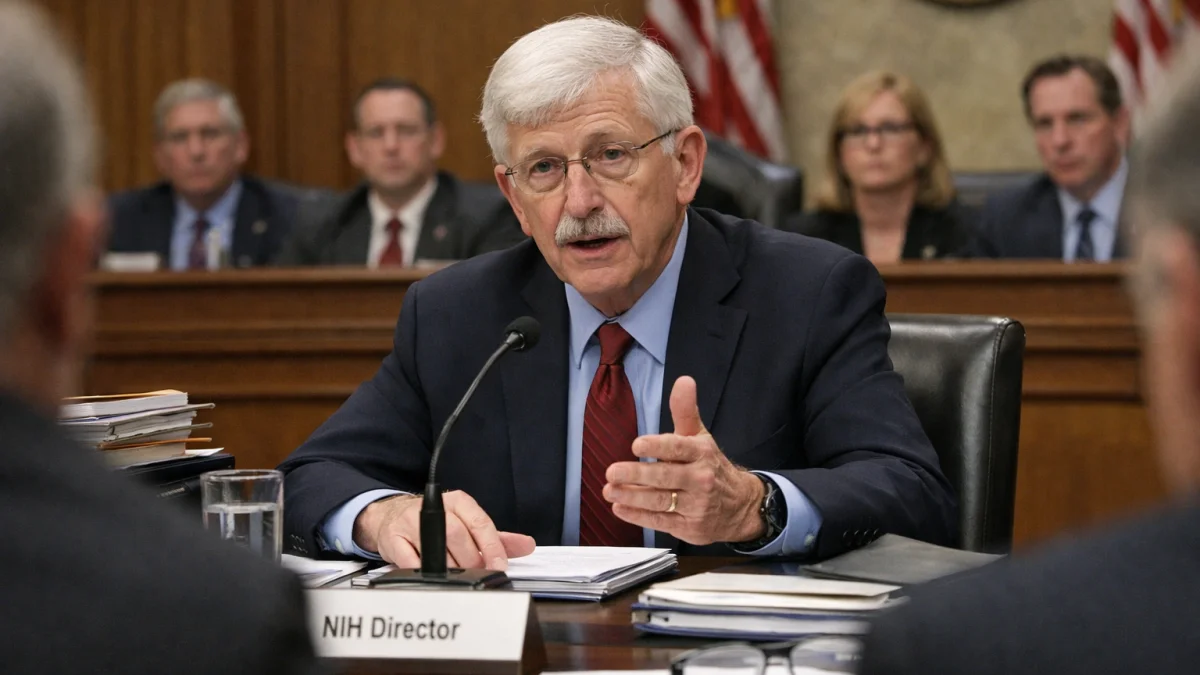


WASHINGTON — National Institutes of Health Director Dr. Jay Bhattacharya defended recent funding reductions and policy changes at the agency, saying the measures are intended to improve oversight, align research priorities and manage budget constraints, while critics warned the cuts could disrupt scientific research and public health programs.
Bhattacharya’s remarks came during congressional testimony and public appearances in recent months as the NIH faces scrutiny over grant terminations, suspended research funding and broader restructuring proposals advanced by the administration. According to Reuters, Bhattacharya told lawmakers on June 10 that he hoped disputes involving suspended university grants could be resolved and that the agency was working to address concerns raised by researchers and institutions.


The NIH has been at the center of debate over proposed reductions to federal biomedical research spending. Budget proposals backed by the administration have called for significant decreases in NIH funding, including reductions in grant programs and changes to the agency’s structure. During Senate hearings, lawmakers from both parties questioned the potential effects of the proposals on medical research, training programs and ongoing scientific studies.
Bhattacharya has argued that the proposals should be viewed as part of a budget negotiation process with Congress. According to reports from Senate hearings, he said the administration’s budget request was intended to prioritize urgent health needs, strengthen oversight of foreign funding and improve research practices.
The director has also defended policy initiatives aimed at reshaping how research is conducted. Earlier this month, the NIH announced the creation of a new office to support alternatives to animal testing, including the use of laboratory-grown tissues and computer-based research models. The agency said the effort is intended to modernize biomedical research while reducing reliance on animals.
At the same time, criticism has emerged from within the agency and from outside scientific organizations. Reuters reported that dozens of NIH employees publicly criticized funding reductions and grant cancellations, arguing that the measures could harm research efforts and public health. More than 60 current employees signed a letter expressing concerns about what they described as the politicization of scientific research and the termination of grants.
Patient advocacy groups, university leaders and scientific organizations have also raised objections to proposed budget reductions, saying they could affect research into diseases including cancer, Alzheimer’s disease and other major health conditions. Several lawsuits challenging aspects of the administration’s health policies and grant decisions remain pending in federal courts.
Speaking before lawmakers, Bhattacharya said he was “very hopeful” that agreements could be reached with institutions affected by grant suspensions so research could move forward.
As of June 20, congressional consideration of future NIH funding levels and agency reforms remained ongoing, and final budget decisions had not been made.