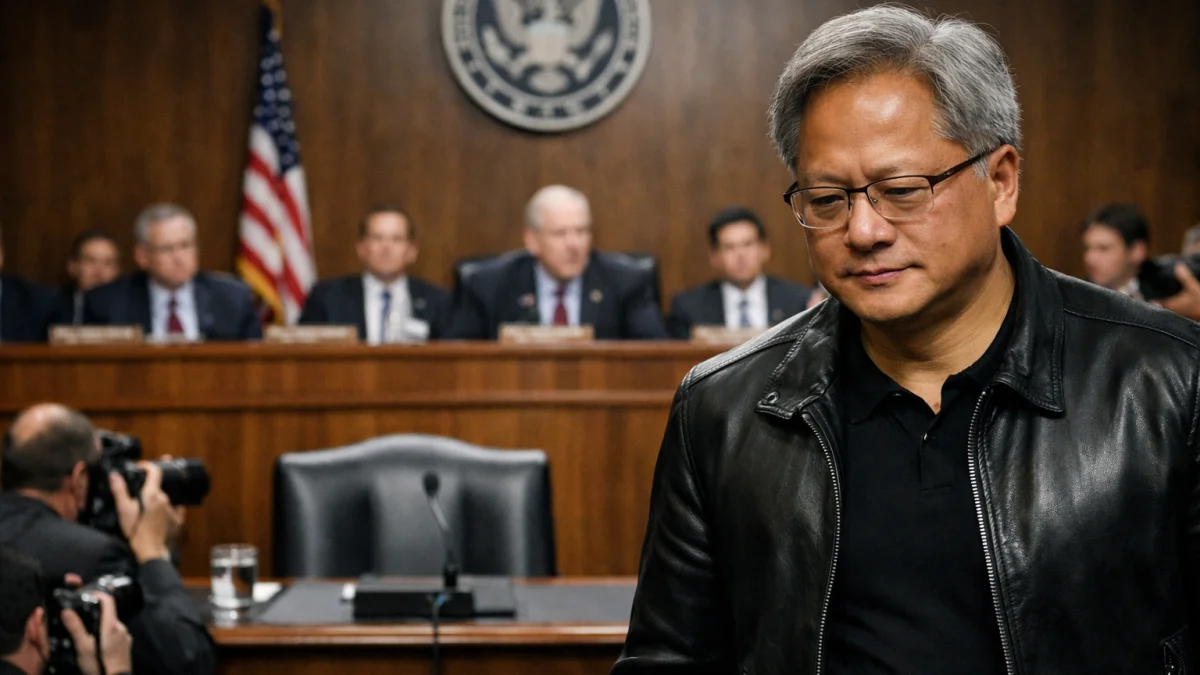


WASHINGTON — Nvidia Chief Executive Jensen Huang has declined an invitation to testify before a U.S. Senate hearing on artificial intelligence, export controls and the company’s business activities in China, drawing criticism from lawmakers seeking public testimony on issues at the center of the global AI industry.
The invitation came from Senator Elizabeth Warren, the ranking Democrat on the Senate Committee on Banking, Housing, and Urban Affairs. In a June 5 letter, Warren asked Huang to appear at a June 11 hearing focused on artificial intelligence, U.S. technological leadership and export-control policy. She said the hearing would provide an opportunity for Huang to discuss Nvidia’s views on U.S. export regulations and its operations in China.


According to a statement released by Warren on June 8, Huang informed the committee that he would not attend the hearing. Warren said Nvidia occupies a central role in debates over artificial intelligence, economic competitiveness and national security, and argued that the company’s chief executive should answer lawmakers’ questions in a public setting.
“I appreciate Mr. Huang’s response, but the American people deserve answers in a public forum,” Warren said in the statement. She added that committee staff would continue seeking an opportunity for Huang to appear before senators in an open hearing.
Nvidia has not publicly detailed the reasons for Huang’s decision. Reports citing correspondence between Huang and the committee said he indicated he was unable to attend and offered instead to host Warren or other committee members at Nvidia’s headquarters in Santa Clara, California.
The dispute comes as lawmakers from both parties scrutinize the export of advanced AI chips and the effectiveness of U.S. restrictions intended to limit China’s access to cutting-edge semiconductor technology. Nvidia has become a focal point of those discussions because its processors are widely used in artificial intelligence systems worldwide.
In recent months, senators have questioned Nvidia’s compliance efforts and its views on export-control enforcement. Earlier this year, Warren and Senator Jim Banks asked federal officials to examine statements Huang made regarding the diversion of AI chips to China, while Nvidia said it prioritizes compliance with U.S. regulations.
Nvidia has repeatedly stated that it supports lawful export controls while maintaining that U.S. companies should remain able to compete in international markets. Huang has also argued publicly that American technology firms benefit when global AI development relies on U.S.-designed hardware and software.
The Senate hearing proceeded on June 11 without Huang’s testimony. As of June 14, committee staff and Nvidia had not announced a new date for a public appearance, and details of any future testimony remained unclear.