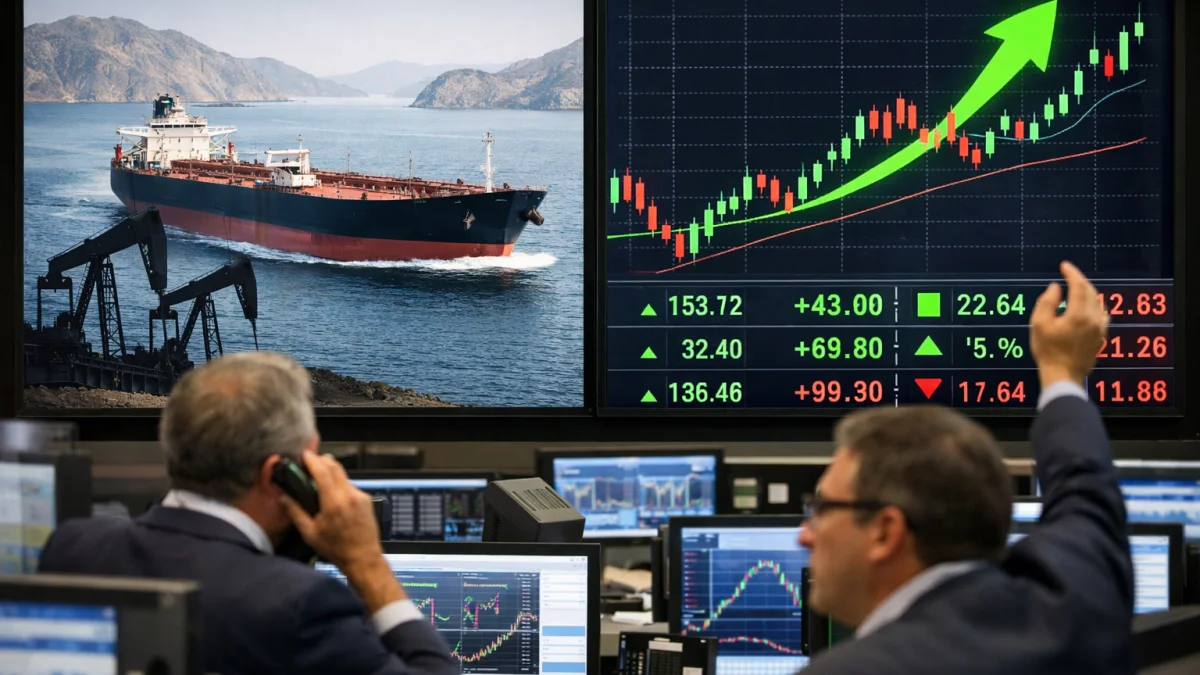


LONDON — Shares of major oil companies swung on Tuesday after announcements regarding the reopening of the Strait of Hormuz, following a U.S.-Iran deal that could restore significant crude shipments to global markets.
Energy firms with substantial Gulf exposure saw mixed trading as Brent crude prices fell sharply on optimism about resumed flows through the critical waterway. The strait, which had been largely closed for months amid conflict, is expected to reopen under terms of a framework agreement.


U.S. President Donald Trump announced on Sunday that a deal with Iran would lead to the toll-free reopening of the Strait of Hormuz and the removal of a U.S. naval blockade. A formal signing is scheduled for Friday in Switzerland, according to officials.
Oil prices dropped more than 4% in early trading on Monday, with Brent crude falling to around $83 per barrel. Industry executives noted that full restoration of flows could take weeks or longer due to logistical challenges, including potential mine clearance.
"Even with a deal to reopen the Strait of Hormuz, it could take weeks or months for oil to fully flow," analysts at risk intelligence firms have cautioned.
Shares in companies such as ExxonMobil and Chevron fluctuated as investors weighed lower near-term oil prices against prospects of increased global supply. Broader stock markets rose on hopes of eased energy costs.
The Strait of Hormuz had been a flashpoint in the U.S.-Iran conflict that escalated earlier in 2026, disrupting roughly one-fifth of global oil and LNG shipments. Its effective closure contributed to sharp rises in energy prices earlier this year.
Iranian officials have indicated willingness to restore commercial traffic, while U.S. statements emphasized immediate authorization for shipping once conditions are met. Details on the precise timeline for full operations remain unclear.
European and Asian refiners, heavily reliant on Gulf crude, stand to benefit from resumed supplies, though executives from major oil firms have warned of lingering market tightness due to depleted reserves.
As of Tuesday, trading in oil company stocks continued to reflect uncertainty over the pace of implementation. No major new commitments on volumes or security guarantees had been detailed publicly beyond the framework announcement. The G7 leaders, meeting in France, have monitored developments closely as part of broader energy security discussions.