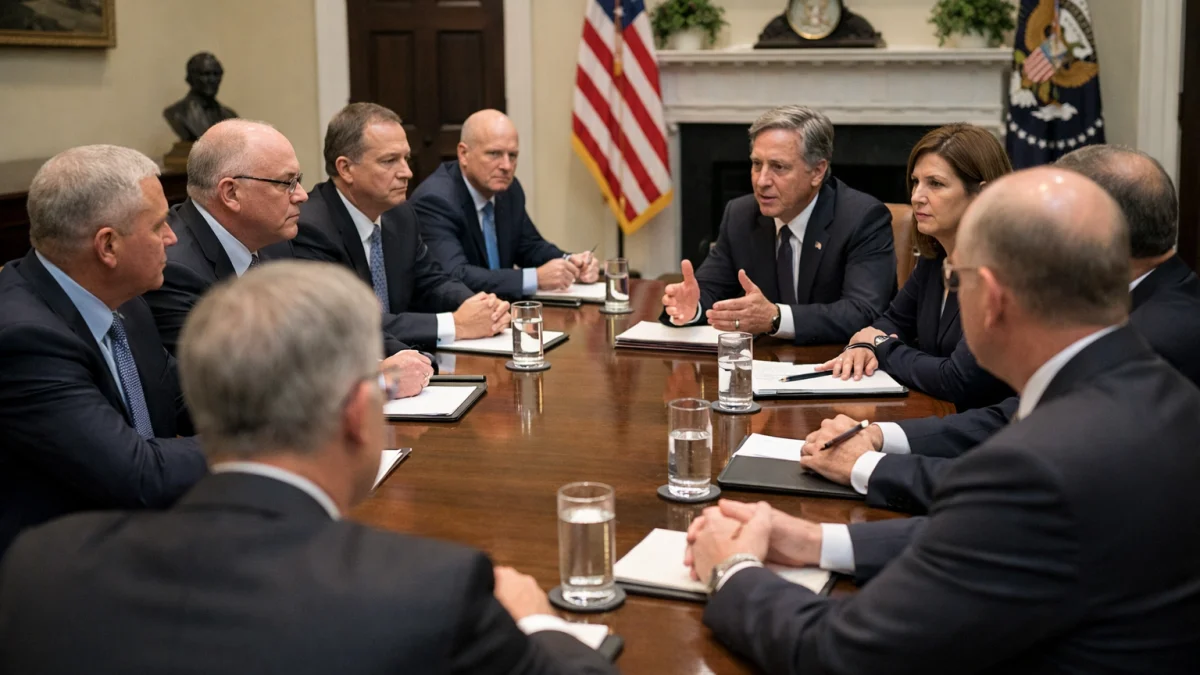


WASHINGTON — Oil industry executives have warned the White House that gasoline prices could surge further in coming weeks as U.S. fuel inventories fall to critically low levels amid disruptions in global energy markets, according to people familiar with the discussions.
The warnings were delivered in recent weeks to senior administration officials, industry participants said. Executives from major companies including Exxon Mobil and Chevron have flagged concerns about dwindling reserves, which have been drawn down to replace supplies affected by the conflict in the Middle East.


One industry executive told reporters that inventories are approaching “tank bottom” and that price pressures could intensify by mid-to-late June. The U.S. average gasoline price stood at about $4.26 a gallon earlier this week, up significantly from pre-conflict levels, according to AAA data.
The alerts come as the Trump administration grapples with broader inflationary pressures, including recent rises in wholesale and consumer prices. The closure of key shipping routes in the Persian Gulf has strained global oil flows, contributing to higher costs.
Exxon Mobil Senior Vice President Neil Chapman has publicly noted that crude oil inventories have reached “unheard of” lows, while Chevron CEO Mike Wirth has warned that June and July could be critical months for supply dynamics.
“We have shared those concerns at the highest levels of government about what’s coming in mid-to-late June,” one unnamed executive said, according to reports on the private briefings.
White House officials have acknowledged the challenges and taken steps including releases from the Strategic Petroleum Reserve and other measures to mitigate impacts. However, industry leaders have indicated that new domestic production increases would take months to materialize.
The situation reflects ongoing effects from the regional conflict, which has disrupted about one-fifth of global oil trade through the Strait of Hormuz. Energy analysts have projected that without resolution, further price increases are likely.
Administration officials have described some price rises as temporary, while emphasizing priorities such as national security. Broader economic data released this week, including wholesale price figures, showed energy costs contributing to monthly gains.
As of Thursday, the national average retail gasoline price remained elevated compared with earlier in the year. Industry meetings with the administration continue, focusing on supply chain issues and potential policy responses. Details on any specific new actions remain unclear.