

LONDON — Global oil markets reacted sharply on Monday after U.S. and Iranian officials announced a preliminary agreement that includes reopening the Strait of Hormuz, a key route for global energy shipments, sending crude prices lower as traders responded to expectations of improved supply flows.
Brent crude and U.S. West Texas Intermediate futures both fell by more than 4% in early trading after the announcement, according to market data cited by Reuters and other financial news outlets. The decline followed statements from U.S. President Donald Trump and Iranian officials indicating that a framework agreement had been reached to halt hostilities and resume maritime traffic through the strategic waterway.


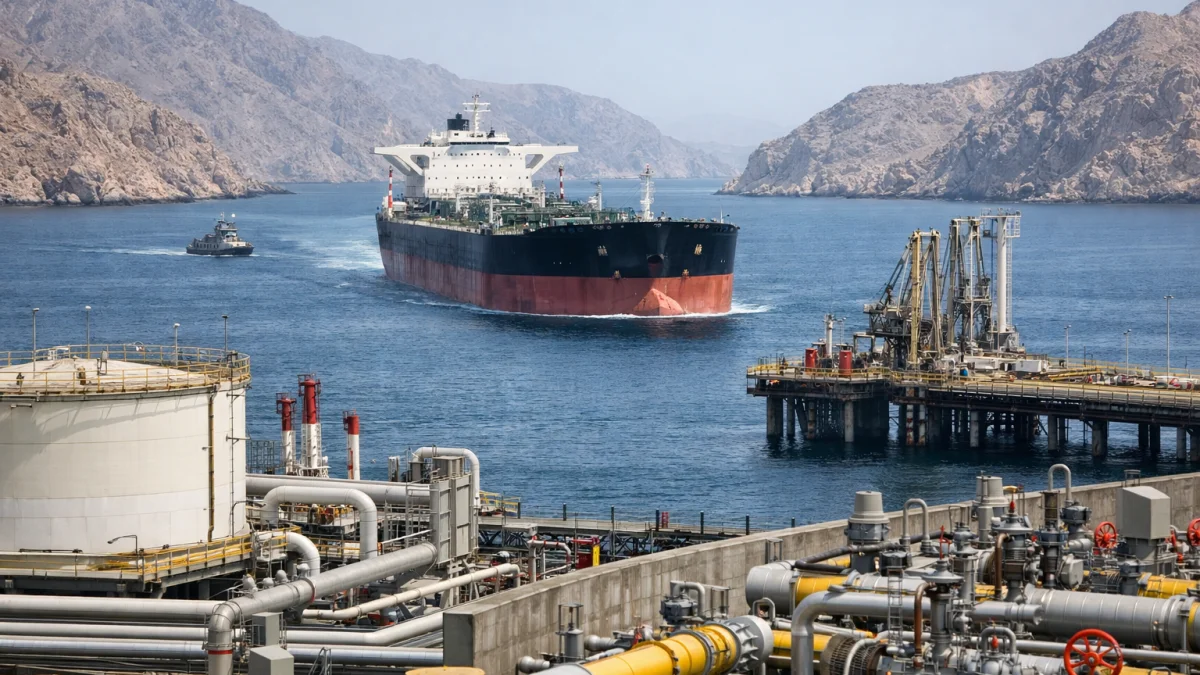
The Strait of Hormuz, located between Oman and Iran, is one of the world's most important oil transit corridors. Disruptions to traffic through the strait during months of conflict contributed to higher energy prices and increased concerns about global supply availability. The latest announcement raised expectations that oil exports from Gulf producers could begin moving more freely once shipping routes are fully restored.
“The Deal with the Islamic Republic of Iran is now complete,” Trump wrote on social media on Sunday, according to Reuters. Iranian officials also confirmed that an agreement had been reached, although details of the arrangement and its implementation remain limited.
Market participants responded by unwinding positions that had reflected concerns about prolonged supply disruptions. By Monday morning, Brent crude was trading near its lowest level since early March, according to Reuters market reports. Analysts cited by financial media said the reopening announcement reduced the immediate risk premium that had been built into oil prices during the conflict.
Despite the market reaction, officials and analysts cautioned that a return to normal shipping conditions may take time. Reuters reported that the proposed agreement calls for the strait to reopen after mine-clearing and other safety measures are completed. Some energy analysts said inventories depleted during the disruption period would also require time to rebuild.
Joachim Nagel, a member of the European Central Bank's Governing Council, said on Monday that lower oil prices alone would not immediately ease broader inflation pressures. “It will take months” for supply conditions to normalize, he said, according to Reuters.
The announcement followed months of disruption that affected global energy markets and prompted governments and industry participants to monitor shipping conditions closely. While the agreement was welcomed by market participants, several provisions remain subject to further negotiations, according to officials involved in the talks.
As of Monday, oil prices remained below last week's levels, while traders continued to assess the timetable for reopening the Strait of Hormuz and the potential impact on global energy supplies. Details of the final agreement remained unclear.