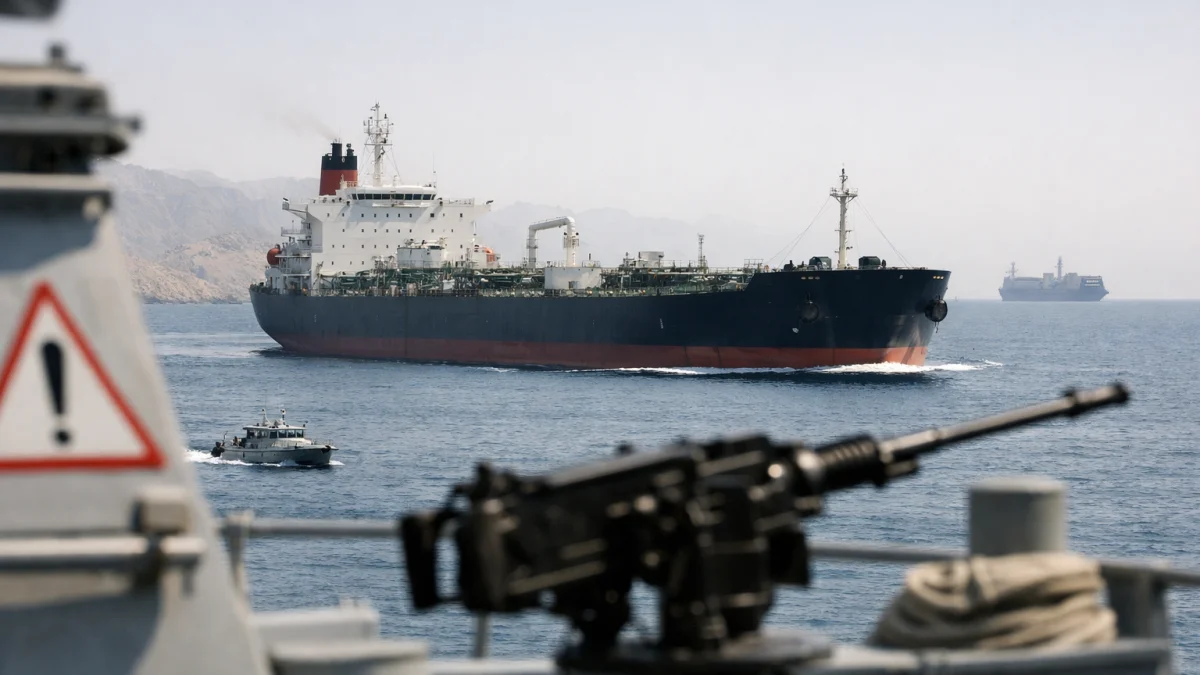


LONDON — Global oil supplies tightened further this weekend as commercial traffic through the Strait of Hormuz remained sharply reduced amid ongoing U.S.-Iran ceasefire tensions, energy analysts and shipping trackers said.
The narrow waterway, which normally carries about one-fifth of global oil supplies, has seen commercial transits limited since early March following Iranian restrictions and U.S. responses, according to the International Energy Agency and maritime intelligence reports. Flows have been reduced to a small fraction of pre-conflict levels, with most major operators and insurers avoiding the route.


The disruptions stem from the broader conflict that began in late February and the fragile ceasefire established in April. Iran has coordinated limited passages for select vessels, primarily its own or aligned tankers, while U.S. officials have maintained positions aimed at securing open navigation, industry sources said.
Oil prices have remained elevated but stable in recent days, with benchmarks holding below $100 per barrel as of Friday, supported by draws from global stockpiles, increased U.S. production and rerouting efforts, market data showed. However, analysts warned of growing pressure on inventories due to the persistent shortfall of roughly 10 million barrels per day from Persian Gulf exports.
“Transit through the Strait of Hormuz remains restricted, coordinated, and selectively enforced,” a maritime intelligence firm noted in a recent assessment.
The situation has prompted some Gulf producers to explore alternative export routes where possible, though pipeline capacity is limited. OPEC+ and other producers have discussed the prolonged nature of the disruption, with consultants indicating it could take months for operations to normalize even if the strait reopens.
No immediate new attacks on shipping were reported over the weekend, but shipping groups continued to advise caution. Earlier incidents in the region had led to stranded vessels and heightened insurance costs.
As of Sunday, U.S. and Iranian negotiators, with Pakistani mediation, were engaged in talks to address the strait and nuclear issues, officials said. Details on any potential timelines for resumed full traffic remained unclear. Energy markets were closely monitoring developments, with traders citing risks of further inventory draws if the impasse continues into the summer.
The U.S. Energy Information Administration and other monitors continued to track the situation, urging preparedness for potential volatility in energy prices and supply chains.