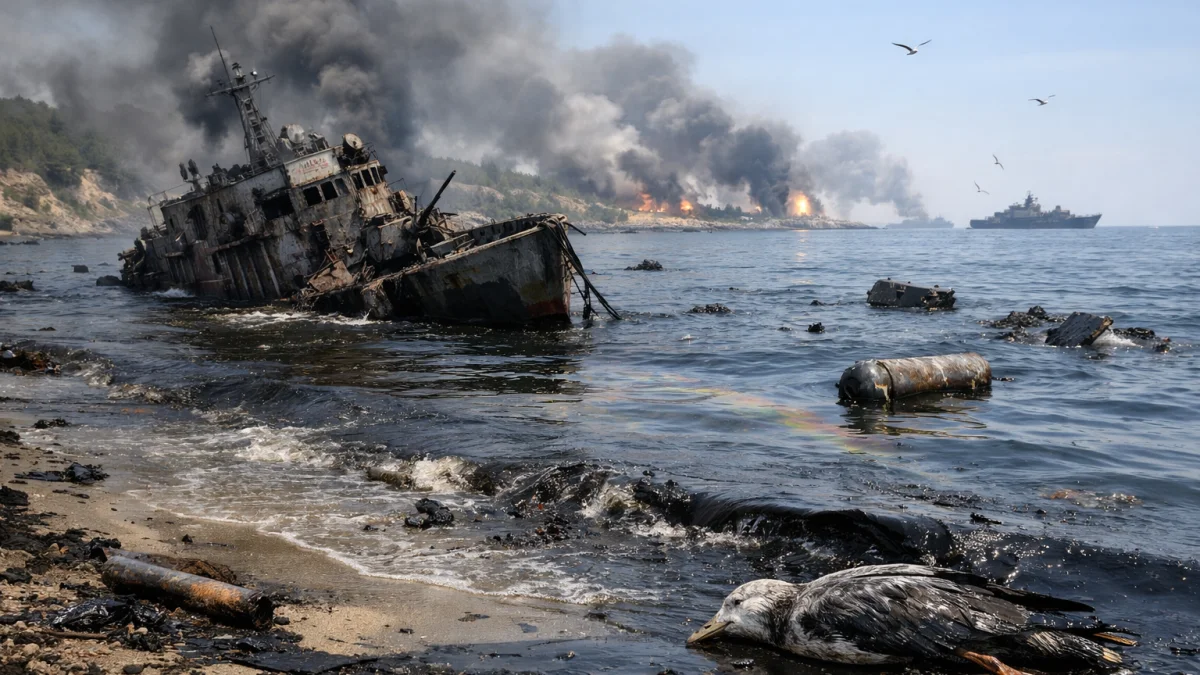


KYIV — The Russia-Ukraine conflict continues to affect the environmental condition of the Black Sea and surrounding regions, with governments, international organizations and researchers reporting risks linked to marine pollution, drifting naval mines, damage to infrastructure and broader ecological disruption.
Officials and environmental experts said this month that the conflict’s impact extends beyond military and economic consequences, affecting coastal ecosystems, maritime safety and environmental monitoring across the Black Sea basin. The concerns were highlighted during international discussions in May and June involving policymakers, researchers and regional organizations focused on Black Sea environmental protection.


The International Centre for Black Sea Studies said a round-table discussion held in Athens in May examined the direct and indirect environmental effects of military activity in the Black Sea. Participants discussed risks to biodiversity, fisheries and coastal communities, according to the organization.
Researchers have also pointed to hazards posed by drifting naval mines. A study published earlier this year said mine warfare in the Black Sea has created transboundary risks for marine ecosystems, fisheries and shipping routes. The authors noted that uncontrolled or drifting mines can threaten biodiversity and coastal habitats across the region.
Regional governments continue to respond to those dangers. On June 3, Romania's defense ministry said its navy detonated a drifting anti-landing mine that had washed ashore on the country's Black Sea coast. Romanian authorities said more than 150 drifting mines have been discovered and destroyed in the Black Sea since the escalation of the conflict, with Romania, Bulgaria and Turkey operating a joint effort to address the threat.
Environmental concerns have also been linked to attacks on energy and industrial infrastructure. Ukrainian strikes on facilities in Russian-controlled Crimea and southern Russia, as well as Russian attacks on infrastructure in Ukraine, have raised concerns about pollution and environmental damage, according to officials and researchers. Details of the full environmental impact remain under assessment.
The conflict has also affected cultural and natural heritage sites. Ukrainian authorities reported damage this month to the historic Kyiv Pechersk Lavra monastery, a UNESCO World Heritage site, during a Russian attack. Russia denied responsibility for the damage.
“The need to safeguard the ecological value and economic resilience of the Black Sea is becoming increasingly important,” organizers of the May environmental forum said in a statement.
International organizations, including the United Nations, have continued to call for de-escalation and greater attention to environmental risks associated with the conflict. Monitoring efforts by regional governments and researchers remain ongoing, while assessments of long-term ecological effects continue.