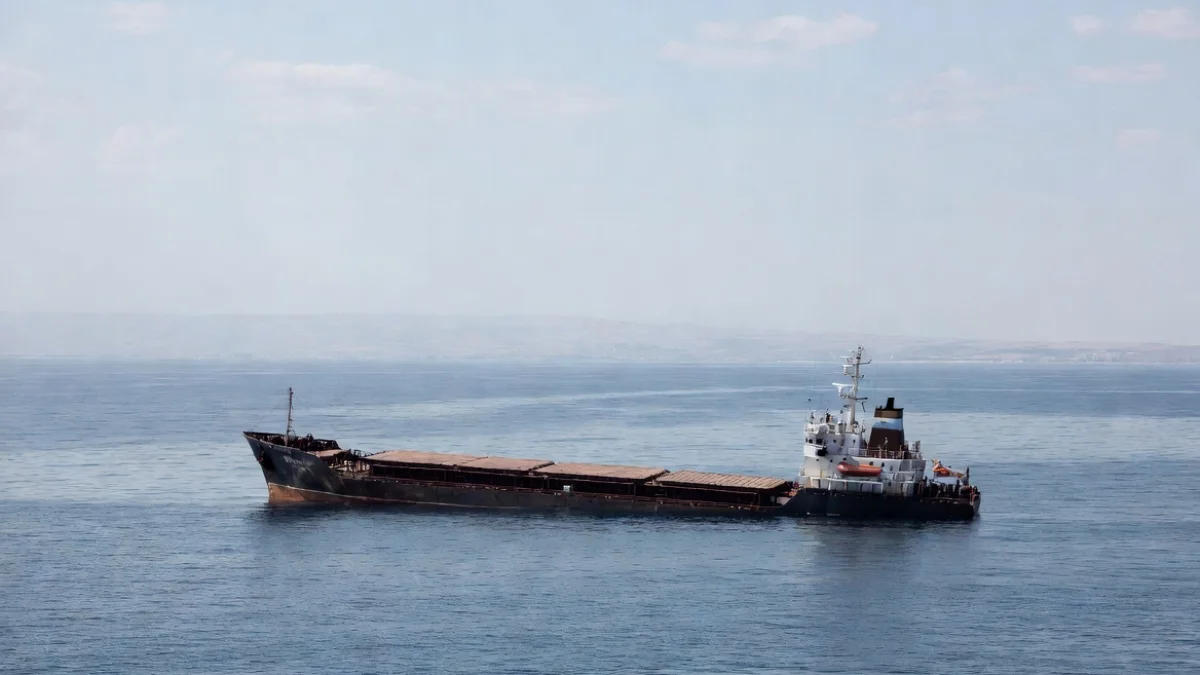


ATHENS — A vessel from Russia’s so-called shadow fleet carrying nuclear reactors sank in the Mediterranean Sea on Monday, Greek and international maritime authorities said.
The ship went down approximately 120 nautical miles south of Crete after suffering a mechanical failure and taking on water in rough seas, according to preliminary reports from the Greek coast guard and the International Maritime Organization. No casualties were immediately reported, though search efforts continued for any crew members who may have been unaccounted for.


The vessel, identified by tracking data as a Russia-flagged cargo ship frequently used to circumvent Western sanctions, was transporting decommissioned or spent nuclear reactor components, officials familiar with the matter said. Details on the exact type and number of reactors remained limited as of Tuesday.
Greek authorities dispatched patrol vessels and aircraft to the area to monitor the site and contain any potential pollution. The European Union’s maritime safety agency and the International Atomic Energy Agency were notified and are coordinating with Russian authorities, officials said.
“This is a serious maritime incident involving sensitive cargo,” a senior Greek coast guard official told reporters on Monday. “We are treating it with the highest priority regarding both search and rescue and environmental protection.”
Russia’s transport ministry confirmed the loss of the vessel but said initial assessments indicated the nuclear material was properly contained in transport casks designed for such shipments. It provided no further details on the cargo’s destination or origin.
Shadow fleet vessels — aging ships often operating with opaque ownership structures — have been linked to Russia’s efforts to export oil and other goods despite sanctions imposed following its invasion of Ukraine. Incidents involving these ships have raised concerns among Western governments and environmental groups about safety standards and regulatory oversight.
Maritime experts monitoring the situation said the sinking could pose risks of oil leakage from the vessel’s fuel bunkers, while the nuclear cargo adds an additional layer of complexity. Radiation monitoring teams were deployed to the area, with initial readings showing no immediate elevation in background levels, according to preliminary Greek reports.
As of Tuesday afternoon, Greek authorities reported an oil slick near the sinking site and were working with salvage experts to assess the wreck. The IAEA said it was in contact with all parties and would provide further updates as more information becomes available. Recovery operations and a full investigation into the cause of the sinking are expected to take weeks.