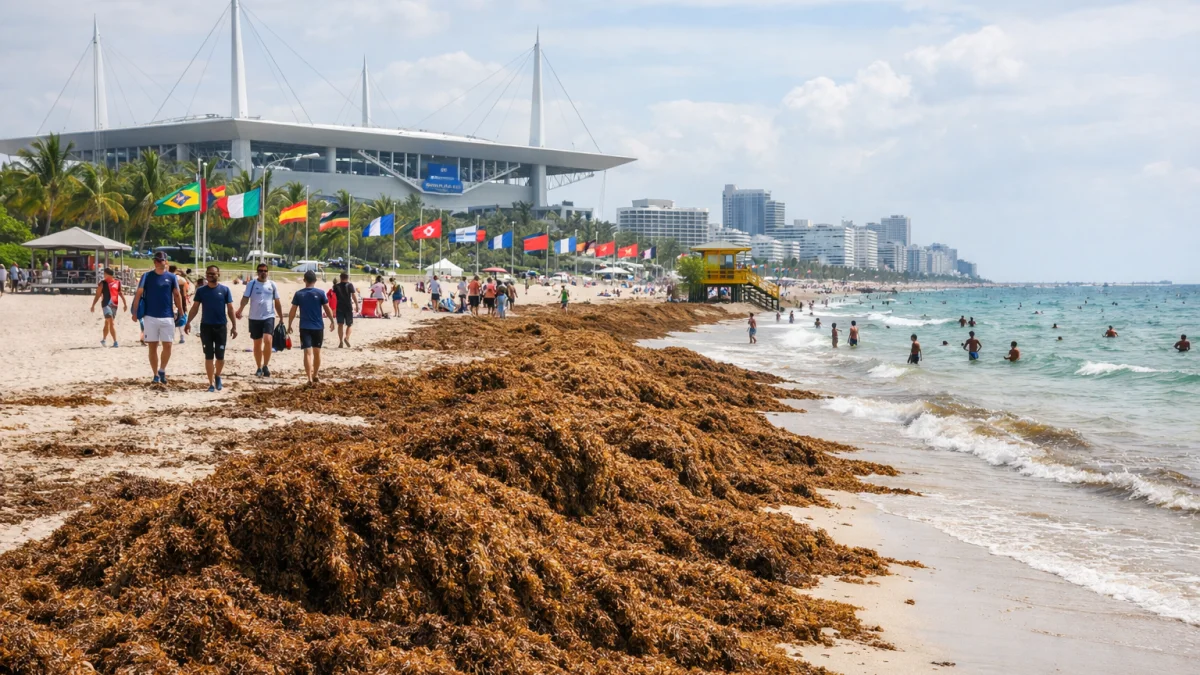


MIAMI — Large mats of sargassum seaweed have blanketed sections of Miami beaches as the city hosts World Cup-related events, officials and scientists said.
The influx of the brown macroalgae, which has been washing ashore in significant volumes along South Florida's Atlantic coast, coincides with public celebrations and watch parties for the 2026 FIFA World Cup. Miami Beach is among the venues featuring beachfront events and fan gatherings.


University of South Florida researchers reported in recent bulletins that 2026 is on track to be a major sargassum year, with satellite data showing tens of millions of metric tons of the seaweed in the Atlantic. Amounts have already led to heavy accumulations exceeding typical seasonal levels in the region.
City crews in Miami Beach coordinate daily with Miami-Dade County Parks to manage the seaweed using beach-friendly equipment, blending it across the shoreline after surveys for sea turtle nests. Similar efforts occur in other affected areas, though the material often returns with incoming tides.
Sargassum, which forms part of the Great Atlantic Sargassum Belt, has become a recurring seasonal phenomenon since around 2011, driven by factors including ocean currents, nutrient levels and warmer waters. It provides habitat in the open ocean but decomposes onshore, producing a sulfurous odor and potentially affecting air quality and tourism.
"While visually unappealing to some and accompanied by an unpleasant smell, the seaweed is not usually harmful to humans," said one local report summarizing expert assessments.
Beach conditions vary. Aggressive morning cleanups keep main tourist stretches of Miami Beach more manageable during the day, but heavy surges can still impact water visibility and create mounds along the shore. Some visitors have noted the odor, while others continue to use the areas for recreation.
The situation has drawn attention during the World Cup period, with images circulating of fans near seaweed-covered stretches and some reports of it affecting beach rankings, such as in Dr. Beach's annual list.
Scientists continue to monitor the blooms, with forecasts indicating sustained or increasing levels through the peak summer months. Local authorities maintain that beaches remain open and are working to mitigate impacts for residents and visitors.
As of June 21, cleanup operations were ongoing, with no immediate changes reported in the overall volume arriving from offshore mats. Details on total economic effects or long-term mitigation strategies remain under assessment by state and local agencies.