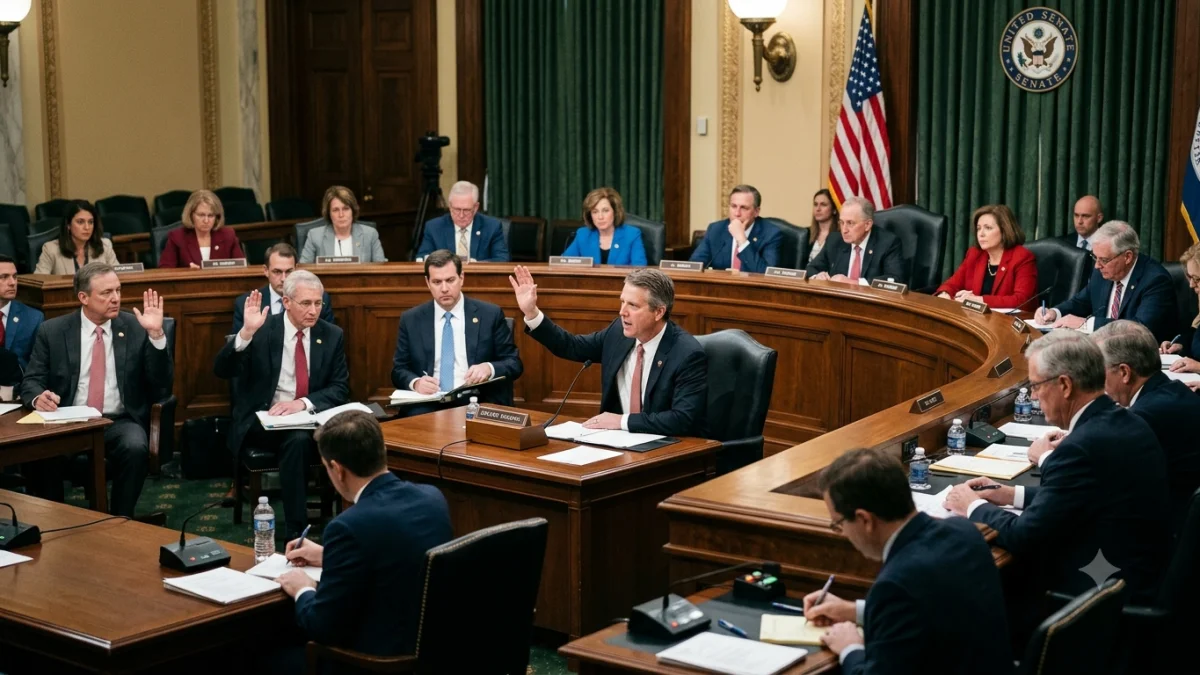


WASHINGTON — A Republican-led U.S. Senate committee voted on Thursday to hold former top infectious disease official Anthony Fauci in contempt of Congress after he repeatedly declined to answer lawmakers' questions during a hearing on the government's response to the COVID-19 pandemic, escalating a long-running political dispute over his role during the public health crisis.
The Senate Homeland Security and Governmental Affairs Committee approved the contempt resolution along party lines, with Republicans supporting the measure and Democrats opposing it. Committee Chairman Senator Rand Paul of Kentucky said the panel would refer the matter directly to the U.S. Department of Justice rather than seek a vote of the full Senate, an approach that legal experts have described as unusual and whose procedural basis could face scrutiny.


Fauci, who retired from government service in 2022 after leading the National Institute of Allergy and Infectious Diseases for decades, appeared before the committee under subpoena last week. During the hearing, he repeatedly invoked his Fifth Amendment right against self-incrimination instead of responding to questions about pandemic-era policies and decisions.
Paul, a longtime critic of Fauci's handling of the pandemic, argued that the former official should not have relied on the Fifth Amendment because former President Joe Biden issued him a federal pardon covering actions through Jan. 19, 2025. Paul has maintained that the validity of Fauci's constitutional claim should be tested.
Fauci's legal team rejected the committee's action, calling the contempt vote a politically motivated effort to punish him for exercising constitutional rights. Democrats on the committee similarly criticized the proceedings, arguing that witnesses are entitled to invoke the Fifth Amendment and describing the investigation as partisan.
The committee's action does not itself constitute a criminal conviction. Any prosecution would depend on further action by the Justice Department, and legal specialists have noted that referrals of this kind are uncommon and could face significant legal challenges.
The contempt vote marks the latest chapter in years of Republican investigations into Fauci's conduct during the COVID-19 pandemic, including scrutiny of public health guidance, federal research funding and the government's response to the outbreak. Fauci has consistently denied wrongdoing and previously dismissed allegations against him as unfounded.
As of Thursday, the committee had approved the referral, while no Justice Department decision on whether to pursue the matter had been announced.