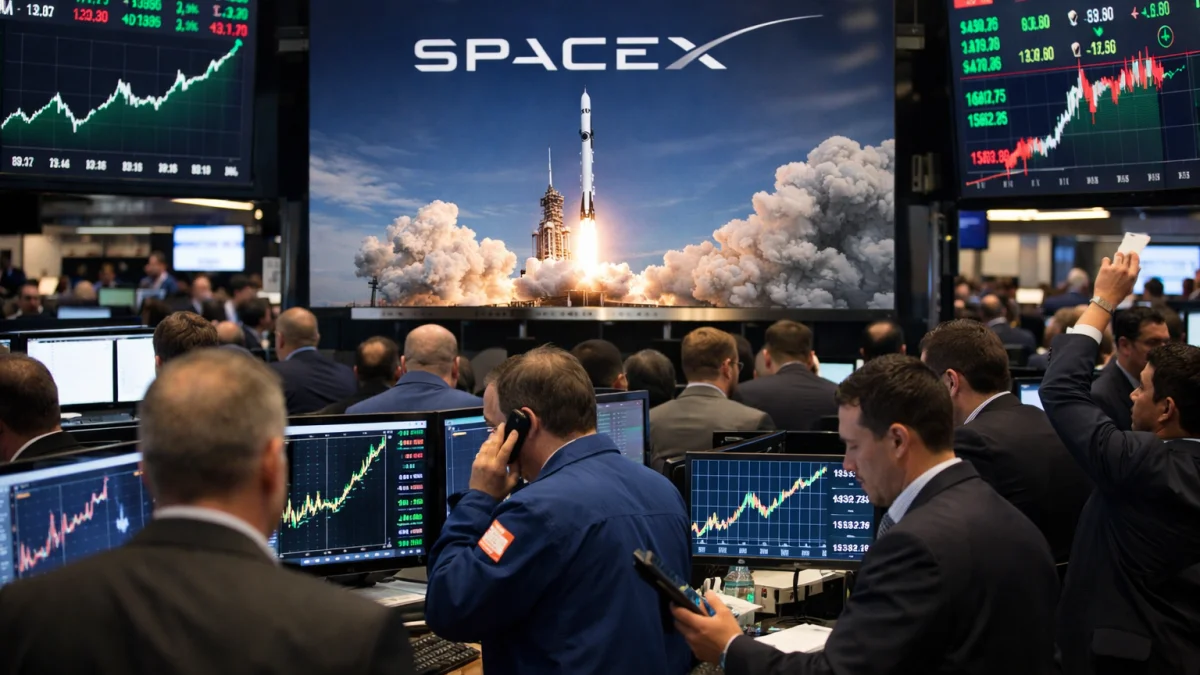


NEW YORK — SpaceX completed the largest initial public offering in history on Friday, raising $75 billion and sending shares of the rocket and satellite company surging in its Nasdaq debut, company officials and market participants said.
The company, founded by Elon Musk, priced its shares at $135 each, achieving a valuation of about $1.77 trillion at the offering. Shares opened at $150 and climbed as high as $176.52 before closing around $161, up about 19 percent, according to trading data.


SpaceX, formally Space Exploration Technologies Corp., listed under the ticker symbol SPCX. The offering involved the sale of roughly 555 million shares and drew overwhelming demand, with bids exceeding $250 billion, sources familiar with the matter said.
The IPO marks a milestone for the company, which has transformed the space industry with reusable rockets and operates the Starlink satellite internet constellation serving millions of users. It also reflects growing investor interest in space technology and artificial intelligence-related ventures tied to Musk’s companies.
Musk, who retains a significant stake, commented on the debut from the company’s headquarters in Texas. He noted the long odds the company faced at its founding.
SpaceX reported about $18.7 billion in revenue last year, driven largely by Starlink, though it posted an operating loss of $4.2 billion, according to regulatory filings. The company has government contracts and a growing presence in satellite communications.
The offering surpassed previous records, including Saudi Aramco’s 2019 debut, in terms of capital raised. It is expected to create thousands of employee millionaires among SpaceX staff.
Wall Street banks including Goldman Sachs, Morgan Stanley, Bank of America, Citigroup and JPMorgan Chase led the transaction. Trading volume exceeded 500 million shares on the first day.
As of June 13, 2026, SpaceX shares continued to trade actively. The company has not issued additional comments on post-IPO plans beyond standard regulatory disclosures. Musk has agreed to a lock-up period on his shares.
Market analysts noted the significant impact on broader indices and investor sentiment toward high-growth technology sectors, though specific effects on other stocks remained fluid in early trading. Details on immediate strategic shifts following the listing were not disclosed.