

The first things residents found were often the smallest.
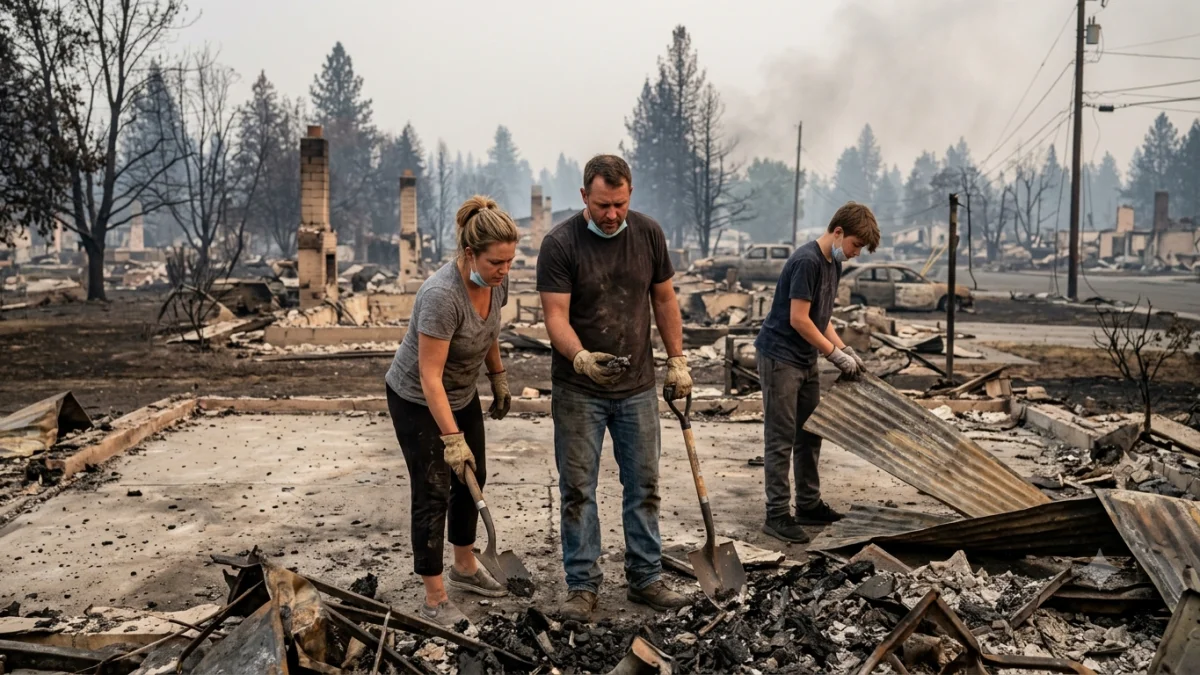
A warped house key half-buried in gray ash. A ceramic mug cracked by intense heat. Twisted bicycle frames. Charred family photographs fused together. Across neighborhoods on the outskirts of Spokane, Washington, families returned this week to properties transformed into fields of blackened debris after fast-moving wildfires swept through residential communities, leaving hundreds of homes destroyed and thousands of people facing an uncertain recovery.


The search through what remained of their homes marked the beginning of a different phase of the disaster. After days spent fleeing advancing flames and waiting behind evacuation checkpoints, residents were confronted with the practical and emotional task of determining what, if anything, had survived.
The destruction around Spokane has become one of the most severe wildfire disasters in the United States this year. Washington officials said the cluster of fires destroyed more than 700 buildings, scorched more than 8,000 acres and forced roughly 64,000 people to evacuate after flames spread rapidly through neighborhoods over the weekend. Governor Bob Ferguson declared a statewide emergency and requested federal assistance, while Spokane Mayor Lisa Brown described the fires as the region's worst natural disaster. Authorities had not confirmed any fatalities as firefighters continued gaining access to previously unreachable areas.
For many residents, the scale of the loss became clear only after evacuation orders were lifted.
Emergency officials had urged people to leave quickly as shifting winds pushed flames across suburban developments and wooded areas. Sheriff's deputies went door to door in some neighborhoods, warning residents that conditions could change within minutes. Many families left carrying only pets, medications and a handful of personal belongings, unsure whether they would have homes to return to.
When they returned, some properties remained standing with only smoke damage or scattered ash coating their yards. Others had been reduced almost entirely to foundations, chimneys and fragments of metal.
The uneven pattern of destruction reflected the unpredictable behavior of wind-driven wildfires. Entire streets escaped with limited damage while neighboring blocks suffered catastrophic losses, underscoring the difficulty firefighters faced as they tried to defend homes under rapidly changing conditions.
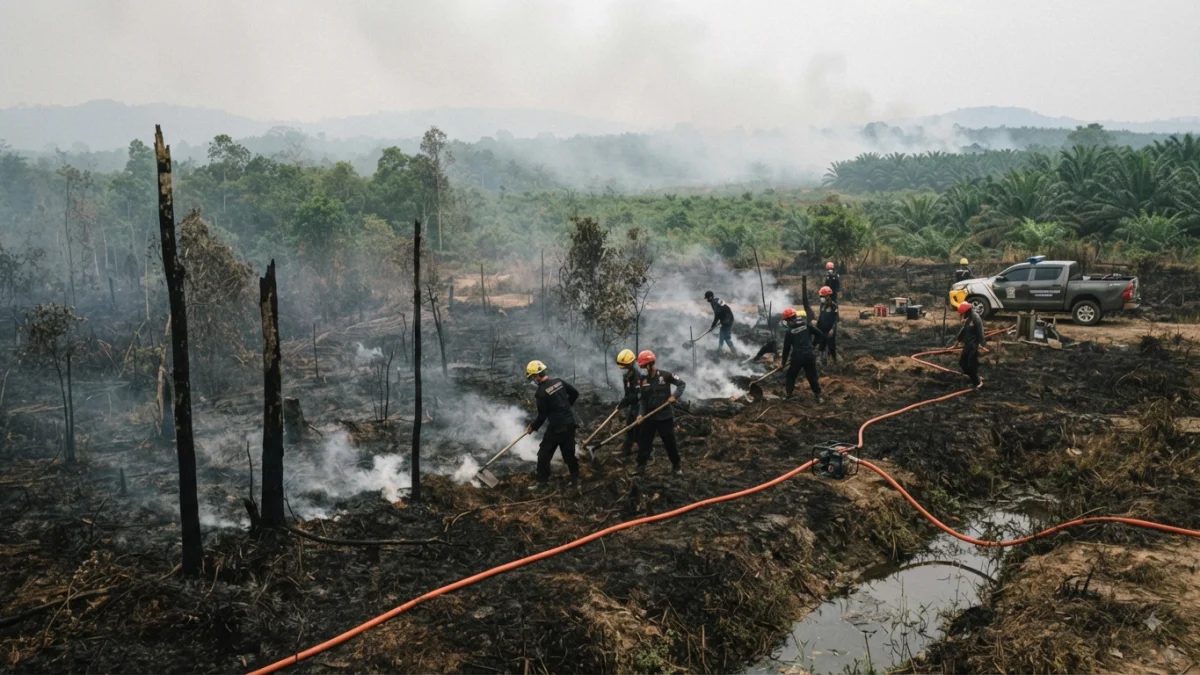
Fire crews from across the region continued battling multiple blazes simultaneously. Washington officials said more than a dozen major fires were burning statewide, stretching personnel and equipment as prolonged heat and dry vegetation created dangerous conditions throughout the Pacific Northwest.
Recovery has already begun to reshape daily life.
Relief organizations and local governments established assistance centers where displaced residents could begin insurance claims, apply for emergency aid and obtain information about temporary housing. Community groups organized donations of clothing, household goods and animal supplies, while volunteers offered meals and storage space for families who no longer had homes.
For homeowners, however, the immediate task often involved carefully searching through debris for irreplaceable items before cleanup crews arrived.
Wildfire recovery specialists caution that returning to burned properties carries risks. Ash can contain hazardous materials released from burned building products, electronics and household chemicals. Authorities have urged residents to follow official guidance, wear protective equipment and wait until areas are declared safe before entering damaged sites.
The Spokane fires also illustrate how wildfires increasingly threaten communities beyond remote forests.
Researchers have documented growing risks in the wildland-urban interface, where residential development borders vegetation capable of carrying fast-moving fires. Extended drought, unusually warm temperatures and extreme fire weather have combined to increase the frequency of destructive fire seasons across parts of the western United States, while expanding development has placed more homes directly in harm's way.
Climate scientists caution that no single wildfire can be attributed solely to climate change, but they say rising temperatures and increasingly dry conditions are contributing to longer and more intense fire seasons in many regions. Those broader trends have become part of the conversation in Spokane as residents weigh not only how to rebuild but also what future wildfire seasons may bring.
Questions about insurance and rebuilding have emerged almost as quickly as the fires themselves.
Some families face lengthy claims processes, while others may discover their coverage is insufficient to replace homes at current construction costs. Local officials have acknowledged that rebuilding entire neighborhoods will likely take months or years, even after fire crews fully contain the blazes.
Investigators are also working to determine the causes of the fires. Authorities have charged a Spokane man with first-degree arson in connection with the largest blaze, although the legal process remains at an early stage. Officials continue investigating the broader series of fires independently as firefighters focus on containment and public safety.
Even as smoke lingered over parts of Spokane, signs of resilience began appearing alongside the destruction.
Neighbors checked on one another after returning home. Volunteers unloaded donated supplies. Utility crews restored damaged infrastructure while firefighters remained positioned near neighborhoods vulnerable to renewed flare-ups if winds intensified.
For families sorting carefully through layers of ash, recovery has become measured less by what was lost than by what can still be carried forward—a recovered keepsake, an intact document, a family photograph spared by chance. Around them, blackened foundations testify to the speed with which wildfire can alter a community. Ahead lies the slower work of rebuilding homes, restoring neighborhoods and adapting to a landscape where extreme fire has become an increasingly familiar part of summer.