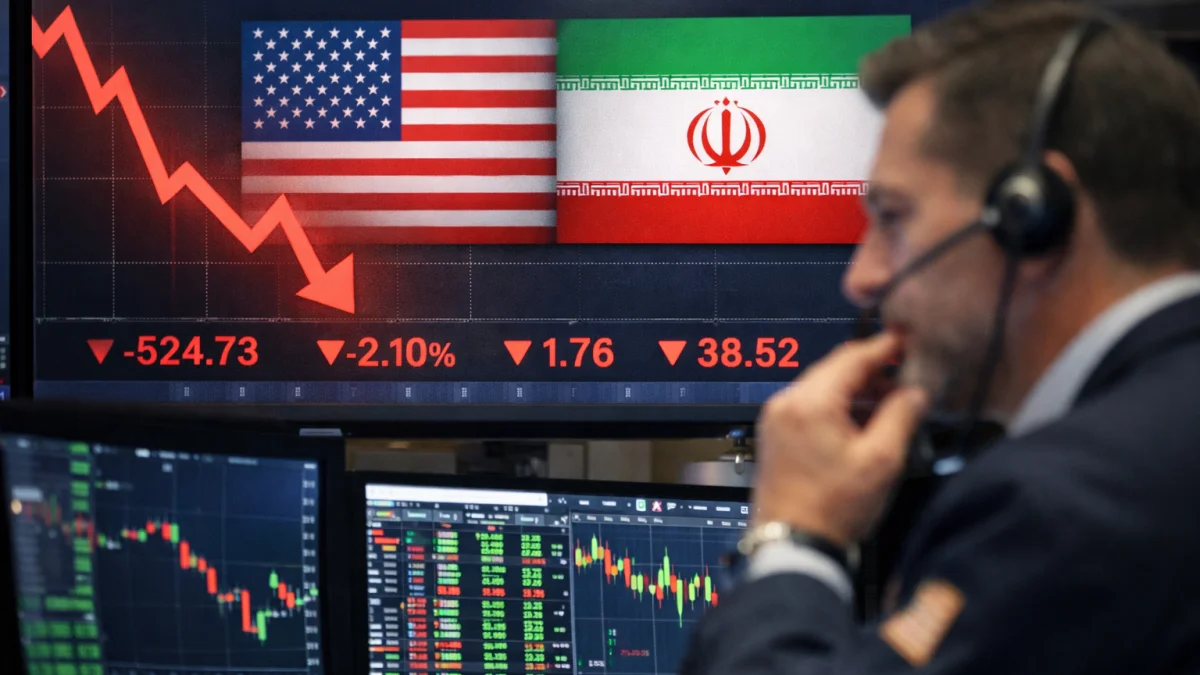


NEW YORK — Global stock markets showed mixed movements Wednesday as investors weighed the latest diplomatic efforts amid ongoing U.S.-Iran tensions, including Pakistan-mediated communications aimed at stabilizing a fragile ceasefire.
Major U.S. indexes opened with modest gains before trading mixed, with technology shares facing pressure while energy stocks rose on oil price fluctuations. The developments follow recent exchanges of strikes that tested the ceasefire agreement reached in April.


Pakistan’s Interior Minister Mohsin Naqvi delivered a message from Pakistani leadership to Iranian officials in Tehran this week, as part of continued mediation between Washington and Tehran, officials said. The talks seek to address issues including maritime security in the Strait of Hormuz.
Oil prices rose modestly early in the session before paring gains, reflecting uncertainty over potential disruptions to energy supplies. Brent crude futures traded around the mid-$90s per barrel, according to market data.
Analysts attributed the cautious market sentiment to persistent geopolitical risks despite the ceasefire framework. “Markets remain sensitive to any signs of escalation or progress in negotiations,” one trader noted, speaking on condition of anonymity.
The S&P 500 fluctuated near flat, while the Nasdaq Composite saw declines in some technology stocks amid broader risk aversion. The Dow Jones Industrial Average posted small gains, supported by energy and defense-related shares. European markets also traded mixed, with the region’s STOXX 600 index showing limited movement.
The U.S.-Iran conflict, which escalated earlier in 2026, has led to periodic volatility in financial markets since the April ceasefire. Investors have closely monitored developments in the Gulf region, where disruptions to shipping routes have influenced commodity prices. Pakistan has facilitated indirect talks, helping broker the initial truce but with limited progress toward a comprehensive deal.
U.S. officials have emphasized the need for security guarantees and curbs on Iran’s nuclear activities, while Iranian leaders have called for sanctions relief. Details of the most recent messages exchanged via Pakistani channels remained limited, with both sides describing them in general terms.
Broader economic concerns, including upcoming U.S. inflation data, also weighed on sentiment. Some investors rotated toward sectors perceived as more resilient to geopolitical shocks.
No major breakthroughs were reported from the latest diplomatic contacts. Further indirect talks are expected in the coming days, with markets likely to remain attuned to any statements from involved parties as the fiscal year appropriations and policy decisions unfold in Washington.