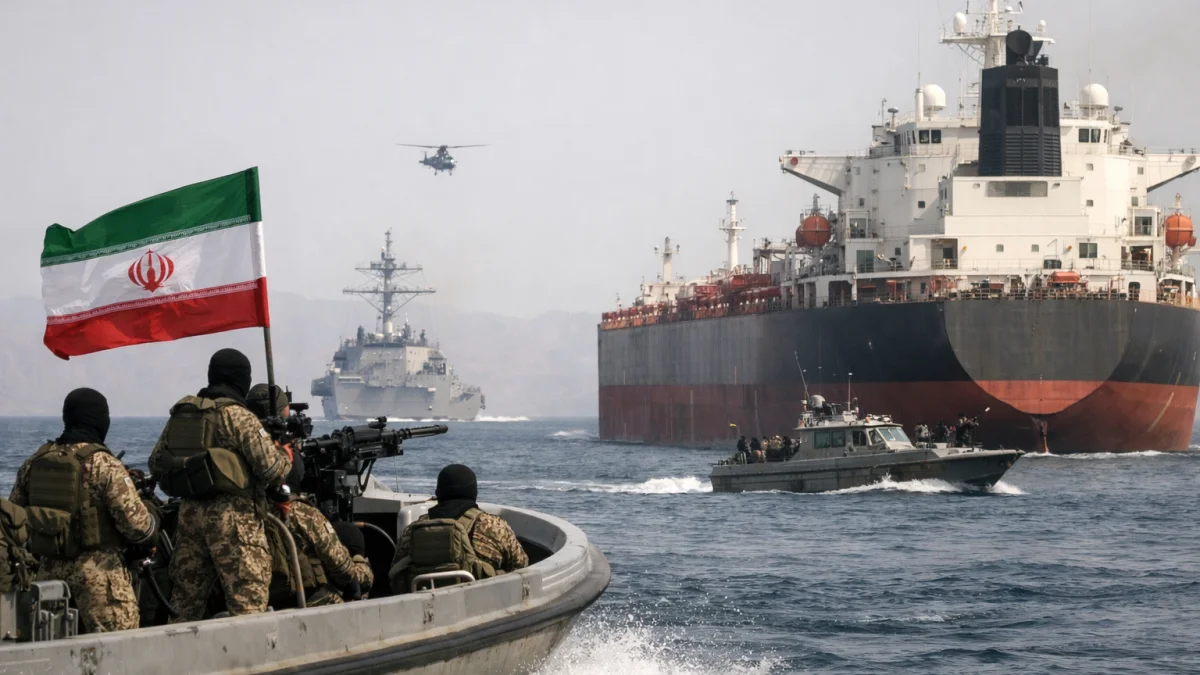


The renewed disruption of shipping through the Strait of Hormuz has once again placed one of the world's most strategically important maritime chokepoints at the center of global security and energy policy, as military tensions between Iran, the United States, and regional actors continue to reverberate through oil markets and commercial shipping. Recent attacks on vessels, declarations affecting navigation, and fluctuating military activity have reduced commercial traffic while prompting governments and shipping companies to reassess operational risk even as diplomatic efforts seek to stabilize the situation.
The significance of the latest developments extends well beyond the Gulf. The Strait of Hormuz carries a substantial share of globally traded crude oil and liquefied natural gas, making any sustained disruption a matter of international economic concern rather than solely a regional security issue. The current episode illustrates how maritime security, energy supply chains, financial markets, and geopolitical competition have become increasingly interconnected. Even when energy exports continue at reduced levels, uncertainty alone can affect shipping costs, insurance premiums, freight availability, and commodity pricing.


Shipping data indicate that vessel movements through the strait declined sharply following renewed restrictions and security threats, although some commercial traffic continued under heightened military surveillance and risk management procedures. Major tanker operators have adopted cautious operating practices, while several Gulf producers have adjusted export arrangements to preserve flexibility. Industry participants have emphasized that physical access is only one component of restoring normal trade; confidence that vessels can transit safely is equally important.
The maritime dimension has also become a test of naval deterrence. The United States and its partners have sought to maintain freedom of navigation while avoiding a broader regional conflict. Iran, meanwhile, has continued to link maritime access to wider security disputes and negotiations with Washington. The result has been a complex environment in which military deployments are intended both to reassure commercial shipping and to deter further escalation, while diplomatic channels remain active despite intermittent hostilities.
Recent diplomatic initiatives underscore that military pressure and negotiations are proceeding simultaneously rather than sequentially. U.S. and Iranian officials have pursued talks intended to reduce hostilities, including discussions covering maritime security in the Strait of Hormuz. According to officials, understandings regarding commercial navigation have formed part of broader efforts to stabilize relations, although renewed military incidents have repeatedly tested those arrangements.
For energy markets, the immediate concern extends beyond physical shortages. Oil-producing countries maintain significant production capacity, strategic reserves exist in many importing nations, and alternative export routes provide some flexibility. Nevertheless, the Strait of Hormuz remains difficult to replace because of the sheer volume of hydrocarbons normally transported through it. Consequently, traders often respond not only to confirmed supply disruptions but also to increased geopolitical risk and uncertainty regarding future availability. This dynamic explains why market volatility can persist even when exports continue at reduced levels.
Commercial shipping faces similar challenges. Maritime operators must balance contractual obligations, crew safety, insurance requirements, and operational costs. Reports from shipping companies indicate that lingering concerns over naval mines and attacks have constrained confidence despite periods of reduced fighting. Industry executives have warned that restoring normal shipping patterns could require sustained clearance operations and credible security guarantees rather than simply announcing political agreements.
The legal and diplomatic dimensions also remain significant. European authorities have continued to frame freedom of navigation through the Strait of Hormuz as an issue governed by international law, adopting targeted measures against individuals and entities they say are involved in actions threatening maritime transit. Such responses illustrate how governments increasingly combine diplomatic pressure, economic sanctions, and naval deployments rather than relying exclusively on military instruments.
Historically, tensions in the Strait of Hormuz have repeatedly demonstrated that even temporary disruptions can influence global markets disproportionate to their duration. Previous confrontations, including tanker incidents and regional crises, produced similar spikes in shipping risk and energy prices before commercial flows gradually recovered. The current episode differs, however, in that repeated interruptions and evolving military technologies—including concerns about naval mines and unmanned systems—have complicated assessments of operational security for commercial fleets.
Official responses continue to emphasize both deterrence and de-escalation. Maritime authorities have coordinated with industry to provide navigational guidance while reviewing safety conditions following attacks on commercial vessels. Governments involved in negotiations have simultaneously sought to preserve diplomatic engagement despite continued military incidents, reflecting recognition that a prolonged disruption would carry substantial economic consequences for producers, consumers, and global trade alike.
The confirmed picture remains fluid. Commercial traffic has been disrupted, security risks remain elevated, and diplomatic efforts continue alongside intermittent military activity. Officials are closely monitoring the safety of commercial navigation, implementation of any ceasefire understandings, the pace of shipping recovery, mine-clearance and maritime security operations, and developments in negotiations that could determine whether the Strait of Hormuz returns to more stable commercial operations or remains a persistent source of geopolitical and economic uncertainty.