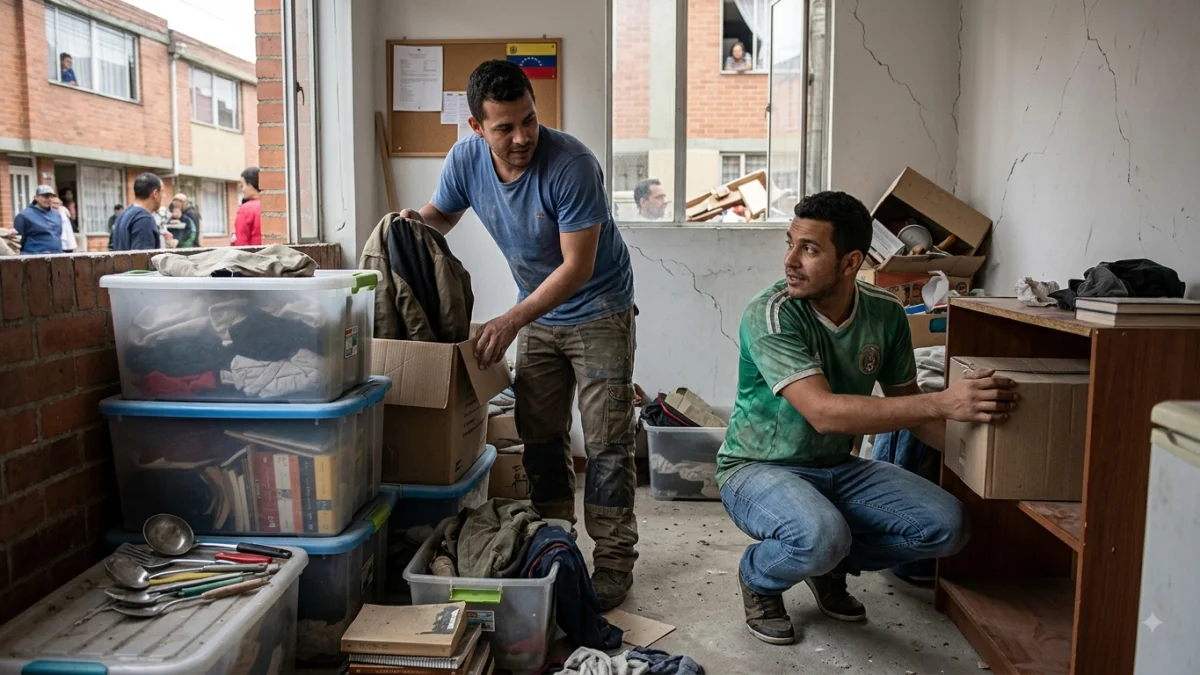


For brothers Deiker and Hernando Rodríguez, Cali was meant to be the place where a difficult journey finally settled into something more ordinary: school, work and the chance to build a future.
The brothers had arrived in the Colombian city with their parents after their family left Venezuela in 2016 as the economic crisis there worsened. Their father, a Colombian who had spent decades working in Venezuela, sold the family’s vehicle to help finance the journey to the border. In Cali, the family began again.


Years later, the brothers had become examples of the possibilities that migration could offer. Deiker earned a place at the Universidad Autónoma de Occidente to study electrical engineering after receiving a strong score on Colombia’s national university entrance examination. Hernando, who had worked after arriving in Cali while hoping to study medicine, eventually enrolled in biomedical engineering through a university scholarship program.
Then, on Monday morning, the ground moved beneath the city.
A magnitude 7.4 earthquake struck western Colombia, with an epicenter near San José del Palmar in the department of Chocó. The Colombian Geological Service described it as the strongest earthquake recorded in the country in the 21st century. The tremor damaged buildings and hospitals across the western region, including Cali, Pereira, Armenia, Quibdó and Manizales.
By Monday evening, President Abelardo De La Espriella had declared a national state of emergency and said 111 people had died. Authorities in Valle del Cauca reported 35 deaths and about 700 injuries, while rescue operations continued into the night. Reuters reported that workers and volunteers were still searching rubble for survivors after darkness fell.
For Venezuelans who had made Colombia home, the earthquake carried a particular resonance. Many had already experienced displacement once, leaving a country where economic hardship had made daily life increasingly difficult. Cali had offered some families a chance to establish roots rather than remain in transit.
The Rodríguez brothers' story had embodied that transition.
When the family arrived in Cali, relatives helped them settle. Their father, whose years of work in Venezuela ended with a liquidation payment worth only a fraction of what the family needed, returned to the city where he had been born. The brothers worked, studied and gradually built their own paths. In a 2024 interview with El País, Deiker described the family's arrival as a new beginning and said that they had worked to move forward after reaching Colombia.
Their experience also reflected a broader reality in Cali, one of Colombia's major destinations for Venezuelan migrants. The city became a place where people escaping Venezuela's crisis sought education, employment and stability. The brothers were highlighted by their university and local media as examples of migrant students succeeding academically.
The earthquake exposed how fragile that sense of stability can be.
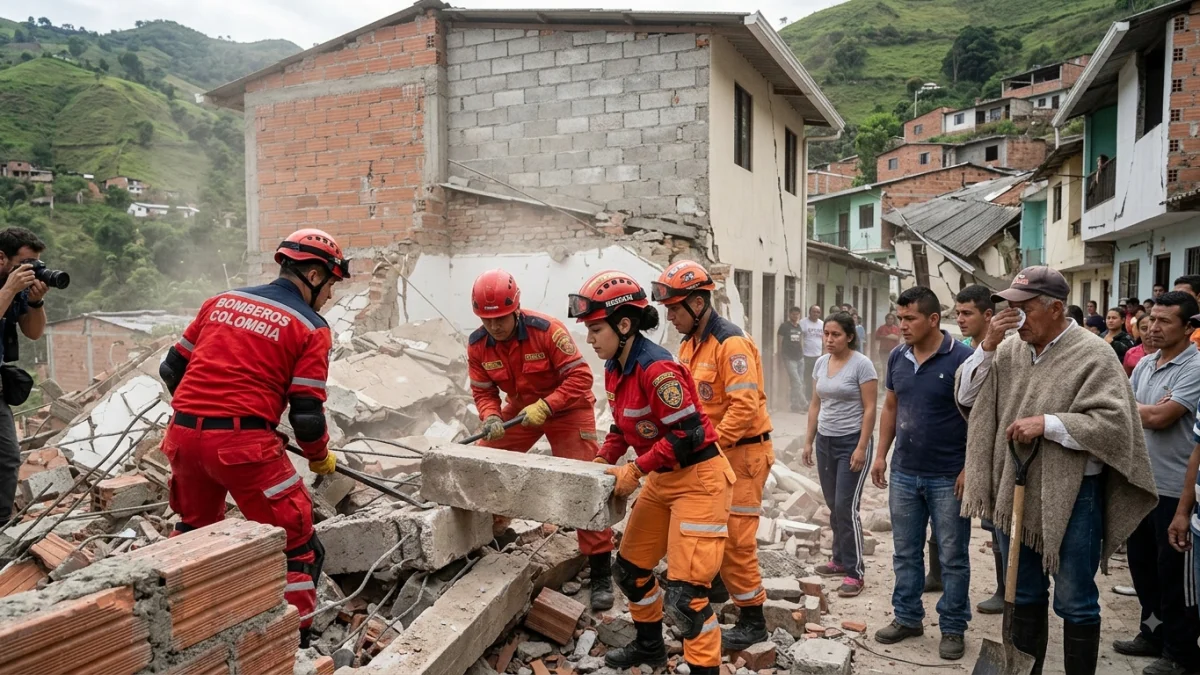
In Cali, Reuters-verified video showed residents and emergency personnel digging through debris at collapsed buildings. Firefighter Mauricio Andrade told Reuters that his team had rescued two adult women and two children and was preparing to reach others. Carmen Yasmin Garcia, a 43-year-old resident and rescue volunteer, said her group had helped seven people escape a fallen building while four people and a dog remained trapped.
At another residential complex, 69-year-old Saul Paz told Reuters he had been with his wife and son when the shaking began.
“I think if it had lasted five seconds more there would be nothing left,” he said. “There are people who went to bed last night with a house and a car and today they won't have anything.”
The earthquake came less than two months after devastating earthquakes struck neighboring Venezuela. Those June quakes displaced thousands of families and left communities there struggling to recover. UNHCR reported in July that nearly 18,000 people had been left without shelter and that joint United Nations-government assessments estimated 1.3 million people were facing socioeconomic needs following the disaster.
That earlier catastrophe had already reached across the border. Venezuelans living in Colombian cities organized aid collections, searched for information about relatives and sent money and supplies to families affected in Venezuela. In Bucaramanga, for example, Venezuelan migrants spent hours trying to contact relatives after the June earthquakes while local authorities established collection points for assistance.
Now Colombia itself was confronting the consequences of a major earthquake.
The physical damage was still being assessed. Colombia's civil aviation authority suspended operations at airports including those serving Pereira, Manizales, Quibdó, Armenia, Cartago and Buenaventura while engineers inspected infrastructure. The Colombian Geological Service had recorded 21 aftershocks by late Monday and warned that more tremors were possible.
Scientists said the depth of the earthquake did not prevent severe shaking. Northwestern University seismologist Suzan van der Lee told Reuters that the quake's magnitude, inland location and strike-slip motion may have increased the damage in populated valleys. Colombia lies in a region of complex tectonic activity along the Pacific Ring of Fire.
For Deiker and Hernando, however, the significance of Cali had never been geological.
It was the city their family chose after leaving Venezuela. It was where their father returned after decades abroad, where they finished school and where university opportunities allowed them to pursue careers. Their story was one of rebuilding a life after migration, not simply surviving it.
As rescue teams searched collapsed buildings on Monday night, that distinction became harder to take for granted.
There is no verified public report as of Tuesday identifying Deiker or Hernando as victims of the earthquake, nor evidence that their home or studies were directly affected. But the disaster struck the city in which their family had spent years transforming displacement into belonging.
The brothers had once told young Venezuelans considering Colombia that it was possible to study, pursue ambitions and move forward there.
This week, Cali was reminded how quickly even a carefully rebuilt life can be tested by forces beyond anyone's control.