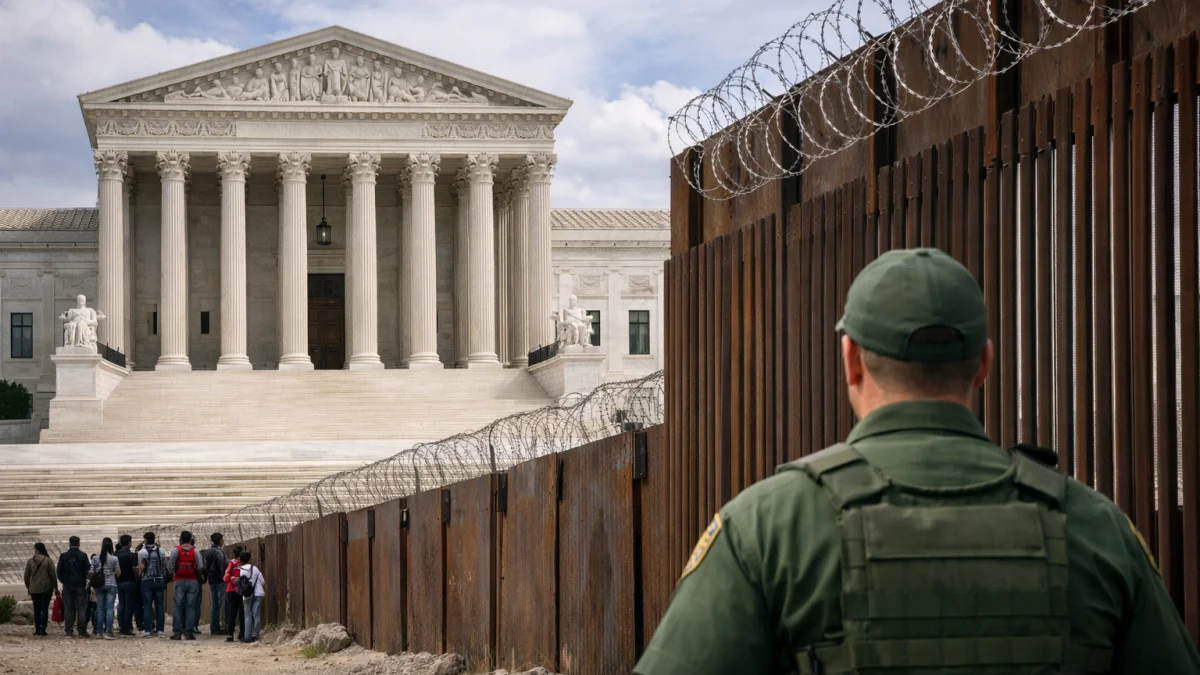


WASHINGTON — The U.S. Supreme Court is poised to play a central role in ongoing disputes over federal border and immigration policies, with several closely watched cases involving asylum procedures, detention practices and citizenship questions either awaiting decisions or scheduled for review, according to court records and government filings.
As the court approaches the end of its current term, immigration-related litigation has remained among the most significant legal challenges facing the federal government. Several cases stem from policies adopted by President Donald Trump’s administration and challenged by immigrant-rights organizations, states and affected individuals.


One of the most closely watched disputes concerns a policy known as “metering,” under which border officials limited the number of migrants permitted to present asylum claims at ports of entry along the U.S.-Mexico border. During arguments in March, several conservative justices appeared receptive to the administration’s request to revive the policy after lower courts ruled against it. The Supreme Court has not yet issued a final decision.
The justices are also considering cases involving birthright citizenship, Temporary Protected Status and access to asylum procedures at the border. Court observers expect rulings on several of those matters before the current term concludes. Details of the court’s eventual decisions remain unclear.
Separately, the Supreme Court agreed this month to hear a case involving the prolonged detention of certain immigrants facing removal proceedings. The case will examine whether individuals subject to mandatory detention are entitled to bond hearings when confinement becomes lengthy. The administration argues federal law permits continued detention pending deportation proceedings, while challengers contend constitutional due-process protections require judicial review.
“The Constitution does not permit prolonged detention without meaningful process,” lawyers representing the challengers argued in court filings cited by legal organizations. Administration attorneys have maintained that existing immigration statutes authorize the detention framework under review.
The disputes come amid broader legal battles over immigration enforcement. Federal courts have recently reviewed policies affecting asylum processing, detention standards and screening procedures, producing differing rulings across jurisdictions. Several of those matters could eventually reach the Supreme Court.
As of Monday, no final rulings had been issued in several of the pending immigration cases before the court. The justices are expected to continue releasing opinions in the coming days, while preparations proceed for arguments in newly accepted cases during the court’s next term beginning in October.