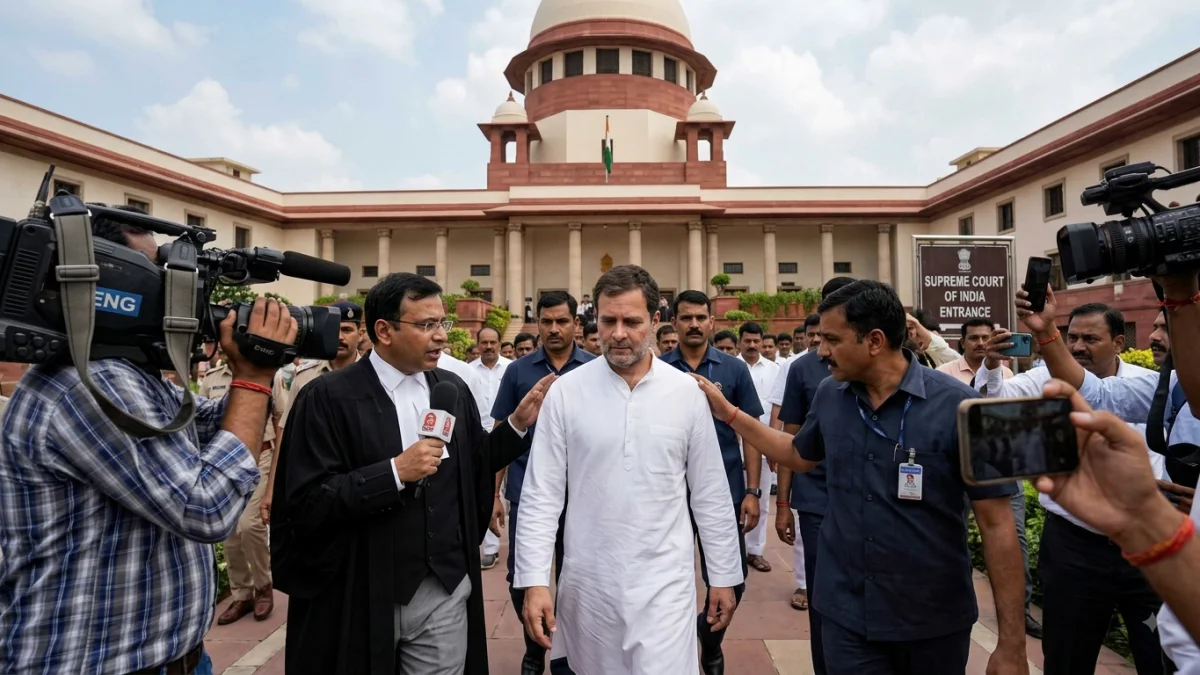


NEW DELHI — India’s Supreme Court on Friday quashed a criminal complaint and summons against opposition leader Rahul Gandhi over remarks about Hindu nationalist ideologue Vinayak Damodar Savarkar, ruling that the prosecution could not proceed without mandatory approval from the Uttar Pradesh government.
A bench comprising Justices Dipankar Datta and Sheel Nagu said the required sanction had not been granted before the lower court took cognisance of the case. The court therefore set aside the complaint and the magistrate’s orders against Gandhi.


The case arose from allegations over comments Gandhi made about Savarkar during his Bharat Jodo Yatra in Maharashtra in November 2022. Advocate Nripendra Pandey accused Gandhi of promoting hatred and enmity by describing Savarkar as a servant of the British and alleging that he received a pension from them. The complaint led to proceedings under provisions including Section 153A of the Indian Penal Code, which concerns promotion of enmity between groups, and Section 505, relating to statements capable of causing public mischief.
Under Section 196 of the Criminal Procedure Code, state government sanction is required before a court can take cognisance of an offence under Section 153A. During Friday’s hearing, the state acknowledged that no such sanction had been granted. The Supreme Court said the absence of the mandatory approval was sufficient to end the proceedings.
The ruling followed a legal battle that began after a Lucknow court summoned Gandhi in December 2024. The Allahabad High Court declined to quash the proceedings in April 2025, saying Gandhi had an alternative remedy before a sessions court. Gandhi then challenged the matter in the Supreme Court, which stayed the proceedings while considering his appeal.
The Supreme Court had previously expressed disapproval of Gandhi’s remarks about Savarkar while granting the interim stay, cautioning him against what it described as irresponsible comments concerning freedom fighters. The Uttar Pradesh government had opposed Gandhi’s plea, alleging that his remarks were intended to spread hatred and enmity. Those allegations were not adjudicated on their merits in Friday’s ruling.
Friday’s order ends the proceedings arising from the Lucknow complaint and summons against Gandhi.