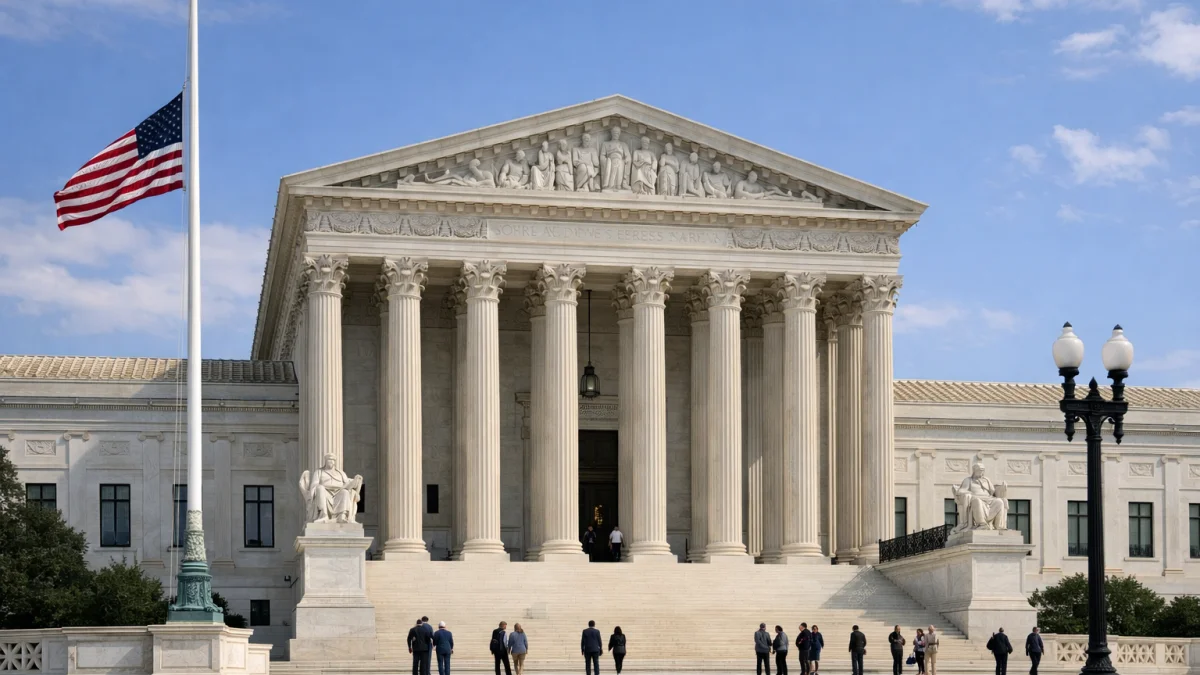


WASHINGTON — The U.S. Supreme Court on Thursday expanded the circumstances in which federal criminal defendants can challenge appeal waivers included in plea agreements, ruling that such waivers are not enforceable when applying them would result in a miscarriage of justice, according to the court’s decision in Hunter v. United States.
The ruling addressed whether defendants who agree to give up their right to appeal as part of a plea deal are limited to a small set of exceptions when seeking review of their sentences. The case involved Munson Hunter, a federal defendant who challenged whether his appeal waiver prevented him from contesting aspects of his sentence, according to court records.


The Supreme Court’s decision rejected the view that only previously recognized exceptions, such as claims of ineffective assistance of counsel or sentences above the statutory maximum, could overcome an appeal waiver, according to legal summaries of the ruling. The court held that additional review may be available in cases where enforcement of the waiver would create a miscarriage of justice.
Justice Elena Kagan wrote the majority opinion, according to reports on the decision. The court said that enforcing appeal waivers without regard to serious errors could raise concerns about the fairness of the judicial process. “If a court always carries out those waivers—no matter the kind or degree of error tainting a sentence—the judicial system’s integrity may come into question,” Kagan wrote, according to a summary of the opinion.
Appeal waivers have become common parts of federal plea agreements, which allow defendants to resolve criminal cases without trial. Supporters of the practice, including prosecutors, have argued that the agreements provide certainty and reduce litigation. Defense lawyers have argued that defendants should retain the ability to challenge serious legal errors despite signing such agreements.
The case reached the Supreme Court after a lower court, the U.S. Court of Appeals for the Fifth Circuit, had limited Hunter’s ability to pursue his challenge based on the appeal waiver in his plea agreement, according to court materials. The Supreme Court sent the case back for further proceedings under its ruling.
The decision did not eliminate appeal waivers or allow all defendants who signed them to automatically pursue appeals. Instead, the court established that courts must consider whether enforcing a waiver would result in an exceptional injustice, according to the ruling summaries.
The Supreme Court’s decision was issued as part of its 2026 term, and lower federal courts will apply the ruling in future cases involving disputes over plea agreement appeal waivers.