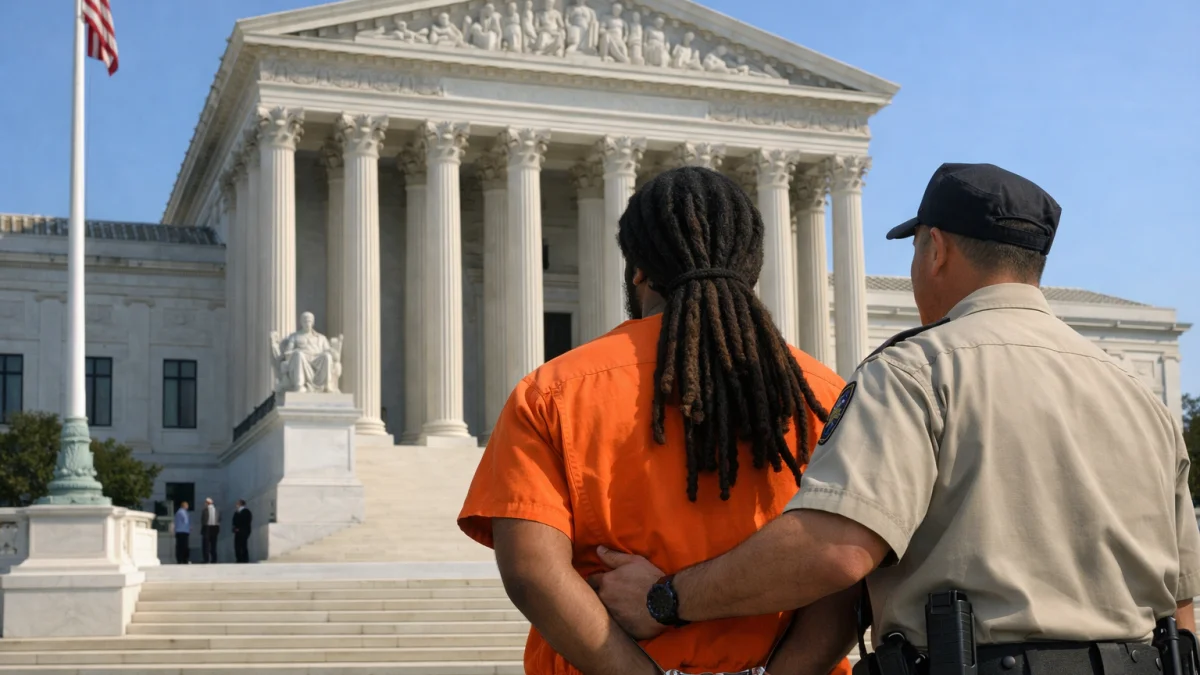


WASHINGTON — The U.S. Supreme Court ruled on Tuesday, June 23, 2026, that a Rastafarian man cannot pursue a lawsuit seeking monetary damages from Louisiana prison officials after he alleged guards violated his religious rights by forcibly cutting his dreadlocks while he was incarcerated. The court ruled 6-3 that the federal Religious Land Use and Institutionalized Persons Act (RLUIPA) does not allow such damages claims against individual state officials, according to the court’s opinion.
The case involved Damon Landor, a former Louisiana inmate who said his Rastafari faith required him to keep his hair uncut. Landor alleged that prison officials at the Raymond Laborde Correctional Center cut his dreadlocks despite his objections and documentation regarding his religious beliefs, according to court records. He sought financial compensation under RLUIPA, a federal law designed to protect religious exercise by people held in state and local institutions.


Justice Neil Gorsuch wrote the majority opinion, joined by five other justices. The majority said that while RLUIPA provides protections for religious rights, the law does not authorize individuals to seek monetary damages from state employees acting in their personal capacities, according to the ruling.
“The question presented is whether RLUIPA permits private parties to seek damages from individual state officials,” Gorsuch wrote, concluding that the statute did not provide that remedy. The court’s decision upheld the dismissal of Landor’s lawsuit against the officials.
Landor’s attorneys argued that the prison officials’ actions violated protections guaranteed under federal religious liberty law. The U.S. government had supported Landor’s position during the case, while Louisiana officials argued that allowing such lawsuits could expose individual employees to financial liability, according to reports on the proceedings.
The three liberal justices dissented. Justice Ketanji Brown Jackson wrote that the ruling limited the ability of prisoners to enforce federal protections when officials violate their religious rights, according to the dissent.
The decision addressed the legal remedy available under RLUIPA rather than whether Rastafarian religious beliefs are protected under the law. The Supreme Court’s ruling did not change the statute’s requirement that prisons avoid imposing substantial burdens on religious exercise, according to the opinion.
As of Wednesday, June 24, 2026, the ruling remained the final decision in Landor’s case. Further legal action would depend on any separate claims or proceedings available under other laws, details of which remained unclear.