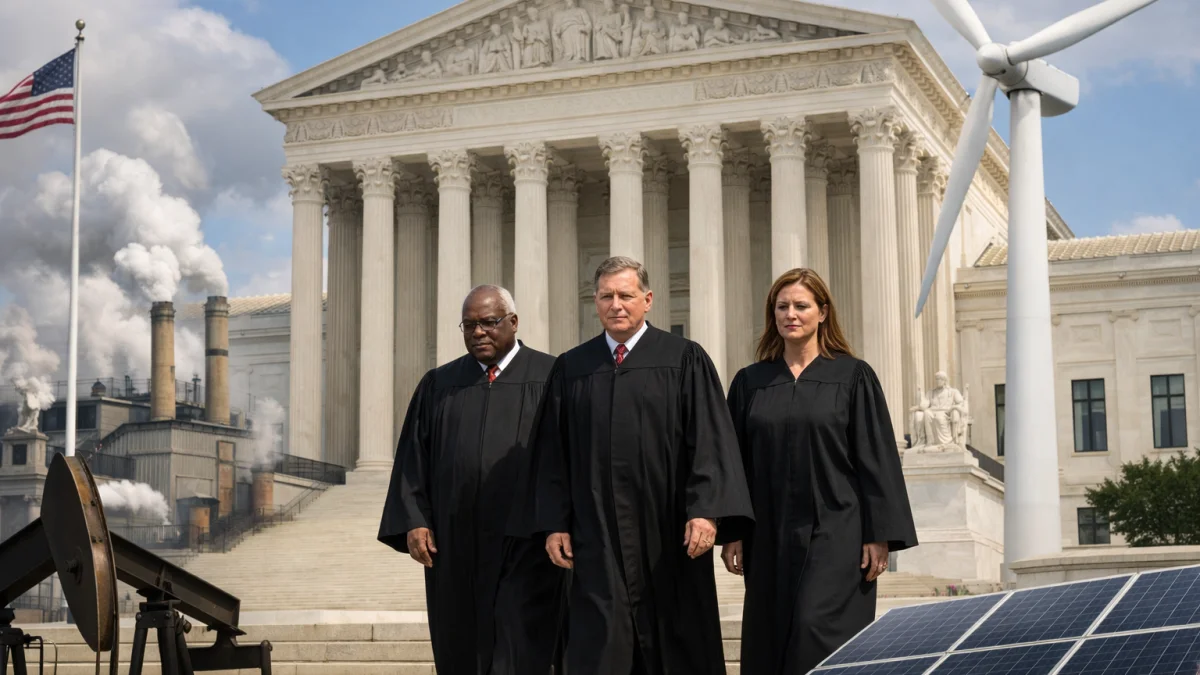


WASHINGTON — A recent U.S. Supreme Court ruling limiting presidential tariff authority has prompted new questions about the legal foundation of climate-related trade measures and other executive actions that rely on broad statutory delegations, according to legal experts, businesses and environmental advocates.
In a 6-3 decision issued on Feb. 20, the Supreme Court ruled that the International Emergency Economic Powers Act (IEEPA) does not authorize a president to impose tariffs without clear congressional approval. The case, Learning Resources v. Trump, centered on tariffs imposed under emergency powers, but several legal observers said the ruling could influence future disputes involving executive authority in other policy areas.


Chief Justice John Roberts, writing for the majority, said the president's asserted authority required “clear congressional authorization” because of its significant economic and political consequences. The court relied in part on the “major questions” doctrine, which has been increasingly used to scrutinize broad claims of executive power.
Environmental groups, trade lawyers and industry organizations have been closely watching the implications for proposed climate-related trade policies, including carbon border adjustment mechanisms and import restrictions tied to emissions standards. While no federal climate tariff program is currently before the Supreme Court, attorneys said the ruling may affect how courts evaluate future executive actions that attempt to regulate trade in pursuit of environmental goals. Details regarding specific future challenges remain unclear.
“The President asserts the extraordinary power to unilaterally impose tariffs of unlimited amount, duration, and scope,” the court wrote in the majority opinion, according to court summaries and legal analyses published after the ruling.
Supporters of stronger climate regulations said the decision does not directly affect environmental laws enacted by Congress or regulations adopted under statutes such as the Clean Air Act. However, they acknowledged that the ruling could encourage additional legal challenges to executive branch initiatives that rely on broadly worded statutory authority. Opponents of expansive federal regulation argued that the decision reinforces constitutional limits on executive power and strengthens Congress's role in setting major economic policy.
The ruling specifically addressed tariff authority under IEEPA and did not eliminate other trade tools available to presidents. Legal analyses noted that statutes including Sections 122, 232 and 301 of federal trade law remain available, subject to procedural and statutory limitations.
Following the decision, the administration moved to replace the invalidated tariffs using alternative legal authorities, while business groups called for greater certainty regarding future trade policy. International trading partners and industry associations said questions remain about how future tariff-based initiatives, including those linked to environmental objectives, would be structured and defended in court.
As of June, no major federal climate-rule challenge directly tied to the Supreme Court's tariff ruling had reached the high court. Legal experts said the broader implications for climate-related trade measures are likely to emerge through future litigation and congressional action.