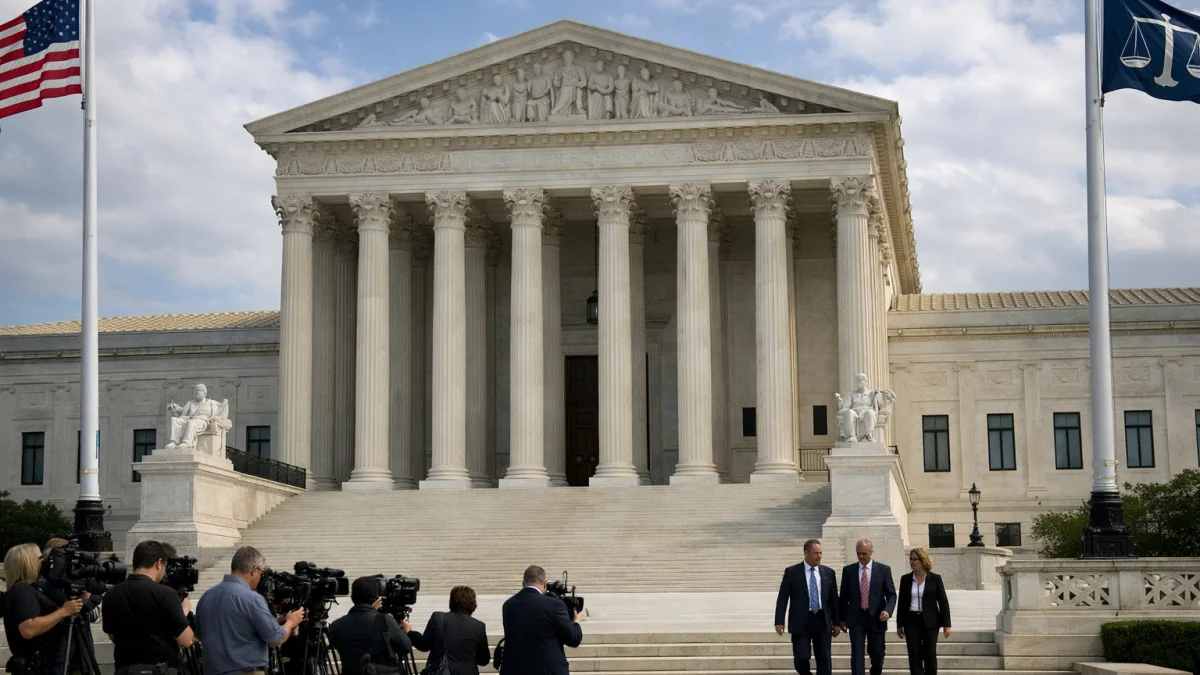


WASHINGTON — The U.S. Supreme Court’s February ruling that the president lacks authority under the International Emergency Economic Powers Act to impose tariffs has left new tariff proposals in legal uncertainty, according to trade lawyers and administration officials.
In a 6-3 decision on Feb. 20, 2026, the court held that the 1977 law does not authorize President Donald Trump to impose the broad “reciprocal” tariffs or related measures enacted in 2025. The ruling affirmed lower court decisions invalidating tariffs imposed on imports from nearly all trading partners.


Chief Justice John Roberts wrote the majority opinion, joined by Justices Sonia Sotomayor, Elena Kagan, Neil Gorsuch, Amy Coney Barrett and Ketanji Brown Jackson. The court concluded that the power to impose tariffs rests with Congress under Article I of the Constitution, and IEEPA’s language allowing the president to “regulate” imports during emergencies does not extend to levying duties.
“The question presented is whether the International Emergency Economic Powers Act (IEEPA) authorizes the President to impose tariffs,” the opinion states. “It does not.”
The invalidated measures included a set of tariffs on imports from Canada, Mexico and China tied to declared emergencies over illicit drugs, as well as the wider “reciprocal” tariffs of at least 10% on goods from most countries, with higher rates for some, based on trade deficits.
Following the decision, the administration promptly revoked the IEEPA-based tariffs and moved to impose new duties under other statutes, including Section 122 of the Trade Act of 1974, which allows temporary across-the-board tariffs in response to balance-of-payments issues.
Trade attorneys said the ruling has created a period of legal limbo for certain new proposals as businesses, importers and foreign governments assess the scope of remaining presidential authorities. Details on potential challenges to the replacement measures remain unclear.
The decision has drawn mixed reactions. Supporters of the ruling, including some congressional Democrats and business groups affected by the original tariffs, welcomed the limits on executive power. Critics, including administration officials, argued it hampers the ability to address trade imbalances swiftly.
“Article I grants Congress, not the President, the power to impose tariffs,” the majority opinion noted.
As of mid-June 2026, the administration continues to pursue trade policy objectives through alternative legal pathways, such as national security provisions under Section 232 and unfair trade practice investigations under Section 301. No comprehensive new reciprocal tariff framework has been fully implemented under the post-ruling landscape.
The U.S. Court of International Trade is handling issues related to potential refunds for duties paid under the invalidated IEEPA tariffs. The broader impact on ongoing trade negotiations continues to evolve.