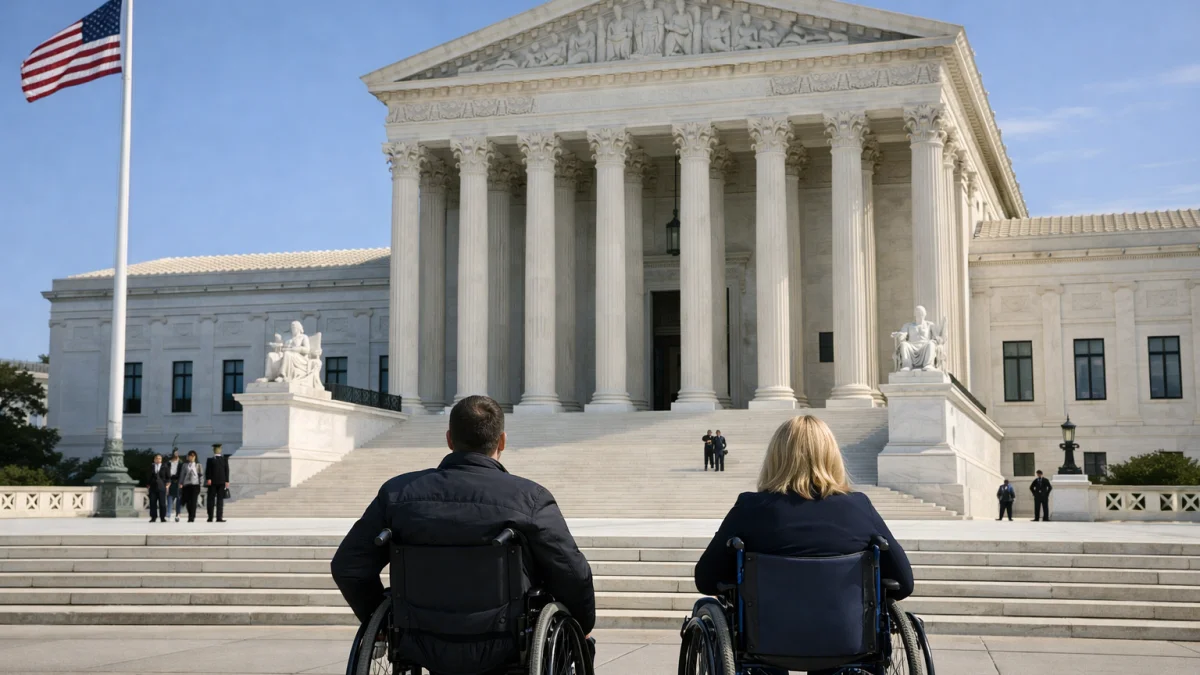


WASHINGTON — The U.S. Supreme Court has left in place a lower-court ruling that limits enforcement of a key Voting Rights Act provision protecting voters with disabilities and those unable to read or write, declining to hear an appeal in a case arising from Arkansas.
The court announced on Monday that it would not review a 2025 decision by the 8th U.S. Circuit Court of Appeals. That ruling found that private individuals and advocacy groups cannot sue to enforce Section 208 of the Voting Rights Act in the seven states covered by the circuit: Arkansas, Iowa, Minnesota, Missouri, Nebraska, North Dakota and South Dakota.


Section 208 generally allows voters who need assistance because of a disability or an inability to read or write to receive help from a person of their choice, with limited exceptions. The provision has long been used by advocacy organizations and private plaintiffs to challenge state election laws they argue interfere with those rights.
The case stemmed from a lawsuit filed by Arkansas United, an immigrant advocacy group that provides language assistance to voters. The group challenged an Arkansas law that restricts the number of voters a person may assist at the polls. A federal district court ruled in favor of the group in 2022, finding the state law conflicted with Section 208. However, the 8th Circuit later overturned that decision, concluding that private parties lack the authority to bring such claims under the statute.
By declining to take up the appeal, the Supreme Court allowed the appellate ruling to remain in effect. The justices did not provide an explanation for their decision, which is customary when denying review.
Voting-rights advocates criticized the outcome, arguing it could make enforcement of the law more difficult because private lawsuits have historically played a central role in protecting voting rights. According to NPR, the ruling “ends a long-used tool” for enforcing protections under Section 208 in the affected states.
Supporters of the lower-court ruling have argued that Congress did not explicitly authorize private lawsuits under that section of the Voting Rights Act and that enforcement authority rests with the U.S. attorney general. The 8th Circuit adopted that interpretation in its decision.
The Supreme Court’s action comes amid broader litigation over the scope of the Voting Rights Act. Earlier this year, the court issued a separate ruling narrowing the application of Section 2 of the landmark law, prompting renewed debate over federal voting-rights protections.
For now, the 8th Circuit’s ruling remains binding within the seven states under its jurisdiction. No further action by the Supreme Court has been announced, and details about any future legislative response remain unclear.