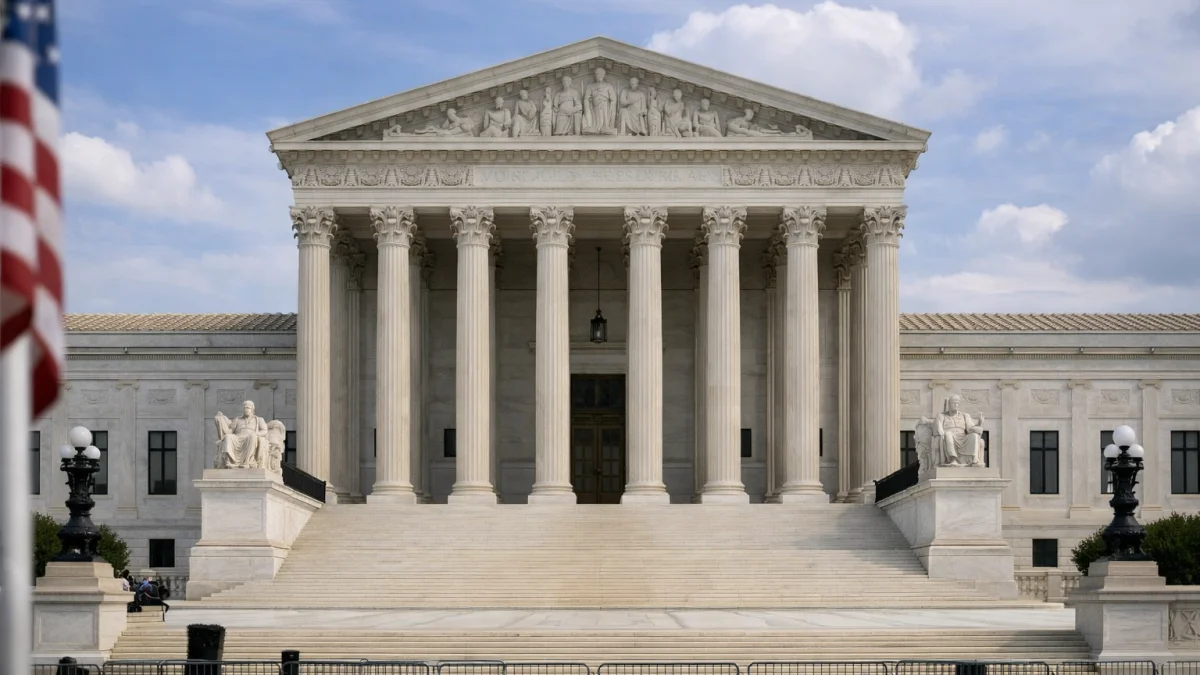


WASHINGTON — The U.S. Supreme Court is continuing to confront legal questions stemming from its February ruling that invalidated President Donald Trump’s broad emergency tariffs, with disputes over refunds, alternative tariff authorities and the scope of presidential trade powers still moving through lower courts.
In a 6-3 decision issued on Feb. 20, the court ruled that the 1977 International Emergency Economic Powers Act (IEEPA) did not authorize Trump to impose sweeping tariffs through executive orders. Chief Justice John Roberts wrote for the majority, joined by a coalition of conservative and liberal justices, concluding that Congress had not granted the president such authority under the statute.


Although the ruling struck down the tariffs imposed under IEEPA, it left several related issues unresolved. One of the most significant concerns involves whether the federal government must refund billions of dollars in tariff payments collected before the court's decision. Thousands of refund claims have since been filed in the U.S. Court of International Trade, according to court filings and legal analyses.
The administration previously indicated that refunds could be issued in some circumstances if tariffs were ultimately found unlawful. However, customs officials have told courts that processing claims on a large scale presents substantial administrative challenges and requires new systems to manage payments and interest calculations.
Another unresolved question concerns the administration’s ability to impose tariffs under different statutes. Following the Supreme Court ruling, Trump announced new tariffs under Section 122 of the Trade Act of 1974, which permits limited temporary trade measures under specific conditions. Those tariffs were later challenged, and a federal trade court ruled against them in May. The administration has appealed, and an appellate court this week extended a stay that allows the tariffs to remain in effect while litigation continues.
The Supreme Court's decision also renewed debate over the so-called major questions doctrine, a legal principle requiring clear congressional authorization for executive actions with major economic or political consequences. Roberts and several members of the majority relied in part on that doctrine, while other justices reached the same result through different legal reasoning.
In his majority opinion, Roberts emphasized that Congress, not the president, holds the constitutional authority to impose tariffs during peacetime. Justice Brett Kavanaugh, writing in dissent, argued that other federal laws could provide authority for future tariffs even if IEEPA could not.
The administration has continued pursuing other trade investigations under existing statutes, including provisions related to national security and unfair trade practices. Several of those actions could result in new tariff proposals.
As of Friday, no additional Supreme Court action had been announced. Litigation concerning refunds, alternative tariff authorities and related trade measures remained active in lower federal courts, while the administration continued defending its trade policies through ongoing appeals.