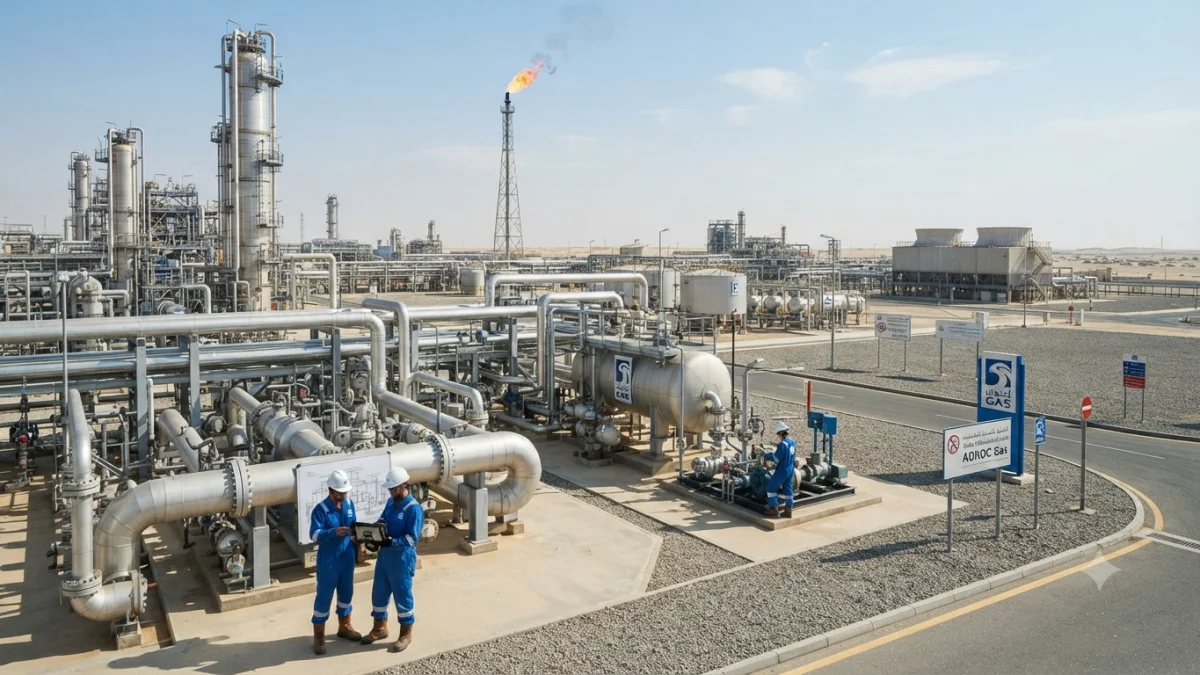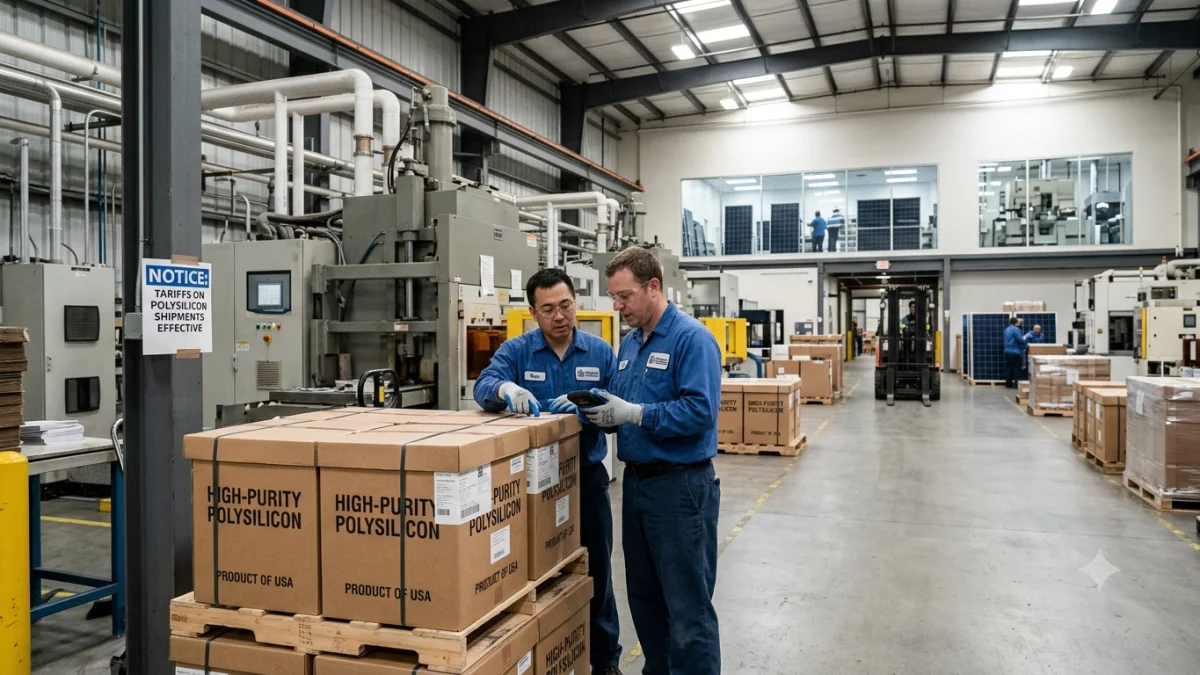


President Donald Trump's decision to impose a 15% tariff on imported polysilicon and establish minimum import prices for polysilicon and related solar products marks the latest expansion of the administration's industrial trade strategy, extending protection beyond finished products to a critical upstream material used in both semiconductors and solar manufacturing. The measures, announced on Aug. 7 and scheduled to take effect on Dec. 4, follow a national security review conducted under Section 232 of the Trade Expansion Act of 1962.
The significance of the move lies less in the tariff rate itself than in its strategic focus. Polysilicon occupies a pivotal position in two industries that Washington increasingly regards as essential to economic competitiveness and national security: advanced semiconductors and renewable energy technologies. By targeting the material rather than only finished goods, the administration is attempting to influence supply chains at an earlier stage of production, where China has established overwhelming global market dominance.


The White House argues that dependence on imported polysilicon creates vulnerabilities for industries critical to artificial intelligence, defense systems, consumer electronics, and electricity generation. According to the administration, rebuilding domestic production capacity is necessary to reduce supply-chain risks that became increasingly visible during recent years of geopolitical tensions and pandemic-related disruptions. Officials said the proclamation combines tariffs with minimum import prices and investment incentives to encourage long-term domestic manufacturing rather than relying solely on border duties.
The policy also illustrates a broader evolution in U.S. trade policy. Previous tariffs often concentrated on finished solar panels or semiconductor products. This measure instead reaches further upstream by protecting domestic production of a raw material that feeds multiple high-technology industries. The approach reflects an industrial policy aimed at strengthening entire manufacturing ecosystems rather than isolated product categories.
Industry reaction has largely reflected companies' positions within the supply chain. U.S. polysilicon producers, including Hemlock Semiconductor and Wacker Chemie's U.S. operations, welcomed the decision, arguing that years of low-priced imports had undermined domestic investment. Several American solar manufacturers also endorsed the policy, saying stronger domestic production could support future expansion of U.S.-based manufacturing capacity and improve supply-chain resilience.
Financial markets interpreted the announcement as favorable for certain domestic manufacturers. Shares of companies with significant U.S. solar manufacturing operations rose following the announcement, reflecting investor expectations that reduced import competition and price floors could improve profitability for domestic producers. Analysts noted, however, that any financial benefit would depend on how quickly companies expand production before the measures take effect later this year.
The administration's decision nevertheless highlights an enduring policy trade-off. Measures designed to encourage domestic production may also increase costs for manufacturers that rely on imported materials during the transition period. Polysilicon is used extensively throughout semiconductor fabrication and crystalline silicon solar-panel production, meaning higher import costs could affect downstream manufacturers until domestic supply expands. The delayed implementation date may provide companies additional time to adjust procurement strategies, although some industry observers have warned it could encourage a temporary increase in imports before the tariffs become effective.
Internationally, the action adds another layer to ongoing U.S.-China economic competition. China remains the dominant global producer of polysilicon and related solar manufacturing inputs. Chinese officials criticized the new measures as protectionist and said Beijing would safeguard the interests of its companies, underscoring continuing tensions over industrial policy and strategic technologies. The announcement comes amid broader efforts by both countries to strengthen domestic capabilities in sectors linked to artificial intelligence, clean energy, and advanced manufacturing.
The use of Section 232 also reinforces the administration's reliance on national security authorities to justify trade actions involving strategic industries. Earlier in 2026, the administration invoked the same legal authority to impose tariffs on certain semiconductor-related imports, arguing that dependence on foreign suppliers threatened U.S. industrial and defense capabilities. The polysilicon action therefore fits within a wider policy framework that increasingly links trade measures to economic security objectives.
Historically, U.S. administrations have imposed tariffs on solar products through several legal mechanisms, including safeguard measures introduced during President Trump's first term and subsequent anti-dumping and countervailing duty investigations. The latest announcement differs by combining tariffs with minimum import prices and investment incentives, indicating a more comprehensive attempt to reshape market incentives across multiple stages of production rather than relying exclusively on import duties.
For businesses, the announcement provides greater clarity about the administration's industrial priorities but leaves important implementation questions unresolved. Companies will be monitoring how Commerce administers the incentive program, how minimum pricing mechanisms are enforced, whether additional exemptions are introduced, and how trading partners respond. While the tariff has been officially announced, its broader economic impact will depend on the pace of domestic investment, changes in global supply chains, and any subsequent policy or legal developments before the measures take effect in December.