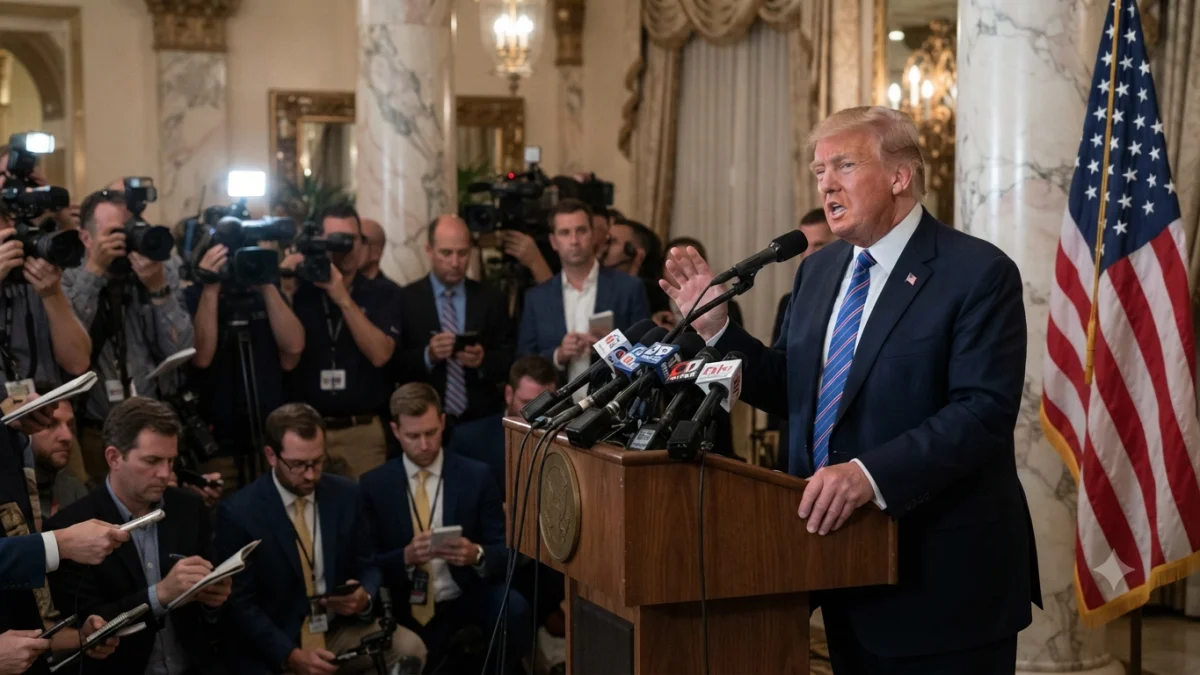


WASHINGTON — President Donald Trump said on Friday he would take his administration’s fight over a planned White House ballroom to the U.S. Supreme Court after a federal appeals court ordered a halt to above-ground construction, ruling that the project requires congressional authorization.
The U.S. Court of Appeals for the District of Columbia Circuit ruled 2-1 that Trump could not proceed with the project without approval from Congress. The court stayed its decision for 14 days to give the administration time to seek Supreme Court review.


Trump said he would appeal, arguing that the ruling improperly interfered with a project he has defended as necessary for White House security and said was being financed largely through private donations.
The proposed ballroom, estimated to cost about $400 million, is planned for the site of the White House East Wing, which was demolished to make way for the project. The administration has said the facility would provide space for large official events and incorporate security-related infrastructure.
The appeals court’s majority, Judges Patricia Millett and Bradley Garcia, said major structural changes to the White House could not be undertaken unilaterally by the president. They emphasized that the dispute concerned presidential authority and congressional control over federal property, rather than whether the ballroom was desirable as a policy matter.
Judge Neomi Rao, a Trump appointee, dissented. She argued that the National Trust for Historic Preservation, which brought the lawsuit, lacked standing and that the administration had presented security concerns that weighed against stopping construction.
The legal dispute began after the National Trust challenged the administration’s authority to demolish the East Wing and build the ballroom without congressional approval. U.S. District Judge Richard Leon had previously ordered construction halted, finding that the project could not proceed without authorization from Congress. An appeals court subsequently allowed construction to continue temporarily while the case proceeded.
The administration has argued that existing federal law gives the president sufficient authority to make improvements to the White House and that halting construction could create security risks. Opponents contend that the scale of the project exceeds the president’s authority and requires congressional approval.
Friday’s ruling leaves the administration able to seek emergency relief from the Supreme Court while the 14-day stay is in effect. Above-ground ballroom construction is paused pending further legal action, while the litigation continues.