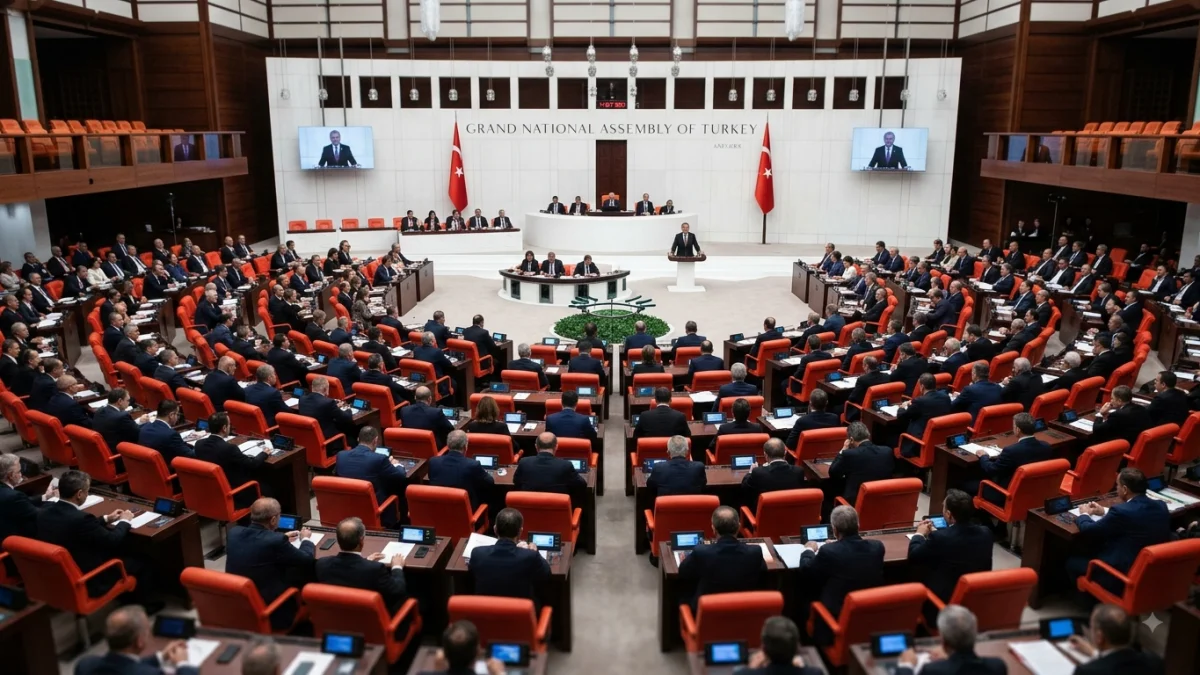


ANKARA — Turkey’s parliament has approved a framework law aimed at supporting the disarmament and dissolution of the Kurdistan Workers Party (PKK), marking a major legislative step in Ankara’s effort to end a decades-long conflict, according to parliament records and Turkish officials.
The Law on Strengthening National Solidarity and Social Integration was approved on Aug. 10 by 468 votes to 88, with six abstentions, according to the Turkish parliament. The measure sets out judicial and administrative procedures for the next stage of the government’s “terror-free Türkiye” initiative.


The legislation provides for investigations, trials and the execution of some sentences involving eligible PKK members to be postponed for five or 10 years, depending on the offense. If specified conditions are met during those periods, cases can be dropped. Applicants would have six months to seek benefits under the law after a formal confirmation that the PKK has disbanded and surrendered its weapons.
The provisions exclude people convicted of intentional killings committed as part of the organization’s activities, as well as certain individuals serving life or aggravated life sentences for offenses committed before June 1, 2005. The legislation therefore does not provide a blanket amnesty, officials said.
Implementation is conditional on security authorities establishing that the PKK and affiliated formations no longer maintain an operational presence and have surrendered their weapons and ammunition. The National Security Council must endorse that assessment in a decision published in the Official Gazette before the measures take effect, according to the law.
The law also establishes an eight-member board chaired by the vice president and a parliamentary commission to oversee implementation. The PKK has been designated a terrorist organization by Turkey, the United States and the European Union.
The legislation received broad political backing. The pro-Kurdish Peoples’ Equality and Democracy Party (DEM) supported the measure, while the İYİ Party was the only parliamentary group to formally oppose it. İYİ leader Müsavat Dervişoğlu argued that the legislation would provide privileges to PKK members.
The main opposition New Party also backed the measure. Its leader, Özgür Özel, told parliament, “We will not stand in the way of peace.”
The PKK, through the PKK-linked ANF news outlet, described the legislation as a beginning but said it contained serious shortcomings, including what it called insufficient provisions on democratic reforms and Kurdish rights. The group also called for imprisoned PKK leader Abdullah Öcalan to be released, a demand not addressed in the legislation.
Parliament Speaker Numan Kurtulmuş called the passage a historic achievement and said the vote demonstrated that Turkey could address difficult issues through political consensus.