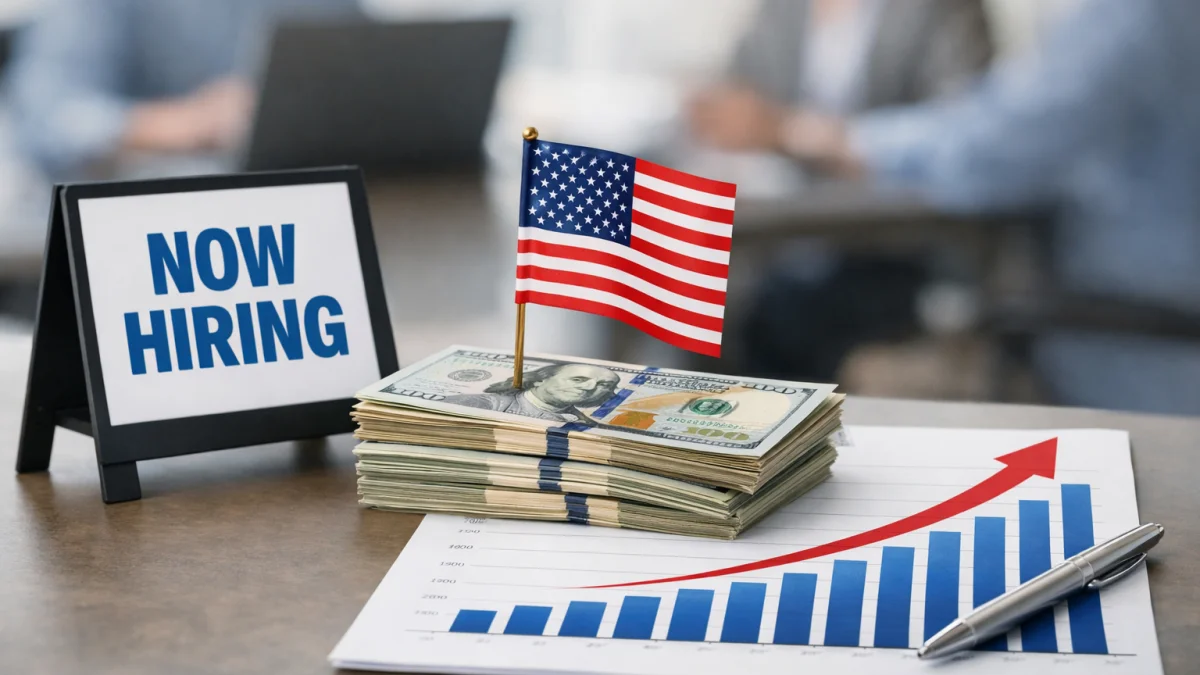


WASHINGTON — U.S. employers added 172,000 jobs in May, exceeding economists' forecasts, while the unemployment rate held steady at 4.3 percent, the Labor Department reported on Friday.
The Bureau of Labor Statistics said total nonfarm payroll employment rose by 172,000 in May, following an upwardly revised gain of 179,000 in April. Economists polled by various outlets had expected an increase of about 85,000 jobs.


Job gains occurred in leisure and hospitality, local government and health care, according to the report. Employment in financial activities declined.
The unemployment rate remained unchanged at 4.3 percent. Revisions to prior months added a combined 93,000 jobs to March and April figures.
Average hourly earnings rose 0.3 percent in May and were up 3.4 percent over the past year, in line with expectations, the BLS said.
The stronger-than-expected report comes amid ongoing economic uncertainties, including elevated prices and global tensions. White House officials described the figures as evidence of labor market resilience.
“ This is a labor market that is stronger than it was last year and is looking pretty darn solid, despite high energy prices and higher inflation generally,” Gus Faucher, chief economist at PNC, said in a statement.
Private payrolls added 120,000 jobs, above forecasts. Sectors showing gains included leisure and hospitality, while some areas like financial activities saw losses.
The data follows three consecutive months of positive job growth. Economists noted that the labor market has shown signs of stabilization after a period of slower hiring earlier in the year.
Federal Reserve officials monitor such reports closely for signals on monetary policy. Markets reacted to the data, with some shifts in expectations for interest rate decisions.
As of Friday, the Labor Department said data collection and seasonal adjustments were conducted according to standard procedures. Further details on industry breakdowns and regional trends will be available in subsequent releases.
The May figures provide the latest snapshot of the U.S. labor market as policymakers assess the balance between growth and inflation pressures. Officials from both the administration and opposition parties commented on the implications for broader economic policy.