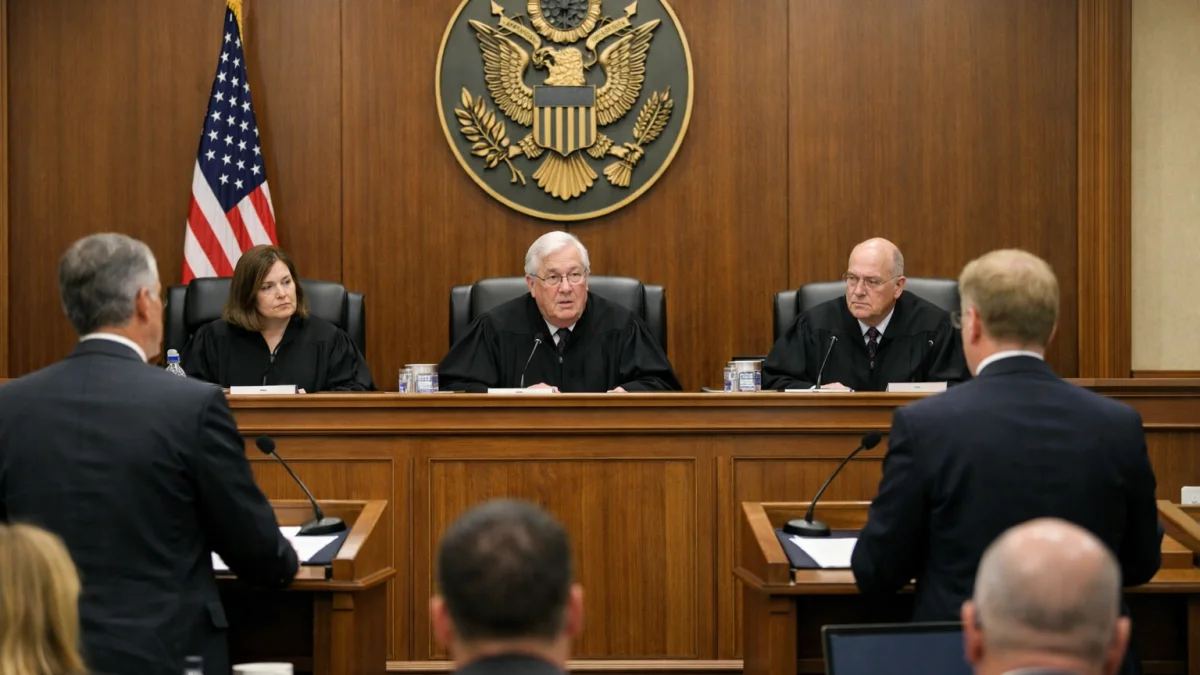


WASHINGTON — A U.S. appeals court on Friday heard arguments in a legal challenge to President Donald Trump's $400 million White House ballroom project, with the administration defending its authority to proceed without additional congressional approval.
The case, brought by historic preservation groups, centers on the demolition of the East Wing and construction of a large ballroom and related facilities. A lower court judge had ordered a halt to the work, ruling that it required explicit approval from Congress, but the U.S. Court of Appeals for the D.C. Circuit allowed construction to continue during the appeal.


Justice Department lawyer Yaakov Roth told a three-judge panel that the project had advanced too far to stop and involved national security considerations that courts should not second-guess. He argued that only Congress could intervene, citing longstanding laws governing White House operations.
The panel, consisting of Judges Patricia Millett and Bradley Garcia, both Democratic appointees, and Trump-appointed Judge Neomi Rao, pressed the government on the limits of presidential power and standing of the challengers. Questions arose about whether courts could review such actions, with one judge referencing hypothetical scenarios involving other national landmarks.
The National Trust for Historic Preservation and other plaintiffs contend the project bypassed required reviews and congressional authorization for major alterations to the White House complex. Construction began after the East Wing was razed, with the new facility intended to include event space and enhanced security features.
Administration officials have described the ballroom as a necessary modernization to address contemporary threats, including to underground protective structures. Preservationists argue it permanently alters a historic site without proper process.
The hearing lasted about two hours and concluded without an immediate ruling. The court is expected to issue a decision in coming weeks.
A lower court injunction was stayed in April, permitting work to proceed amid the litigation. Details on the exact scope of remaining construction and any modifications remain subject to ongoing proceedings.
The dispute highlights tensions over executive authority in managing federal properties. Both sides presented detailed arguments on statutory interpretation and constitutional separation of powers. Further briefs may be submitted before a final appellate decision.