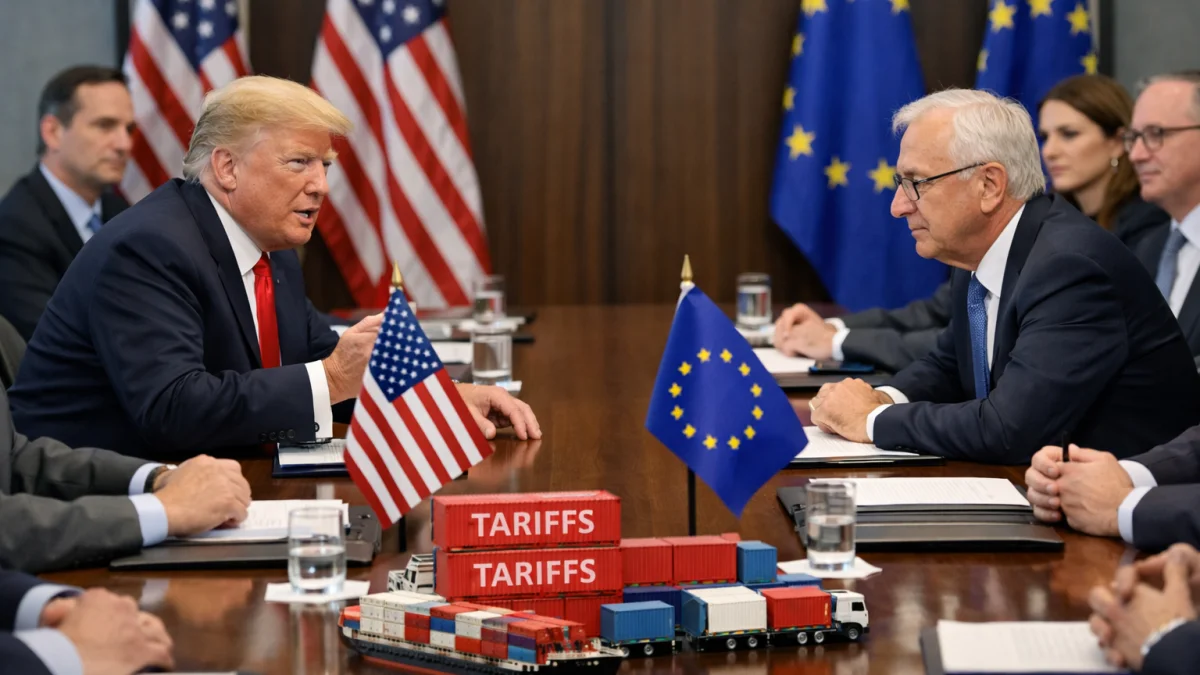


WASHINGTON — Trade tensions between the United States and the European Union remained unresolved this week after President Donald Trump reinstated tariff levels that had applied before recent negotiations, while both sides continued to dispute the implementation of a broader trade agreement reached last year.
The latest friction comes despite efforts by Washington and Brussels to preserve a trade framework negotiated in 2025 that was intended to cap U.S. tariffs on most European goods and reduce EU duties on a range of American products. European officials have argued that the agreement should remain in force, while U.S. officials have maintained that tariff measures adopted under separate legal authorities are consistent with the deal. Reuters reported earlier this month that U.S. Trade Representative Jamieson Greer said Washington would continue to honor agreed tariff caps with the European Union and other trading partners. “We understand that a deal is a deal,” Greer told reporters in Paris.


The dispute has persisted amid a series of tariff announcements by the Trump administration. Earlier this month, U.S. officials proposed new duties affecting dozens of trading partners, including the European Union, following investigations related to forced-labor enforcement standards. U.S. officials said the measures were authorized under Section 301 of the Trade Act of 1974 and were subject to a public comment process before taking effect.
European officials have repeatedly warned that additional U.S. tariffs risk undermining the transatlantic trade arrangement. European Commission President Ursula von der Leyen previously stated that “a deal is a deal” and said the bloc expected both parties to respect the commitments reached during negotiations. EU lawmakers have also sought safeguards allowing Brussels to respond if Washington departs from agreed terms.
On Tuesday, the European Parliament approved legislation needed to fulfill the EU’s obligations under the trade agreement, including the reduction or elimination of tariffs on many U.S. imports. The vote was widely viewed as an effort to avoid a renewed tariff confrontation before a July deadline set by Trump. European officials said the measure demonstrated the bloc’s commitment to implementing the accord.
Business groups on both sides of the Atlantic have called for greater certainty in trade policy, citing concerns about shifting tariff regimes and supply-chain planning. Industry representatives have generally welcomed steps that reduce the risk of additional trade barriers while urging governments to maintain predictable market access.
As of Tuesday, no new settlement had been announced. U.S. and EU officials said discussions on implementation and tariff-related issues were continuing, while both sides maintained their existing positions on the disputed measures.