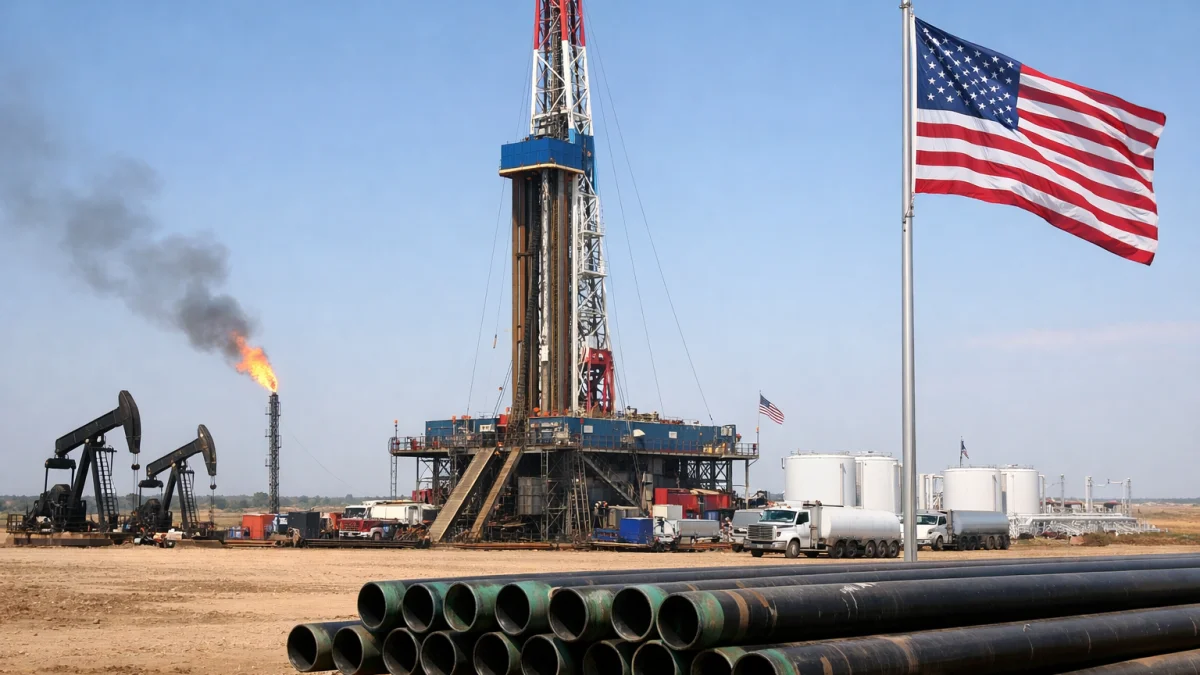


WASHINGTON — Expanding U.S. oil production is helping cushion the domestic economy from some of the energy market disruptions linked to the conflict involving Iran, according to U.S. government forecasts and energy market analysts, even as fuel supplies remain under pressure and prices stay elevated.
The U.S. Energy Information Administration (EIA) said in its June outlook that domestic crude oil production is expected to average about 13.7 million barrels per day in 2026, with output projected to rise further next year. The agency said increased U.S. production and exports have become an important source of supply as disruptions in the Middle East continue to affect global markets.


The assessment comes as oil markets remain focused on the Strait of Hormuz, a key shipping route. The EIA said disruptions to oil production and shipments through the waterway have reduced Middle Eastern output by more than 11 million barrels per day and contributed to significant declines in global inventories.
In its June Short-Term Energy Outlook, the EIA said increased demand for U.S. crude and refined products pushed American net petroleum exports to record levels earlier this year. The agency projected U.S. crude oil production would remain near record highs despite ongoing market volatility.
“Disruptions to crude oil and refined product flows through the Strait of Hormuz have led to increased demand for U.S. supply,” the EIA said in the report.
At the same time, government data show U.S. crude inventories have been falling as refiners increase activity and exports remain strong. The EIA reported this week that U.S. crude stocks declined by more than 7 million barrels in the latest reporting period, while refinery utilization rose above 95%.
Analysts have said the United States’ position as a major producer and exporter has provided flexibility that was unavailable during earlier global oil supply shocks. However, industry groups and market observers have also warned that inventories and emergency reserves have been drawn down as the market responds to supply disruptions.
The EIA said global oil demand is expected to decline this year as higher fuel costs and reduced availability curb consumption in several regions. The agency forecast Brent crude oil prices to remain elevated in the near term before easing as production and trade flows gradually recover.
As of Thursday, oil markets continued to monitor developments related to the Middle East conflict and shipping conditions in the Strait of Hormuz, while U.S. production and exports remained a significant source of global supply, according to the EIA.