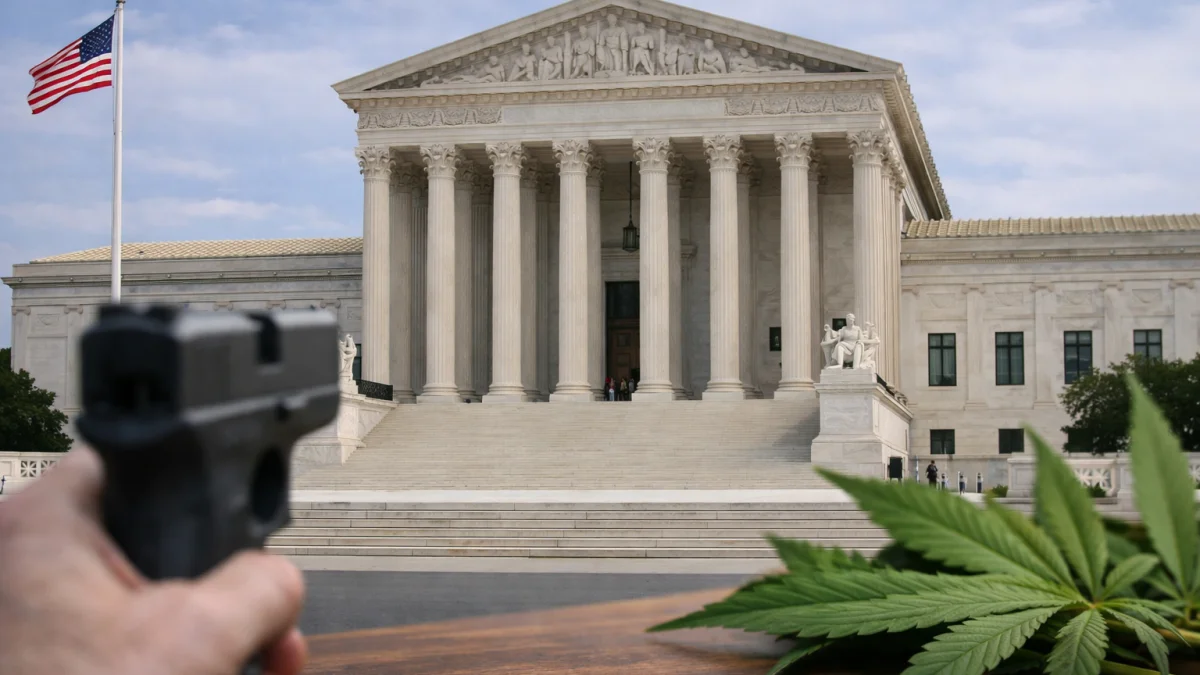


WASHINGTON — The U.S. Supreme Court limited the application of a longstanding federal ban on gun ownership by marijuana users, ruling unanimously on Thursday that the law cannot be used to prosecute an occasional user under the Second Amendment, court records show.
In a 9-0 decision in United States v. Hemani, the justices upheld a lower court ruling dismissing charges against Ali Danial Hemani, a Texas resident who admitted to regular marijuana use. The court found that applying the prohibition under 18 U.S.C. §922(g)(3) to his case violated his constitutional right to keep and bear arms.


The federal law, dating to 1968 and amended later, prohibits firearm possession by anyone who is an “unlawful user of or addicted to” any controlled substance, including marijuana. Justice Neil Gorsuch wrote the opinion, stating that historical analogues did not support disarming individuals for regular but non-incapacitating use of marijuana.
Hemani was charged after FBI agents found a handgun, marijuana and cocaine in his home in 2022. He told authorities he used marijuana approximately every other day. The ruling does not strike down the statute entirely but narrows its application, requiring the government to show a greater connection to dangerousness for such prosecutions.
The decision comes amid expanding state-level marijuana legalization, with more than 40 states allowing some form of cannabis use. It has drawn attention because similar provisions were used in other high-profile cases, including the prosecution of Hunter Biden.
Gun rights advocates welcomed the outcome as protecting Second Amendment rights. The Trump administration, which defended the law, had argued it was necessary for public safety. Details on potential broader impacts for millions of marijuana users who own firearms remain under assessment.
"This ruling recognizes that categorical bans without evidence of danger go too far," a representative for gun rights groups was quoted in reports following the decision.
Legal experts noted the decision aligns with the court's framework from the 2022 Bruen case, which requires historical analogues for gun restrictions. The ruling leaves intact prohibitions for those addicted or whose use poses clear risks.
As of Thursday, the Department of Justice had not issued immediate guidance on implementation or revised enforcement policies. The case returns to lower courts for further proceedings consistent with the Supreme Court's opinion.