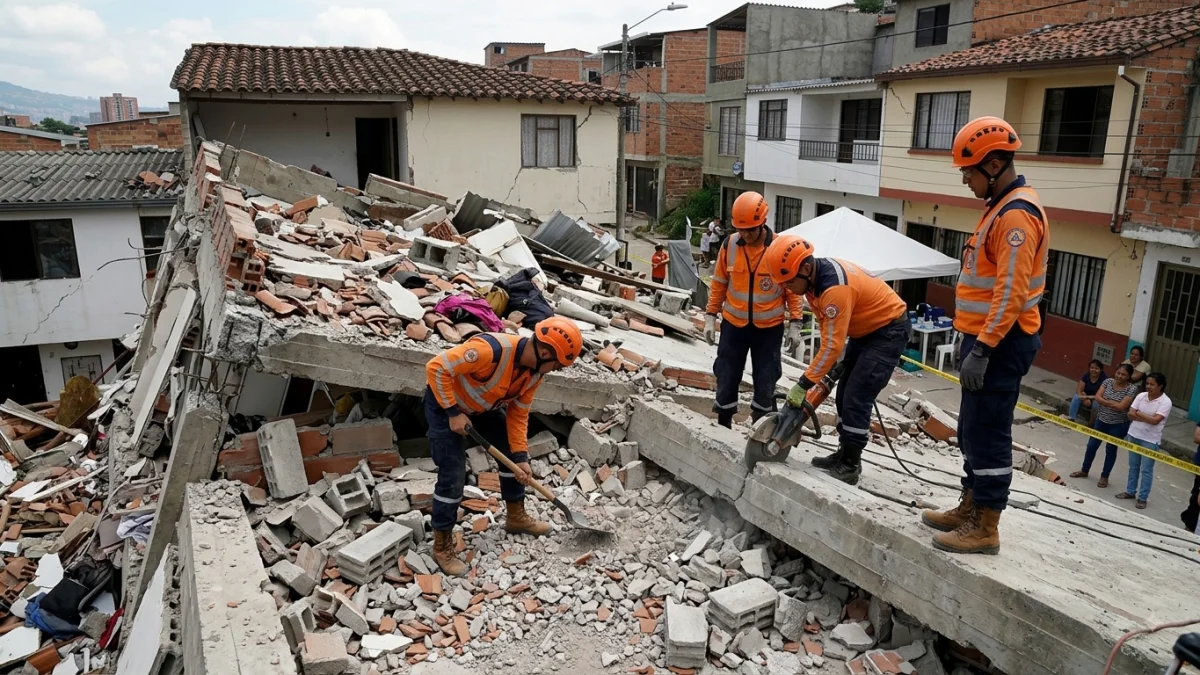


A pair of powerful earthquakes struck northern Venezuela on June 24, 2026, testing the capacity of U.S. humanitarian assistance in a country still subject to a broad sanctions regime. The quakes, registered by the U.S. Geological Survey as a magnitude 7.2 foreshock followed seconds later by a 7.5 mainshock, caused widespread destruction across north-central regions, including areas near Caracas.
The disaster has killed more than 900 people, injured thousands, and left tens of thousands displaced or missing, with casualty figures continuing to rise as rescue operations proceed in damaged infrastructure. It represents Venezuela’s strongest seismic event in more than a century and has strained an already vulnerable state apparatus.


The significance lies in the intersection of immediate humanitarian needs with longstanding U.S. sanctions on Venezuela. Washington has maintained economic restrictions targeting the Venezuelan government and key sectors since the mid-2010s, aimed at pressuring the Maduro regime over governance, human rights, and alleged links to illicit activities. Following political shifts earlier in 2026—including the reported ouster of Nicolás Maduro—the U.S. has engaged with an interim Venezuelan government.
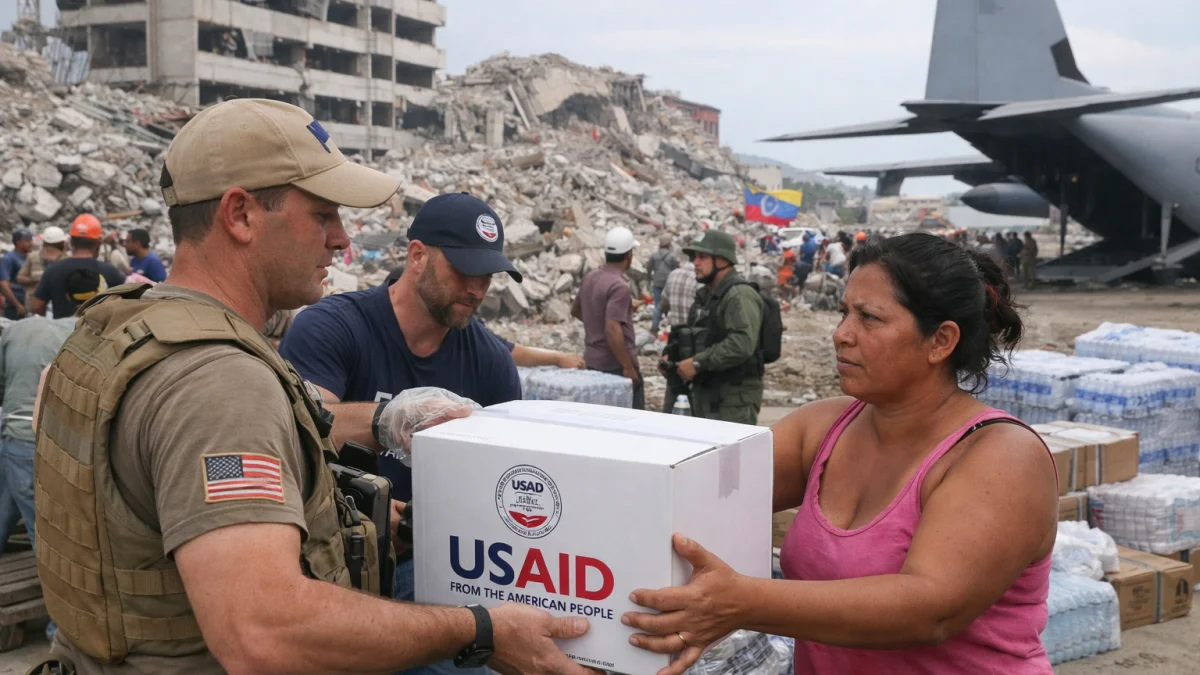
In response to the earthquakes, the U.S. Treasury Department issued General License No. 60 on June 25, temporarily authorizing transactions otherwise prohibited under sanctions to facilitate relief efforts through October 2026. The State Department has mobilized search-and-rescue teams, a Disaster Assistance Response Team, medical supplies, and pledged around $150 million in assistance channeled through U.S. partners, faith-based organizations such as Samaritan’s Purse and Catholic Relief Services, and U.N. agencies.
Secretary of State Marco Rubio described the effort as a “whole-of-government response” that would be “big, fast, and effective.” U.S. military assets, including ships, transport planes, and helicopters, are supporting logistics.
This marks a notable deployment in the Western Hemisphere under the current administration, coming after reported reductions to USAID structures. It tests Washington’s ability to deliver large-scale aid rapidly while navigating sanctions architecture designed for political leverage rather than disaster scenarios.
Venezuela’s pre-existing challenges have compounded the impact. Years of economic contraction, infrastructure decay, and strained public services—exacerbated by sanctions, mismanagement, and prior crises—left the country with limited resilience. Hospitals, schools, and transport networks suffered additional damage, hindering local response. International assessments indicate that up to 6.76 million people could be affected.
Humanitarian organizations have noted that sanctions can complicate banking, logistics, and procurement for aid flows, even with general licenses. Critics argue the longstanding measures weakened state capacity ahead of the disaster, while U.S. officials emphasize targeted relief and coordination with interim authorities.
Global participation includes teams from multiple countries, including Cuba and Iran alongside U.S. efforts, reflecting the scale of needs. Aftershocks, including a magnitude 4.9 tremor on June 26, continue to pose risks.
The episode underscores broader questions about sanctions policy in natural disasters. General licenses for humanitarian purposes are a standard tool, but implementation speed, private-sector compliance, and coordination with local actors determine effectiveness. Historical precedents, such as responses to earthquakes in other sanctioned environments, show that waivers can accelerate aid but do not fully resolve underlying logistical frictions.
As of June 29, U.S. and international teams are engaged in search-and-rescue and initial relief distribution. Venezuelan authorities, supported by external partners, continue damage assessments. Uncertainties remain around the final death toll, long-term reconstruction costs, and the durability of sanctions relief beyond the immediate emergency window. Officials are monitoring aftershock activity, public health risks in overcrowded shelters, and the delivery of pledged assistance to affected populations.