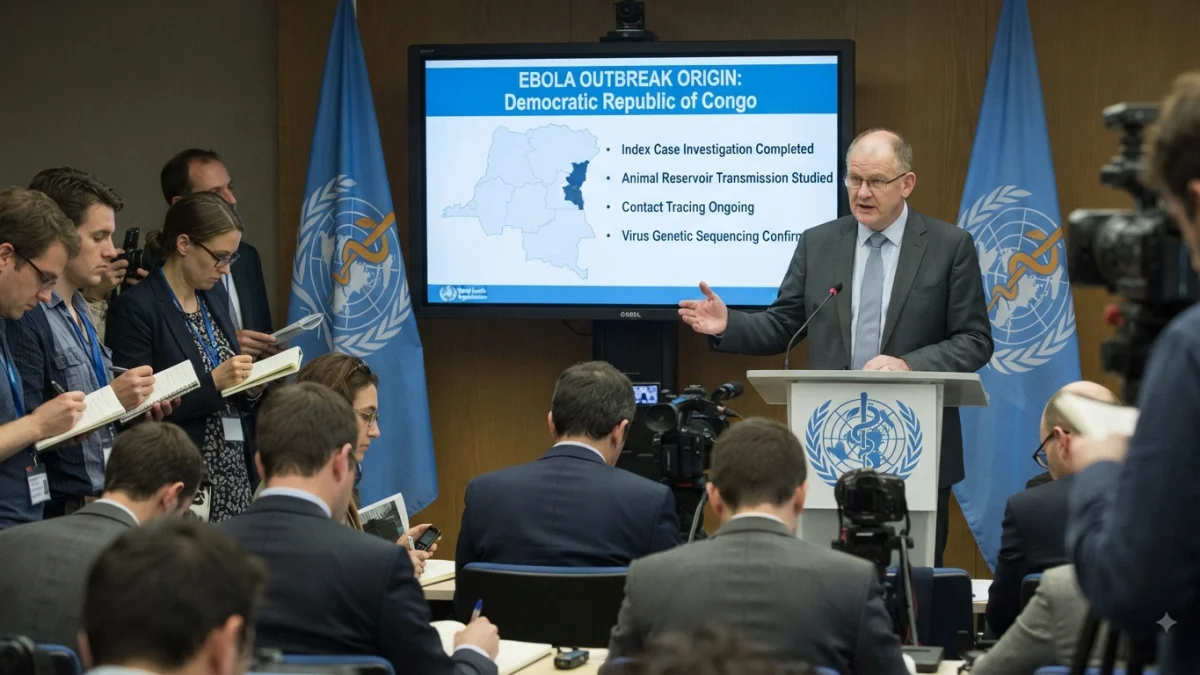


KINSHASA — The World Health Organization said the origin of the Ebola outbreak in the Democratic Republic of Congo remains under investigation, as the disease continues to spread across the country and has become its largest recorded Ebola outbreak.
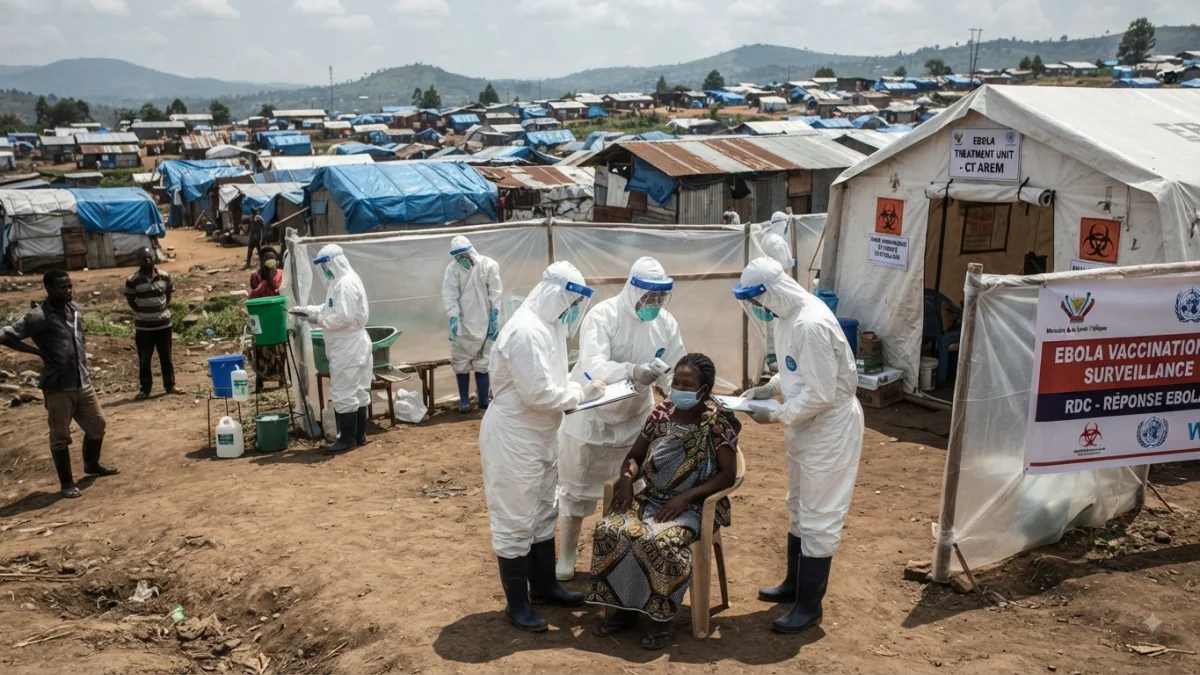
The outbreak is caused by Bundibugyo virus and was initially detected in Ituri province in May. WHO said the disease has since expanded to five provinces and 49 health zones, with sustained transmission complicated by insecurity, population displacement, mobility and cross-border movement.


Bundibugyo virus is a zoonotic disease, meaning it can pass from animals to humans and subsequently spread between people. WHO said fruit bats are suspected to be the natural reservoir, while human infection is thought to occur through close contact with infected wildlife, including bats or non-human primates. But WHO has not identified the specific animal source or established the precise origin of the current outbreak. The World Organisation for Animal Health has likewise said the origin of infection remains under investigation.
WHO received its first alert on May 5 about an unidentified illness with high mortality in Mongbwalu health zone in Ituri, including four health workers who died within four days. Laboratory testing by Congo's National Institute of Biomedical Research in Kinshasa confirmed Bundibugyo virus on May 15, prompting the government to declare its 17th Ebola outbreak.
WHO's latest disease outbreak update, published Aug. 1 using data through July 30, reported 3,605 confirmed cases and 1,587 deaths in Congo. It said cases had been reported across Ituri, North Kivu, South Kivu, Haut-Uele and Tshopo provinces. Ituri accounted for 88% of confirmed cases and 82.6% of reported deaths.
WHO said the large increase in reported cases partly reflected expanded surveillance, laboratory testing and diagnostic capacity, although most of the increase represented continued expansion of the outbreak. The agency said 641 confirmed cases and 282 confirmed deaths were reported during the latest seven-day period covered by its assessment.
The outbreak has also spread beyond Congo. Uganda declared its Bundibugyo outbreak over on July 28 after 42 days without a new locally transmitted confirmed case, although WHO said the country remains at risk of imported infections because transmission continues in neighboring Congo. A confirmed case in France linked to the response in Congo recovered, with no secondary transmission identified.
WHO said it is preparing an updated risk assessment ahead of an Emergency Committee meeting scheduled for Aug. 18. For now, the agency advises against restrictions on travel or trade with affected countries while urging continued surveillance and cross-border preparedness.