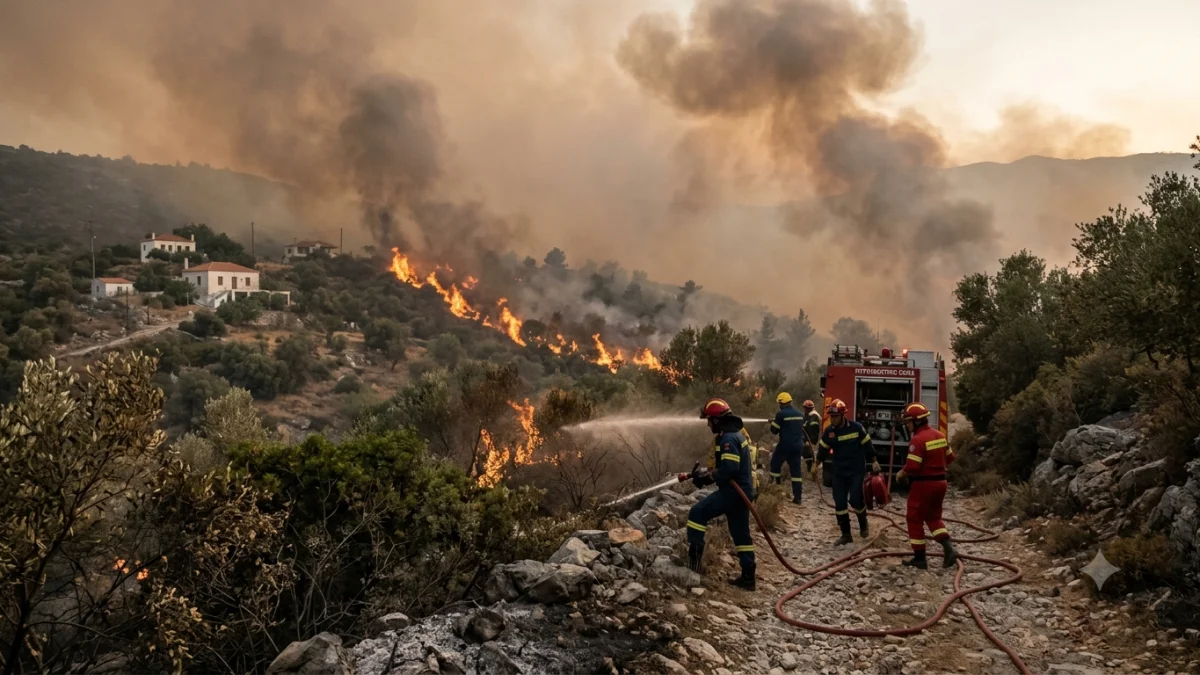


ATHENS — Greece is enduring one of its most destructive wildfire seasons of the past decade, with large blazes fueled by extreme heat, drought and strong winds burning across multiple regions, forcing thousands of people to evacuate and stretching firefighting resources as authorities continue emergency operations.
The latest fires, including a major blaze west of Athens and others on the island of Crete and several Aegean islands, have scorched extensive areas of forest and farmland, damaged homes and infrastructure, and prompted evacuations from communities considered at immediate risk. Greek authorities said firefighting aircraft, helicopters and hundreds of firefighters remained deployed as shifting winds complicated containment efforts.


Officials have described this year's fires as among the country's worst in recent years, reflecting a broader pattern of increasingly destructive wildfire seasons linked to prolonged heat and dry conditions across southern Europe. The European Forest Fire Information System and Greek monitoring agencies have previously identified several recent seasons as among the most severe on record for burned area, with the current season adding to that trend.
According to Greek civil protection authorities, emergency alerts were issued through the country's warning system as residents in threatened areas were instructed to leave. Authorities also requested assistance through European civil protection mechanisms, allowing additional aircraft and personnel from partner countries to support suppression efforts.
The fires have also affected livestock, wildlife and pets, with volunteer rescue groups working alongside local authorities to recover animals from burned communities. Animal welfare organizations said hundreds of animals had been rescued in some of the hardest-hit areas while efforts continued to reunite pets with their owners.
Meteorologists have warned that exceptionally high temperatures, low humidity and persistent winds continue to create conditions favorable for rapid fire spread across much of Greece and southeastern Europe. Similar weather has contributed to wildfires, water shortages and pressure on electricity systems elsewhere in the region during the ongoing heatwave.
Scientists have repeatedly identified Greece as one of Europe's countries most exposed to severe wildfires, with satellite observations showing substantial forest losses in recent years, particularly in the Attica region surrounding Athens. Data compiled by the National Observatory of Athens indicate that repeated major fires since 2017 have destroyed large areas of woodland, underscoring the cumulative environmental impact of successive fire seasons.
Greek authorities said firefighting operations were continuing on Aug. 6, with emergency services monitoring weather conditions closely and warning that the wildfire risk remained high in several parts of the country.