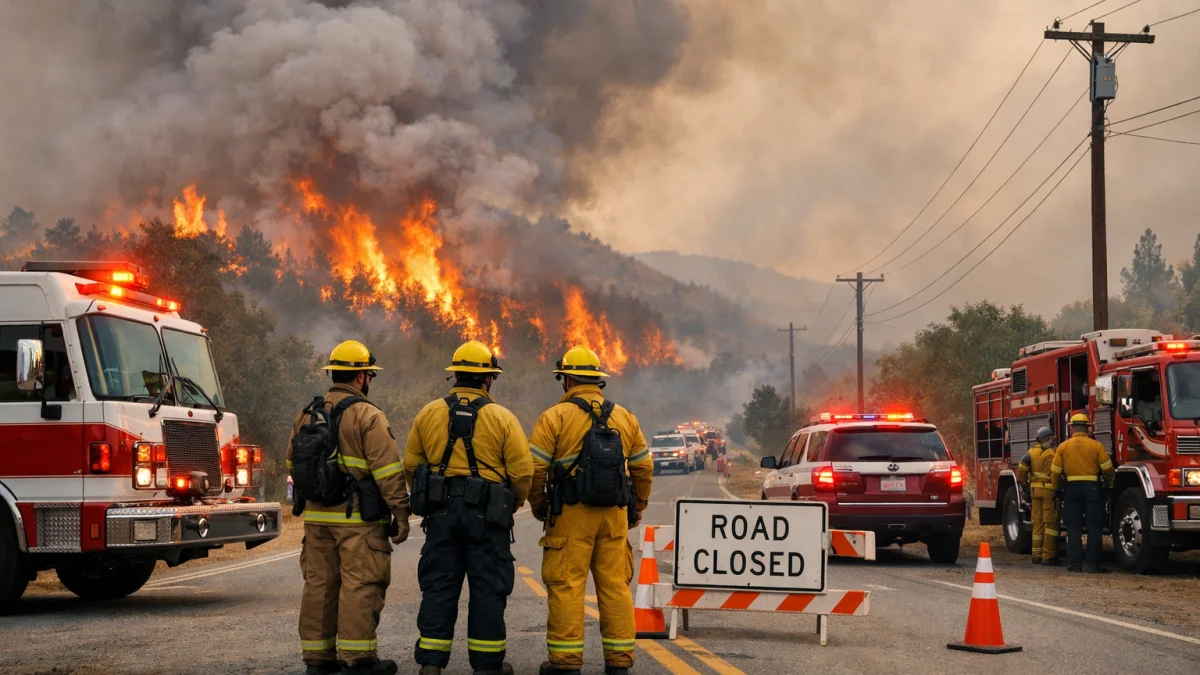


BOISE, Idaho — Wildfires burning across several regions of the United States prompted evacuation orders, air-quality alerts and transportation disruptions this week as fire officials warned that hot, dry conditions could increase wildfire risks in parts of the country heading into the summer.
In South Florida, three wildfires burning near the Everglades led authorities to close portions of major roadways and issue health advisories because of heavy smoke affecting communities in Miami-Dade and Broward counties. The largest blaze, known as the Quarry 2 Fire, had burned more than 15,000 acres by midweek and remained only partially contained, according to the Florida Forest Service and Miami-Dade Fire Rescue. Officials said lightning was believed to have sparked the fire.


“The fire has two names. We have the Quarry 2 Fire, and we also have the Well Fire,” Miami-Dade Fire Rescue Chief Ray Jadallah said, describing the ongoing response effort.
In the western United States, fire agencies continued monitoring active fires and elevated fire danger across parts of California, the Great Basin and the Pacific Northwest. Federal fire outlooks released earlier this month warned of above-normal significant fire potential across large portions of the West during the summer, including northern California and the Inland Northwest.
Wildfire activity has already exceeded historical averages in several regions this year. The National Interagency Coordination Center reported that more than two million acres had burned nationwide by the end of May, according to a June outlook cited by regional fire officials. The same report said the number of fires recorded nationally was above the long-term average.
Recent fires in California highlighted the challenges facing firefighters. In May, the Sandy Fire in Simi Valley triggered evacuation orders and threatened thousands of homes as crews battled fast-moving flames driven by dry conditions and wind, according to local authorities and Reuters footage from the scene.
The latest alerts come after a difficult wildfire season in parts of the Southeast earlier this year. In April, Georgia declared a state of emergency covering dozens of counties as multiple wildfires destroyed homes and threatened additional properties. State officials attributed the conditions to drought and unusually dry vegetation.
Federal agencies, including NASA and the National Interagency Fire Center, have continued to track active fires and fire-weather conditions nationwide through satellite monitoring and field reports.
As of Friday, fire crews remained deployed in several states, while local authorities urged residents in affected areas to monitor evacuation notices, road closures and air-quality advisories. Officials said conditions could change rapidly depending on weather patterns, and containment efforts were continuing.