

MILWAUKEE, Wisconsin — The case of former Milwaukee County Circuit Judge Hannah Dugan has become a focal point in the national debate over immigration enforcement and the role of state courts, following her conviction on charges related to helping a man sought by federal immigration authorities avoid arrest at a courthouse in 2025, according to court records and federal officials.
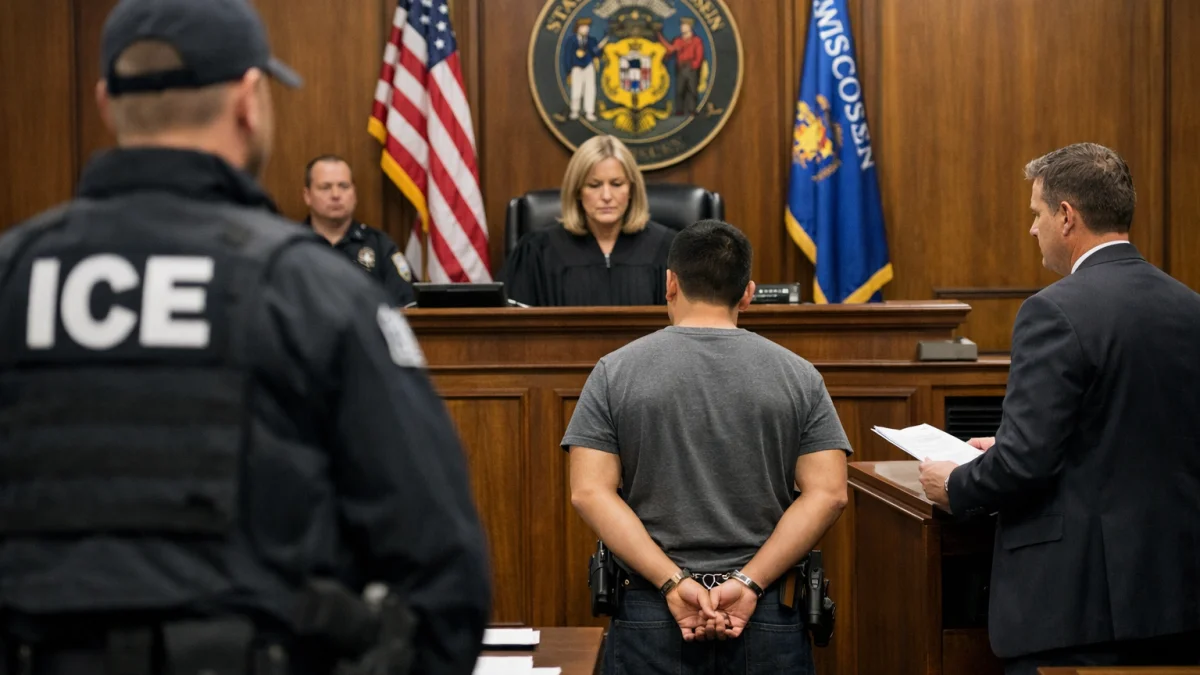
Dugan was accused of assisting Eduardo Flores-Ruiz, a Mexican national who was appearing in her courtroom on state criminal charges, after federal immigration agents arrived at the Milwaukee County Courthouse seeking to detain him. Prosecutors alleged that Dugan directed agents away from the defendant and escorted Flores-Ruiz through a non-public exit, allowing him to temporarily evade arrest before he was detained outside the courthouse.


Federal authorities charged Dugan with obstruction of justice and concealing an individual to prevent arrest. The case drew national attention as the administration of President Donald Trump intensified efforts to prosecute individuals accused of interfering with federal immigration enforcement operations.
Dugan denied wrongdoing and pleaded not guilty. Her attorneys argued that her actions fell within the scope of her judicial responsibilities and reflected concerns about federal agents operating inside state courthouses. Court filings cited disputes over the use of administrative immigration warrants, which differ from warrants signed by judges.
Federal prosecutors rejected those arguments, maintaining that judges are not immune from criminal prosecution for alleged unlawful conduct. In a 2025 ruling, U.S. District Judge Lynn Adelman concluded that judicial immunity did not shield Dugan from the charges. “There is no basis for granting immunity simply because some of the allegations in the indictment describe conduct that could be considered part of a judge’s job,” Adelman wrote.
Supporters of the prosecution said the case demonstrated that public officials must comply with federal law regardless of their position. Critics, including some legal advocates and elected officials, argued that arrests at courthouses could discourage immigrants, witnesses and defendants from participating in judicial proceedings, potentially affecting access to the courts. Details of those broader policy disputes remain contested.
The Wisconsin Supreme Court suspended Dugan from her judicial duties while the case proceeded. Following her conviction in late 2025, she resigned from the bench as state lawmakers considered impeachment proceedings, according to court and government records.
On June 18, the case remained under public scrutiny as federal courts continued to address post-trial motions. A federal judge recently upheld Dugan’s conviction, and sentencing proceedings were continuing, according to court records.