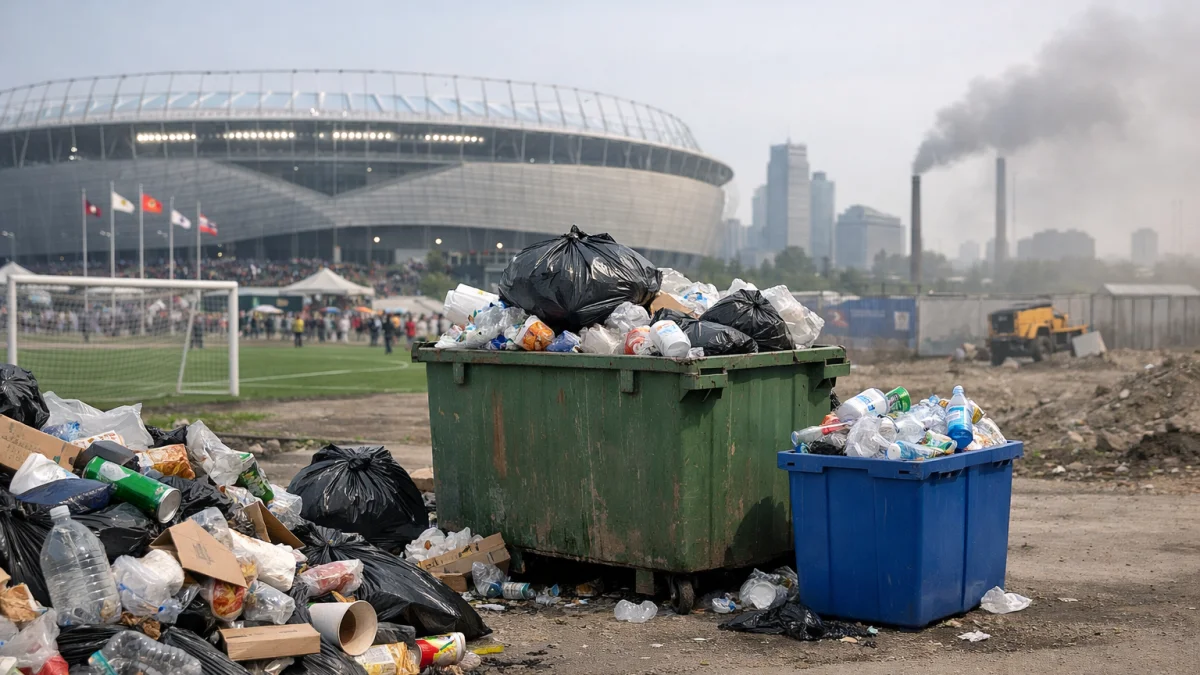


NEW YORK — Host cities for the 2026 FIFA World Cup are grappling with pollution and waste management challenges as preparations intensify for the 48-team tournament spanning the United States, Canada and Mexico, environmental groups and local officials said.
The expanded event, featuring matches across 16 cities, has raised concerns over increased greenhouse gas emissions, traffic-related air pollution and substantial waste generation from millions of visitors. Independent analyses estimate the tournament could produce about 9 million metric tons of CO₂ equivalent, largely due to air travel, according to reports from climate researchers.


FIFA has outlined an environmental strategy focused on sustainability, including waste reduction, recycling programs and public transportation promotion at tournament sites. Host cities such as Seattle have highlighted existing high diversion rates for stadium waste through recycling and composting, with plans to expand these efforts.
However, challenges persist in other locations. Cities in Texas and elsewhere face limitations in public transit infrastructure, leading to greater reliance on private vehicles and potential increases in local pollution during match days, residents and experts noted.
Each sold-out match at venues like Houston’s NRG Stadium could generate significant waste volumes, prompting local committees to implement circular economy measures, including composting and single-use plastic reduction, according to host city sustainability plans.
“We are working to minimize the environmental footprint while delivering an unforgettable event for fans,” a FIFA sustainability representative stated in prepared remarks.
Environmental advocates have called for stronger commitments, pointing to the geographic spread of venues as a driver of higher emissions compared to previous tournaments. Local groups in areas like New Jersey have expressed concerns about heat, air quality and waste impacts on host communities.
FIFA and host committees are promoting awareness campaigns and infrastructure improvements, such as renewable energy use at select stadiums and fan festivals. Some cities have launched community cleanup initiatives in preparation.
Implementation of waste management and pollution mitigation measures varies by location. Organizers continue to refine plans as the tournament approaches, with further assessments and adjustments expected in the coming months ahead of the opening matches.