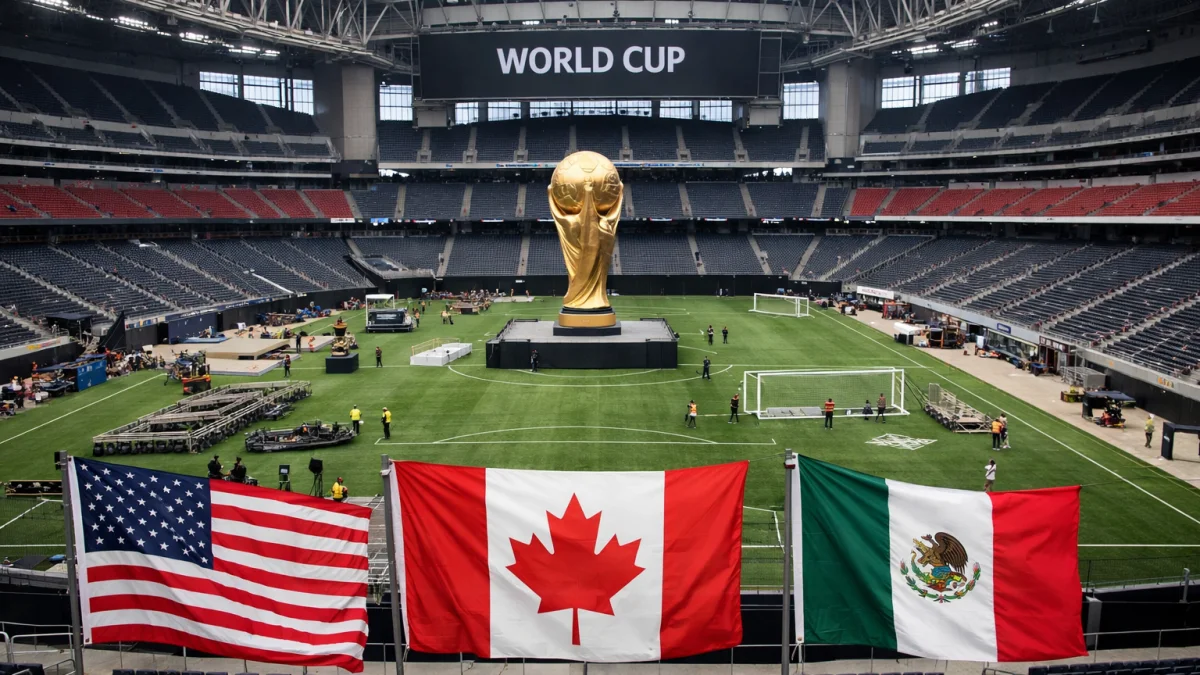


MEXICO CITY — Host cities across the United States, Canada and Mexico are preparing for an unprecedented schedule of matches as the 2026 FIFA World Cup continues across North America, with local authorities, organizers and transportation agencies managing what FIFA has described as the largest tournament in the competition’s history.
The tournament, which opened on June 11 and runs through July 19, is being staged in 16 host cities across the three countries and features a record 48 national teams. FIFA said the event marks the first World Cup jointly hosted by three nations and the first to use the expanded 48-team format. The opening match was held in Mexico City, while the final is scheduled for New York/New Jersey on July 19.


Officials in host cities have increased public transportation services, security operations and fan-event programming as matches draw visitors from around the world. FIFA and local organizing bodies have also coordinated fan festivals and public viewing areas intended to accommodate supporters beyond stadium venues. Details on attendance figures in many cities remained unclear as group-stage matches continued this week.
“The 2026 edition of the World Cup will be the first with 48 teams,” FIFA said in tournament information released before the competition, noting that matches are being played across host cities in Canada, Mexico and the United States.
The United States is hosting matches in 11 cities, including Atlanta, Los Angeles, Miami, Seattle and New York/New Jersey. Canada’s matches are being played in Toronto and Vancouver, while Mexico is hosting games in Guadalajara, Monterrey and Mexico City. FIFA said a total of 16 cities were selected to stage tournament matches.
The scale of the event has also brought challenges. In Mexico, some residents and business owners have expressed concerns about costs and access associated with the tournament. Reuters reported on Wednesday that some local fans said ticket prices and commercial restrictions had limited participation for parts of the public.
Group-stage matches are continuing daily across North America, with teams competing for places in the knockout rounds. FIFA said the expanded format includes 104 matches, the most in World Cup history, with host cities expected to remain focal points for international visitors through the tournament’s conclusion next month.