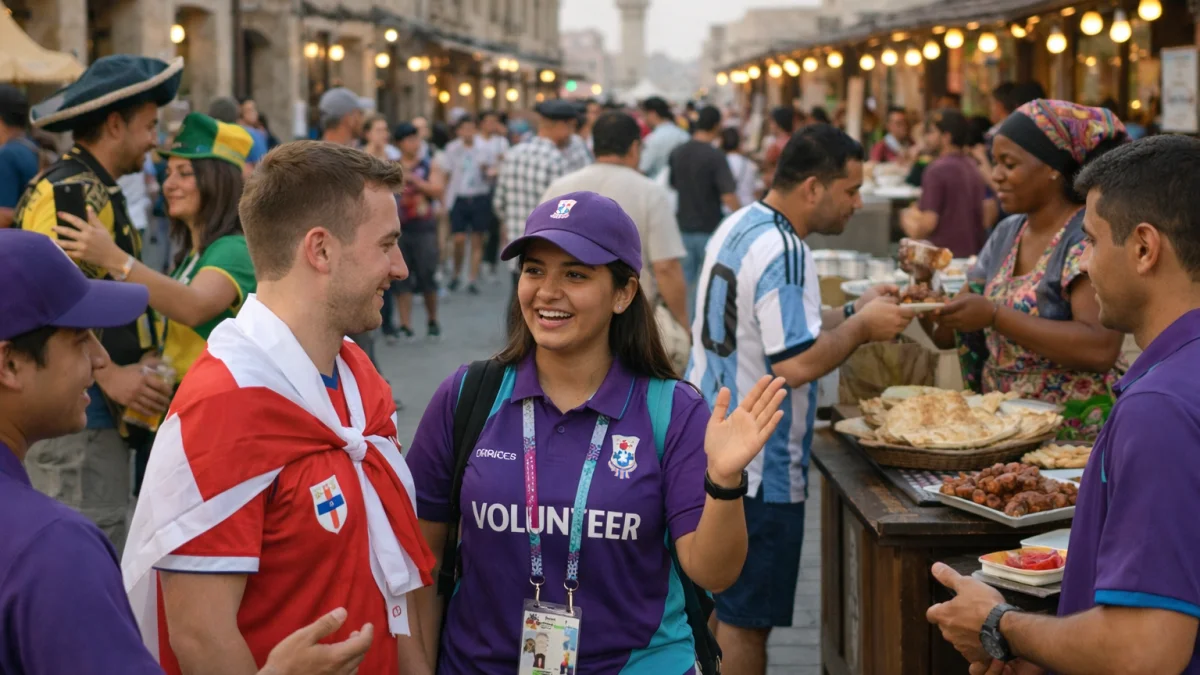


Long before kickoff, the first welcome many visitors to the 2026 FIFA World Cup receive does not come from a player or a stadium announcer. It comes from volunteers stationed at airports, transit hubs, fan festivals and city centers, offering directions, answering questions in multiple languages and helping visitors navigate unfamiliar neighborhoods across the tournament's 16 host cities in Canada, Mexico and the United States.
The encounters are largely routine, but they reflect one of the tournament's most extensive human networks. FIFA says more than 65,000 volunteers are supporting the expanded competition, serving in roles ranging from fan operations and transport to host city management and accommodation. Volunteers commit to multiple shifts during the tournament and are often the first and last people supporters meet during their stay.


That quiet work has become central to the experience of a World Cup that stretches far beyond the stadium gates. While matches remain the tournament's focal point, public squares, local businesses and residential neighborhoods have become gathering places where host communities and visitors share meals, celebrations and conversations that are impossible to schedule but often become the memories people carry home.
The scale of the 2026 tournament has amplified that role. Spread across three countries and featuring more teams than any previous men's World Cup, the competition depends not only on transportation systems and security plans but also on thousands of residents willing to help visitors feel welcome in cities that many are exploring for the first time.
FIFA describes volunteers as the "heartbeat" of its events, assigning them responsibilities that include guiding spectators, assisting guests at airports and hotels, supporting fan festivals and helping visitors navigate host cities. No previous volunteer experience is required, but applicants must complete training and commit to a minimum number of shifts during the competition.
Many volunteers also serve as informal ambassadors for their communities. Some are students hoping to practice languages. Others are retirees or longtime football supporters returning after volunteering at previous international tournaments. Their responsibilities extend beyond logistics to sharing recommendations about neighborhoods, restaurants, museums and local traditions that visitors might otherwise overlook.
That exchange is visible in official FIFA fan festivals as well as in community spaces that have emerged throughout the tournament.
In Mexico, where ticket prices have placed many matches beyond the reach of ordinary supporters, neighborhoods have organized their own public viewing gatherings. Streets, plazas and local businesses have become places where residents and international visitors watch matches together, creating celebrations that many participants describe as more reflective of local culture than the stadium experience itself. Public viewing areas supported by local authorities have attracted large crowds, offering fans an alternative way to participate in the tournament regardless of whether they hold match tickets.
Similar scenes have unfolded elsewhere across North America.
Houston's official FIFA Fan Fest has drawn hundreds of thousands of visitors during the opening weeks of the competition, according to local organizers. While football remains the attraction, the gatherings have also become opportunities for residents to introduce visitors to local food, music and neighborhoods. Tournament officials say feedback from visiting teams and supporters has highlighted the city's hospitality alongside its operational planning.
In Kansas City, a city that has invested heavily in football infrastructure over recent years, international supporters have filled parks, restaurants and public spaces before and after matches. Visitors interviewed during the tournament described finding friendships with local residents and supporters from other countries in places far removed from the stadium itself, underscoring how the event reshapes everyday urban life, even if only for a few weeks.
Not every experience has been uncomplicated.
The tournament has unfolded alongside debates over ticket affordability, transportation, immigration policies and the uneven economic impact on host communities. Some visitors have encountered visa challenges, while critics have questioned whether the benefits of hosting are distributed equally across neighborhoods and residents. Those issues have remained part of the broader conversation surrounding the competition even as fan celebrations continue.
Yet in many host cities, the daily rhythm of the tournament has been shaped less by those policy debates than by countless small interactions between residents and visitors.
Volunteer assignments often place participants outside the stadium, directing spectators through "last mile" routes between transit stations and venues or assisting fans at city festivals. Community discussions among volunteers describe those roles as serving as the first and final point of contact for visitors, helping people find their way while introducing them to the character of each host city.
Those responsibilities rarely appear in match highlights, but they influence how visitors remember the tournament. A helpful conversation at a train station, a recommendation for a neighborhood café or assistance in navigating a crowded fan zone can shape an experience as much as the result on the field.
As the competition continues across North America, those moments accumulate quietly alongside every match.
Goals, trophies and records will define the sporting history of the 2026 FIFA World Cup. The human story, however, is also being written by thousands of volunteers in distinctive uniforms and by host communities opening public squares, businesses and neighborhoods to strangers from around the world. Together, they remind visitors that football's biggest tournament is experienced not only inside stadiums but also in the ordinary places where hospitality becomes part of the game itself.