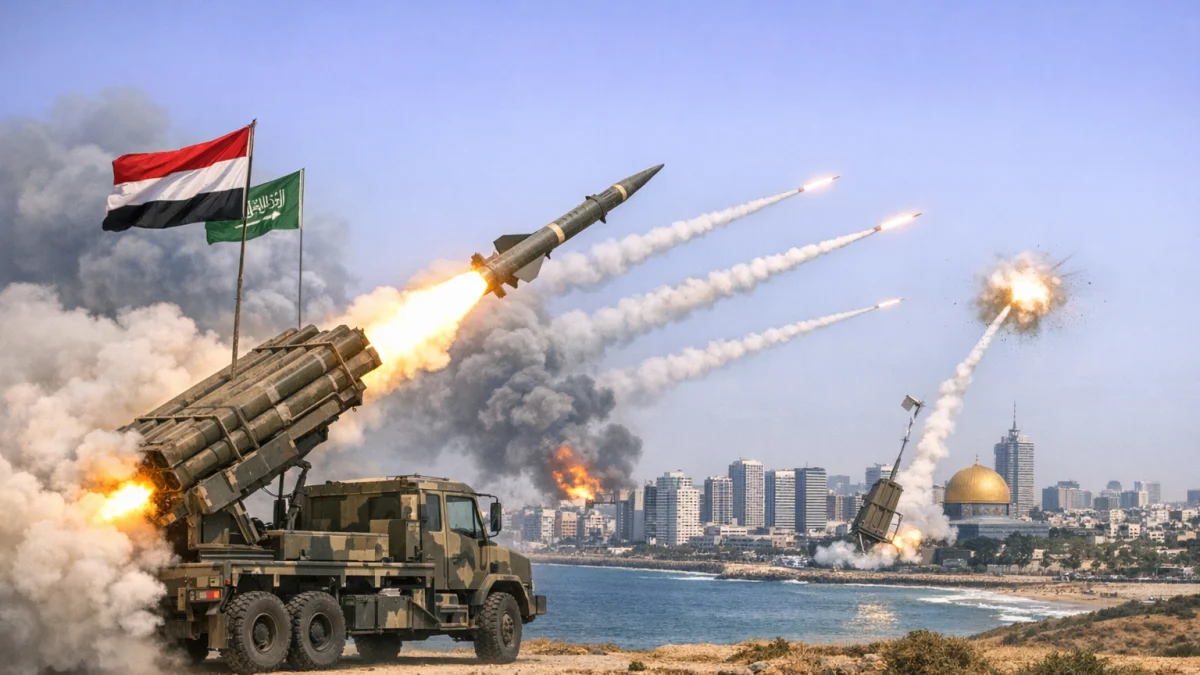


SANA'A, Yemen — Iran-backed Houthi rebels in Yemen launched ballistic missiles at Israel on Saturday, marking the group's first direct attack on the country since the start of the war between the United States, Israel and Iran.
Houthi military spokesperson Yahya Saree said the rebels fired a barrage of ballistic missiles targeting what he described as sensitive Israeli military sites in southern Israel. A second wave involving cruise missiles and drones followed later in the day. Israeli officials confirmed that a missile originating from Yemen was detected and intercepted, with no injuries or damage reported from the attacks.


The strikes come as the monthlong conflict escalates. U.S. and Israeli forces conducted strikes on Iranian targets beginning in late February. Iran has responded with missile and drone attacks on U.S. and allied positions, including a strike on Prince Sultan Air Base in Saudi Arabia on Friday that wounded at least 12 U.S. service members. The Houthis, who control large parts of Yemen and have long received support from Iran, described the operation as their first military action in support of Iran during the current war.
The group has a history of launching missiles and drones at Israel and attacking commercial shipping in the Red Sea. Those Red Sea attacks disrupted global trade routes in previous years. Saturday's strikes widen the geographic scope of the conflict, raising concerns about further regional involvement and potential threats to shipping lanes near the Arabian Peninsula.
Israeli air defenses have intercepted most incoming projectiles from Yemen in past incidents. The Houthis vowed to continue operations until what they called aggression on all fronts ends. The attacks occurred as President Donald Trump extended a deadline for Iran to reopen the Strait of Hormuz to April 6, with the waterway remaining largely restricted to commercial traffic.
As of Sunday, Israeli officials continued to monitor threats from multiple directions while assessing the latest Houthi launches. U.S. Central Command tracked developments in the region, where additional American forces have deployed in recent weeks. The situation in Yemen and along Red Sea shipping routes remained under close observation amid the broader Middle East conflict.