

Zambia’s election is testing whether the economic stabilization achieved under President Hakainde Hichilema can translate into broader prosperity, as voters weigh a recovering copper sector against persistent pressures from high living costs, electricity shortages, debt and governance concerns.
Hichilema, seeking a second term after taking office in 2021, has made economic reform a central part of his campaign. His government has overseen a major restructuring of Zambia’s external debt after the country defaulted in 2020, completed a three-year IMF-supported program and attracted substantial new mining investment. But the election also exposes the limits of that recovery: growth is expected to slow this year, fiscal pressures have increased and the benefits of stronger copper prices and renewed investor confidence have yet to be felt evenly across the economy.


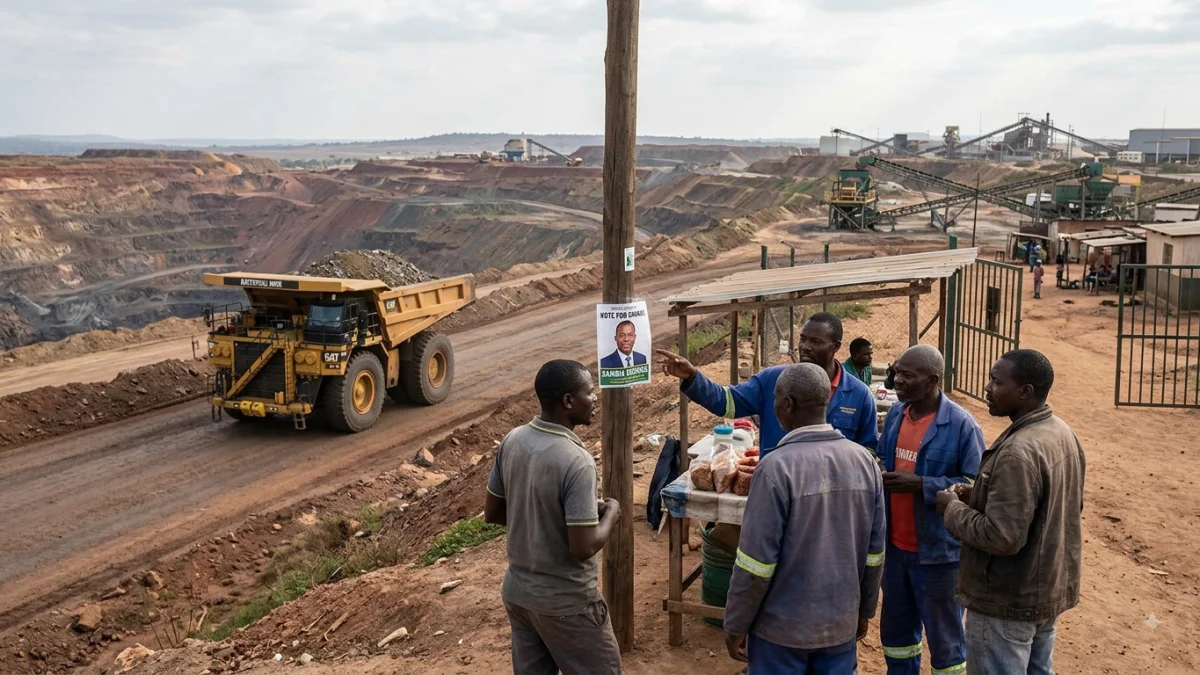
Copper is at the centre of that tension. Zambia is seeking to raise annual copper production to 3 million metric tons, from current levels, as global demand grows for the metal used in power networks, electric vehicles and renewable-energy infrastructure. Reuters reported this month that mining investment since the 2021 election has exceeded $10 billion, while the industry accounts for about 9% of gross domestic product and nearly half of government revenue. Mining companies are seeking further improvements in exploration licensing, infrastructure, electricity generation and incentives for local processing.
That creates an important economic opportunity but also a policy test. A larger copper industry could generate foreign exchange, government revenue and employment while helping Zambia diversify its productive base if more processing and related industries develop domestically. The IMF has similarly identified copper value addition, improved energy supply and greater private-sector participation as priorities for Zambia’s next phase of growth.
Yet higher copper output alone will not resolve the country’s structural problems. Zambia remains vulnerable to fluctuations in commodity prices, electricity shortages and climate shocks. The IMF cut its 2026 growth forecast to 4.3%, citing weaker mining output, normalization after an unusually strong agricultural harvest, softer trade activity, energy constraints and external geopolitical pressures. It expects inflation to reach 8.5% by the end of the year, above the central bank’s target range.
The fiscal position also illustrates the tension between stabilization and electoral demands. Zambia recorded a primary fiscal surplus of 3.1% of GDP in 2025, according to the IMF, while international reserves had risen to $6.4 billion by April 2026. But the Fund said the projected primary surplus for 2026 had fallen to 1.1% of GDP because of weaker tax collection, election-related spending pressures, a civil-service wage adjustment and agricultural subsidy overruns. The IMF has also warned that reforms to strengthen tax administration and revenue collection remain necessary.
Debt restructuring has nevertheless changed the country’s economic position substantially. Agreements now cover about 94% of the debt within the restructuring perimeter, according to the IMF, reducing some of the immediate pressure that followed the 2020 default. But Zambia remains exposed to debt-related risks, and the Fund has stressed that continued fiscal discipline will be necessary to move toward a more sustainable debt position.
The next government will therefore face a narrower policy margin than the election rhetoric might suggest. Zambia needs investment to expand mining and electricity generation, but it also needs stronger public finances, better governance and policies capable of turning resource investment into wider economic activity. The IMF has said a successor program should support private-sector-led growth, diversification and productivity while protecting priority social spending. Negotiations are expected to resume with the incoming government after the election.
For Hichilema, the economic record offers a clear argument for continuity. His administration points to macroeconomic stabilization, debt restructuring, investment and social programs, including free education. The government has also pledged in its election manifesto to expand the economy, end load-shedding and create jobs.
The opposing political argument is that macroeconomic improvements have not sufficiently reduced the pressures experienced by households. Reporting around the election has highlighted concerns over food prices, unemployment, electricity reliability and whether the expanding mining economy is delivering enough benefits beyond investors and government revenues. Political tensions and opposition allegations over the use of state institutions have added a governance dimension to the economic debate, although the government denies accusations of repression.
The election result will therefore matter beyond the presidency. Parliamentary control will influence the incoming government’s ability to implement fiscal, mining, energy and governance reforms, while investor confidence will depend partly on whether economic policy remains predictable. The immediate focus is on the official vote count and whether a presidential candidate secures more than 50%, with a runoff required otherwise. The longer-term test will be whether Zambia can convert its copper advantage and hard-won macroeconomic stabilization into sustained, broadly distributed growth while maintaining fiscal discipline and completing the remaining debt and reform agenda.