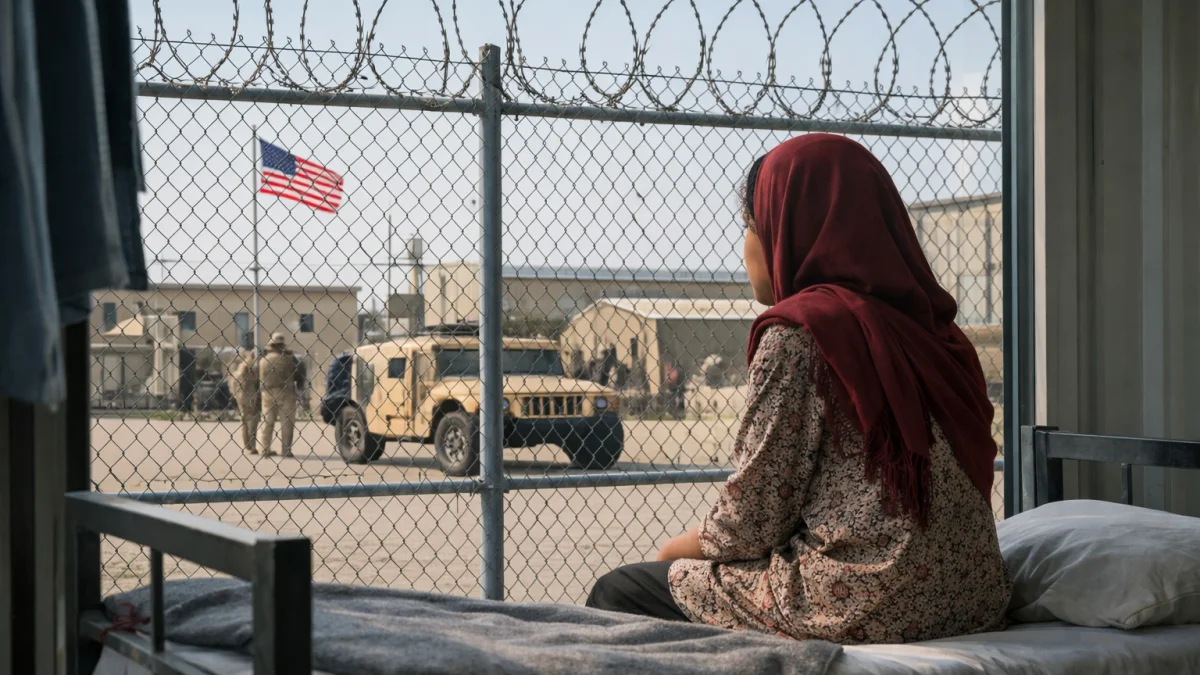


DOHA, Qatar — A 15-year-old Afghan refugee remains stranded at a U.S.-run transit facility in Qatar more than a year after her relocation process stalled, highlighting the uncertainty facing over 1,100 Afghans caught between changing U.S. immigration policies and unresolved resettlement plans.
Zahra Muheb, who lives at Camp As Sayliyah, an unused U.S. military base outside Doha that serves as temporary housing for Afghan refugees, told ABC News that she has spent two birthdays at the facility while awaiting a decision on her future. Most residents are women and children who entered the U.S. refugee resettlement pipeline after fleeing Afghanistan.


The camp population includes Afghans who worked alongside U.S. forces, family members of American military personnel and others considered at risk following the Taliban's return to power. Many were transferred to Qatar during earlier evacuation and resettlement efforts and expected eventual relocation to the United States.
Their cases were thrown into uncertainty after the Trump administration halted or restricted several immigration and refugee processing pathways involving Afghan nationals. U.S. Secretary of State Marco Rubio told lawmakers earlier this month that the administration could not currently admit Afghan refugees into the United States under existing policies, though it was exploring relocation options with other countries.
“I feel like prison might be much better than here,” Zahra told ABC News, describing life at the camp and restrictions placed on residents when they leave for medical treatment. She also said camp residents fear being returned to Afghanistan, where many believe they could face reprisals because of past ties to the United States.
The State Department told ABC News it had no information regarding specific allegations raised by Zahra about interactions with camp officials and said complaints are addressed to protect residents.
The situation has drawn concern from lawmakers in Washington. More than 80 members of the House of Representatives, including Democrats and several Republicans, recently urged the administration to abandon plans that could send stranded Afghans to countries they consider unsafe. Representative Jason Crow of Colorado said in a statement that the United States has a responsibility to protect those who assisted American forces.
Earlier this year, the administration explored the possibility of relocating some of the refugees to the Democratic Republic of Congo, according to advocates and lawmakers. Critics argued that such a move could expose vulnerable families to additional risks and prolong uncertainty about their immigration status.
As of June 20, no final resettlement plan had been announced for the more than 1,100 Afghans living at Camp As Sayliyah. U.S. officials have said discussions with multiple countries remain ongoing, while residents continue to await decisions on where they may ultimately be allowed to settle.