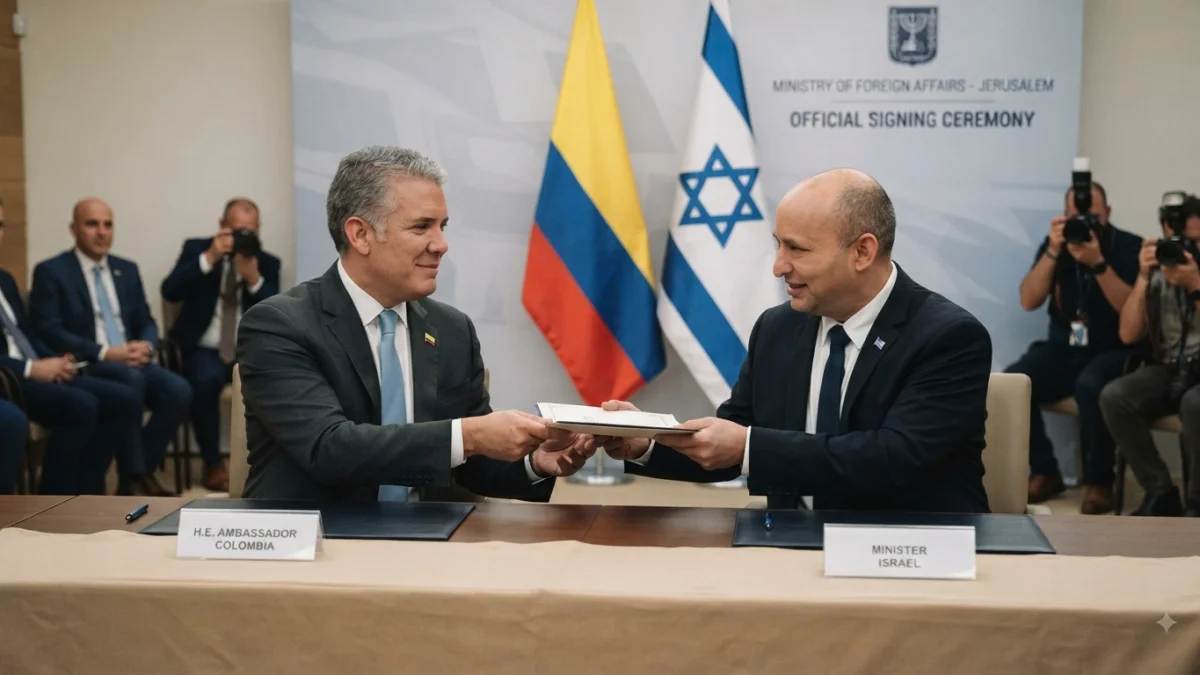


BOGOTA — Colombia has formally recognized Israeli sovereignty over the Golan Heights, becoming only the second country after the United States to do so, in a major shift in its Middle East policy under newly inaugurated President Abelardo de la Espriella.
Colombia’s Foreign Ministry announced the decision on Monday, saying the move reflected the strategic importance of the Golan Heights to Israel’s security and Israel’s right to protect itself against external threats. The ministry also described Israeli control and sovereignty over the territory as an essential component of Israel’s national defense, according to reports citing the government statement.


The Golan Heights, a strategic plateau captured by Israel from Syria during the 1967 Middle East war, has remained at the center of a longstanding territorial dispute. Israel extended its laws, jurisdiction and administration to the territory in 1981, a move the U.N. Security Council declared “null and void” and without international legal effect in Resolution 497.
The United Nations has continued to refer to the territory as the occupied Syrian Golan and has repeatedly reaffirmed that the acquisition of territory by force is inadmissible under international law. General Assembly resolutions have also called on Israel to comply with Security Council Resolution 497.
The United States recognized Israeli sovereignty over the Golan Heights in March 2019 under then-President Donald Trump, breaking with the longstanding position of most governments and international institutions.
Israel welcomed Colombia’s decision. Israeli Foreign Minister Gideon Sa’ar praised the move as a significant diplomatic development and thanked Bogota for its recognition, according to Israeli media reports.
The recognition comes days after de la Espriella took office, replacing leftist President Gustavo Petro, whose government had sharply criticized Israeli policy and downgraded relations with Israel. De la Espriella’s government has moved to restore closer ties with Israel.
Colombia’s decision does not alter the United Nations’ position on the territory or the status established by existing Security Council resolutions. As of Tuesday, the Colombian government had not announced further measures regarding the practical implementation of its recognition.