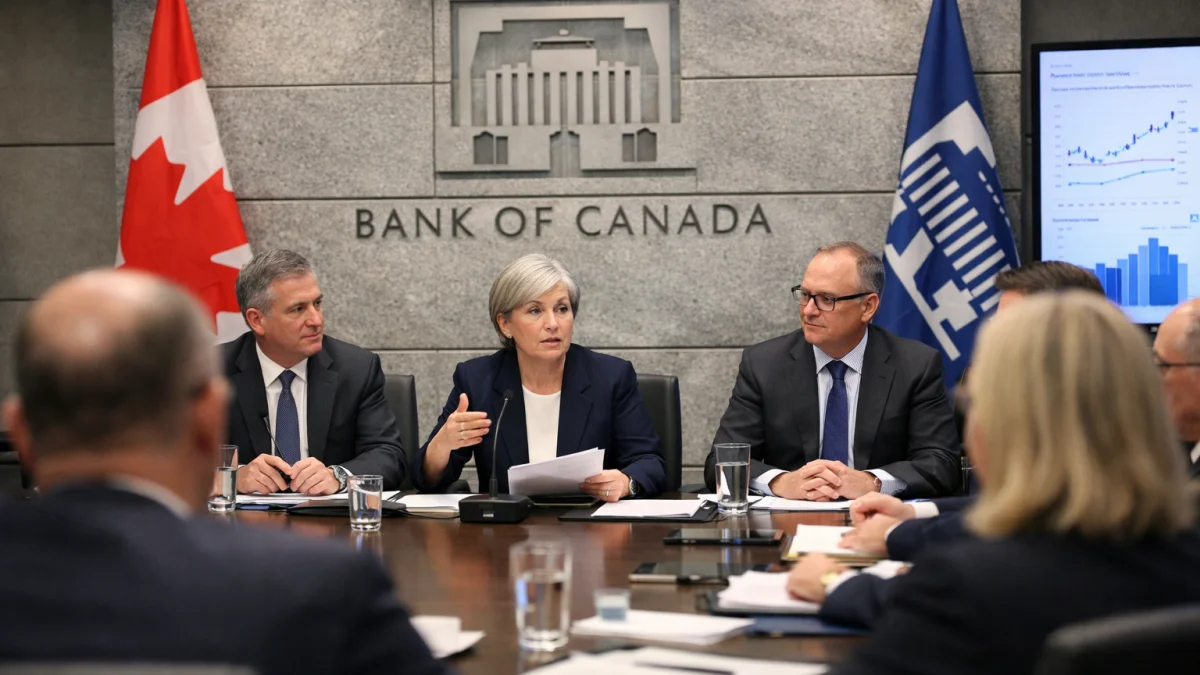
OTTAWA — The Bank of Canada on Wednesday released its summary of deliberations from the Governing Council meeting that preceded its June 10 interest rate decision, showing policymakers agreed to keep monetary policy flexible as they weighed persistent inflation risks against a weak domestic economy and elevated global uncertainty.
The publication provides additional detail on the discussions behind the central bank's decision to leave its benchmark policy interest rate unchanged at 2.25%, a move announced earlier this month. The account of the meeting highlighted the challenge facing policymakers as inflation moved higher, largely because of energy prices, while economic activity remained subdued and uncertainty surrounding international trade and geopolitical developments persisted.
According to the summary, Governing Council members concluded that holding the policy rate steady best balanced competing risks. The Bank said the economy continued to operate below its potential, with slack in the labour market, while higher energy prices had lifted headline inflation. Members agreed there was limited evidence that those energy-related price increases had spread broadly across other goods and services.
The deliberations also showed policymakers debated the risks of acting either too quickly or too slowly. Raising interest rates prematurely could further weaken an already soft economy if energy prices eased, while delaying action could require a stronger policy response later if inflation became more persistent. The summary stated that, for the time being, members were prepared to look through the near-term effects of higher energy prices while closely monitoring incoming inflation data.
"Monetary policy will need to remain nimble," the Governing Council said in the published summary, adding that the Bank remains prepared to respond as economic conditions evolve.
The document also identified external developments as an important source of uncertainty. Members discussed risks stemming from global supply chain disruptions, conflict in the Middle East affecting energy markets, and negotiations over the Canada-United States-Mexico Agreement, known as CUSMA. The summary said a favourable outcome in the trade talks could improve business certainty, while a prolonged or unfavourable process could weigh further on employment and investment in trade-exposed sectors.
The Bank noted that if new U.S. trade restrictions were introduced, lower interest rates might be needed to support growth. Conversely, if higher energy prices proved persistent and generated broader inflation pressures, additional monetary policy tightening could become warranted.
The summary reflects discussions leading to the June 10 policy announcement and does not represent a new policy decision. The Bank of Canada said it will continue to assess incoming economic and inflation data ahead of its next scheduled interest rate announcement.