

WASHINGTON — A new poll has found that only half of U.S. adults trust the Centers for Disease Control and Prevention's public health recommendations, a sharp decline from 77 percent the previous year, according to researchers at the Harvard T.H. Chan School of Public Health and the de Beaumont Foundation.
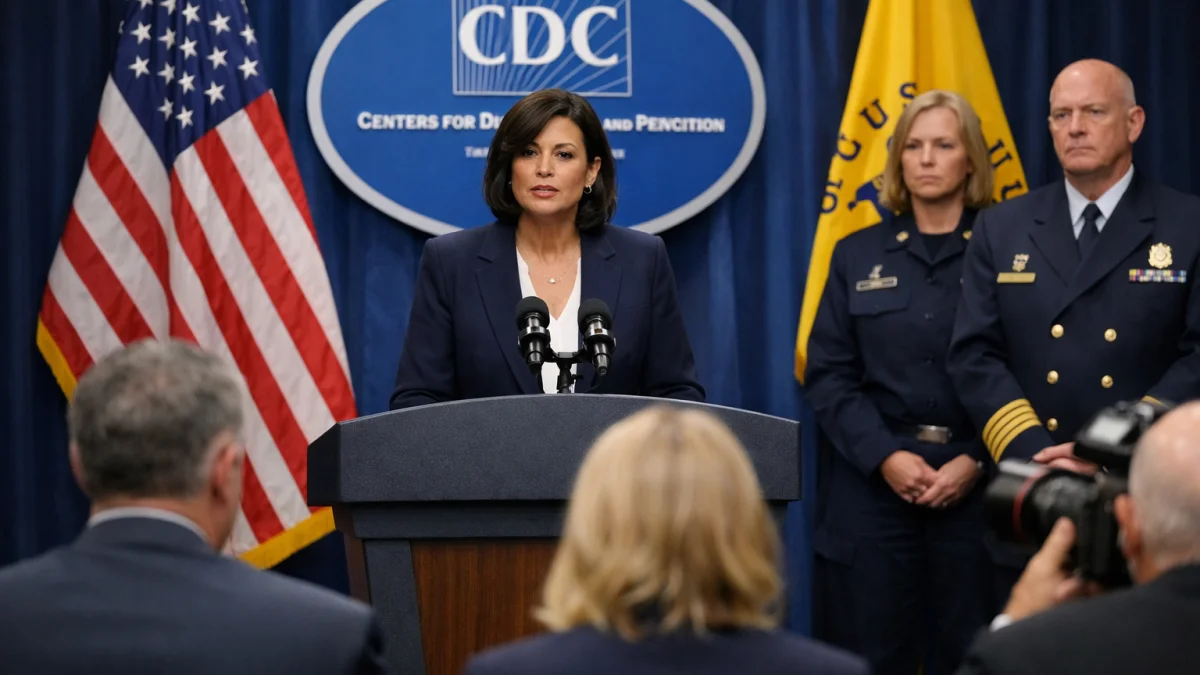
The survey of 2,205 adults, conducted from March 19 to April 1, 2026, showed trust in CDC recommendations dropping to 50 percent from 77 percent in spring 2025. Trust in state health departments fell from 80 percent to 66 percent, while trust in local public health departments declined from 82 percent to 70 percent, the poll found.


The decline was driven largely by partisan differences. Among Democrats, trust fell from 92 percent to 34 percent, and among independents from 77 percent to 47 percent. Republican trust rose slightly from 63 percent to 67 percent, researchers said.
The poll also showed drops across multiple demographic groups, including women, Black and Hispanic adults, urban residents and college-educated individuals. About 38 percent of respondents said they trusted CDC recommendations "somewhat," while 12 percent said "a great deal," according to the report.
Half of Americans said they trusted federal public health recommendations less since President Donald Trump began his second term, the poll indicated. Similar declines were reported for other federal agencies, with trust in the Food and Drug Administration and National Institutes of Health also falling.
Researchers noted the findings come more than a year into changes in federal public health leadership. The poll did not explore specific reasons for the shifts but highlighted deep partisan divides in perceptions of federal health guidance.
"Trust in public health agencies takes a tumble," the report stated, summarizing the overall trend in federal agencies.
State and local health departments remained more trusted than federal agencies overall, though they too saw notable declines. The survey also gauged views on other public health topics, including support for childhood vaccines, but focused primarily on agency credibility.
Officials at the CDC and the Department of Health and Human Services did not immediately respond to requests for comment on the poll findings. Details on potential responses or efforts to address public trust remained unclear.
As of Friday, the full report was available from the Harvard T.H. Chan School of Public Health. Further analysis of the data and any follow-up surveys are expected in the coming months.