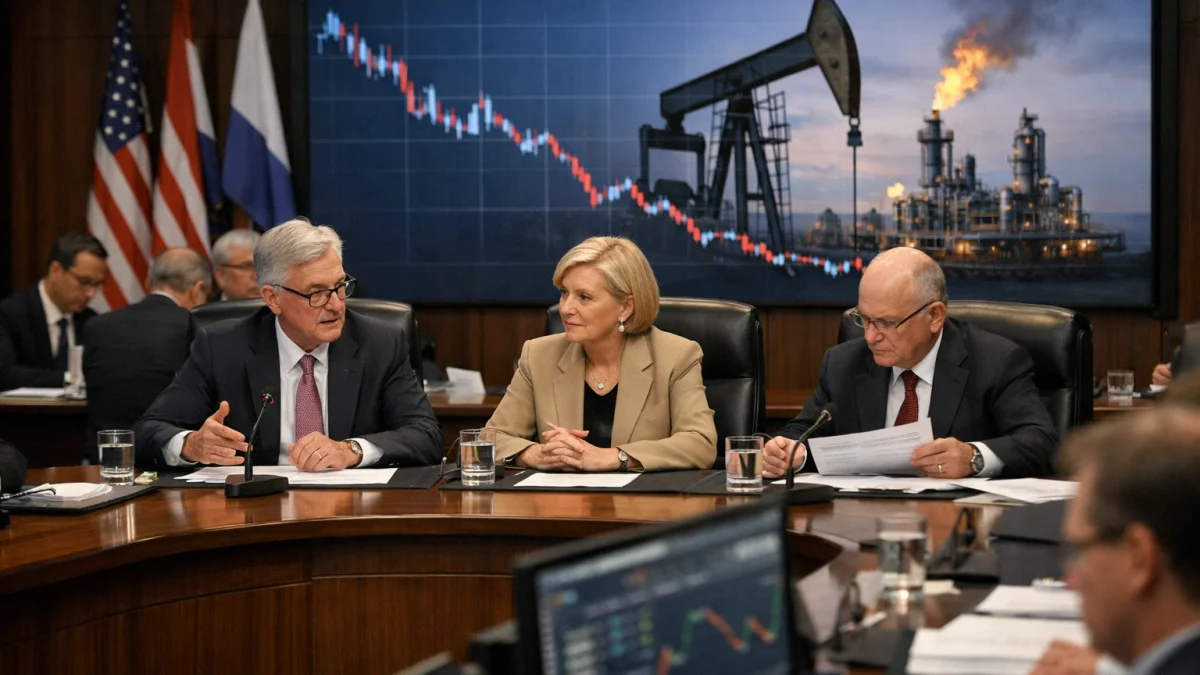


FRANKFURT — Central banks in several major economies have adjusted monetary policy settings in recent weeks as energy-price pressures eased and inflation continued to moderate, according to official statements and policy decisions released through mid-June.
The European Central Bank (ECB) lowered its key interest rates earlier this month, citing progress in bringing inflation closer to its medium-term target. ECB officials said recent declines in energy-related inflation had contributed to the broader moderation in consumer-price growth across the euro zone. The bank emphasized that future policy decisions would remain dependent on incoming economic data.


“Most measures of underlying inflation suggest that inflation will settle at around our medium-term target on a sustained basis,” ECB President said following the policy decision.
Elsewhere, the Bank of Canada has continued a policy-easing cycle that began as inflation pressures receded. Canadian officials said lower energy costs compared with earlier periods had helped reduce headline inflation, although policymakers noted that underlying price pressures in some sectors remained elevated. The central bank said it would continue assessing economic conditions before determining the pace of further adjustments.
In Europe, central bankers have pointed to a combination of lower wholesale energy prices, improved supply conditions and slower consumer-price growth as factors supporting policy changes. Economists and market participants have noted that energy costs played a significant role in earlier inflation surges following disruptions to global energy markets. More recent declines in those costs have reduced some inflationary pressure, according to official data releases.
The ECB, however, has cautioned that uncertainties remain. Officials said geopolitical developments and commodity-market volatility could still affect future inflation outcomes. Similar concerns have been expressed by policymakers at other major central banks, including the Bank of England and the U.S. Federal Reserve, which have continued to monitor inflation trends while evaluating the appropriate policy stance.
Central bank officials have also stressed that inflation remains above target in some jurisdictions despite recent improvements. Policymakers said labor-market conditions, wage growth and services-sector prices continue to influence inflation dynamics alongside developments in energy markets.
Financial markets have closely followed central-bank communications as investors assess the outlook for interest rates. Analysts have cited easing energy-price pressures as one factor contributing to expectations that monetary policy could become less restrictive in some economies, although central banks have generally refrained from providing firm guidance on future decisions.
As of Monday, policymakers across major economies continued to review inflation data, labor-market indicators and energy-market developments ahead of upcoming policy meetings. Central banks said future adjustments would depend on economic conditions and the inflation outlook, while details regarding the timing of any additional policy changes remained uncertain.