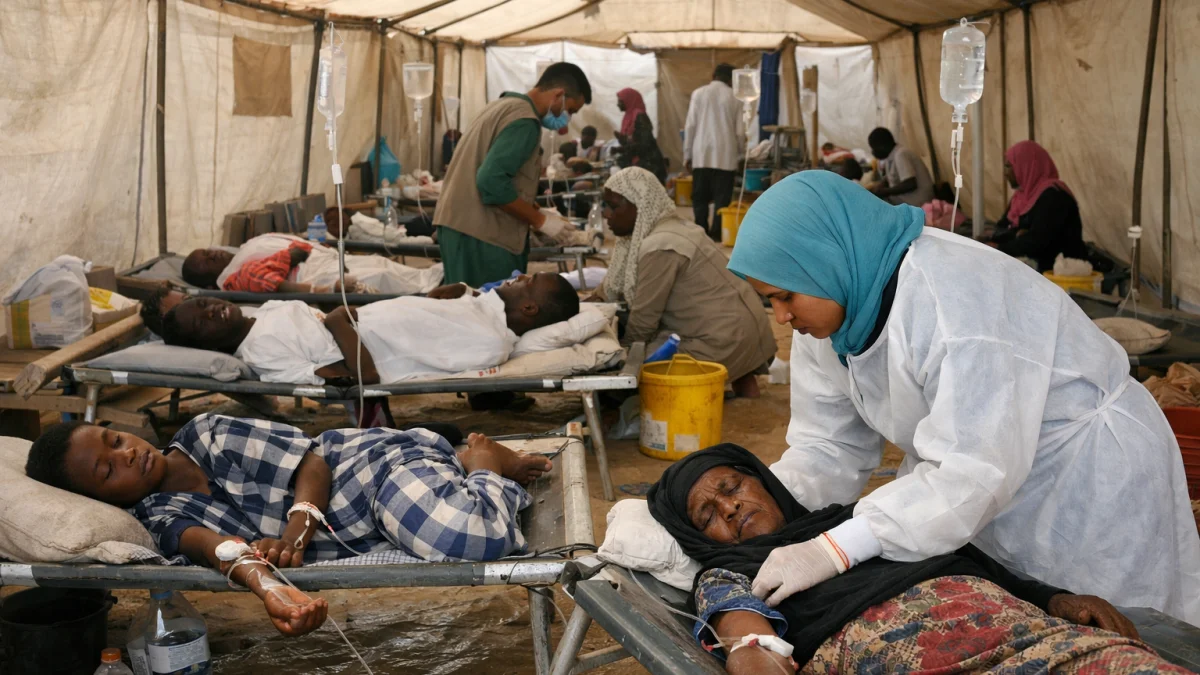


The renewed cholera outbreak in Sudan underscores how quickly communicable diseases can re-emerge in countries where armed conflict has weakened health systems, disrupted water and sanitation services, and constrained humanitarian access. The latest reports from the World Health Organization (WHO) indicate that Sudan is again reporting cholera cases and deaths only months after authorities declared an earlier nationwide outbreak over, highlighting the fragility of disease control gains in a protracted humanitarian emergency.
The development is significant because it illustrates that ending a declared outbreak does not necessarily eliminate the conditions that allow cholera to spread. Sudan officially declared its previous nationwide outbreak over in March after going more than two incubation periods without reported cases, following an epidemic that began in 2024 and ultimately spread to all 18 states, infecting more than 124,000 people and causing more than 3,500 deaths, according to WHO. The emergence of new cases in 2026 suggests that the underlying drivers—including population displacement, damaged infrastructure and limited access to safe drinking water—remain largely unresolved.


WHO's latest epidemiological update identifies Sudan among countries reporting cholera or acute watery diarrhoea during May 2026. Although Sudan's reported case numbers remain substantially lower than those recorded during the peak of the previous epidemic, the country has reported a comparatively high case fatality ratio, indicating that patients may still be reaching treatment late or facing limited access to adequate healthcare. WHO notes that surveillance data remain subject to revision as additional information becomes available.
The outbreak unfolds against one of the world's largest humanitarian crises. Since fighting erupted in April 2023 between the Sudanese Armed Forces and the Rapid Support Forces, millions of people have been displaced internally or across borders. WHO estimates that more than 33 million people require humanitarian assistance in 2026, while roughly two-fifths of health facilities are no longer functioning. Such conditions complicate routine disease surveillance, delay diagnosis and treatment, and limit vaccination campaigns and preventive public health measures.
Cholera is particularly sensitive to these disruptions because transmission is closely linked to inadequate sanitation, contaminated water supplies and overcrowded living conditions. The disease is generally preventable and treatable, with prompt administration of oral or intravenous rehydration significantly reducing mortality. However, outbreaks can expand rapidly where access to clean water, sanitation infrastructure and healthcare has deteriorated simultaneously. Public health agencies therefore regard cholera outbreaks not only as infectious disease events but also as indicators of broader failures in essential services.
Sudan's experience also reflects a wider regional and global resurgence. WHO reported nearly 30,000 new cholera and acute watery diarrhoea cases worldwide during May 2026, a sharp monthly increase affecting countries across Africa, the Eastern Mediterranean, South-East Asia and the Americas. The Eastern Mediterranean Region, which includes Sudan, recorded the largest number of reported cases during the reporting period. WHO has warned that multiple simultaneous outbreaks are stretching global supplies of vaccines, treatment materials and emergency response capacity.
Another concern is the potential for cross-border transmission. Population movements caused by conflict rarely follow administrative boundaries, increasing the risk that infectious diseases spread into neighbouring countries hosting refugees or displaced communities. WHO and humanitarian agencies have repeatedly emphasized that surveillance, vaccination where appropriate, and cross-border coordination are essential to limiting wider regional transmission, particularly where displaced populations face similar shortages of safe water and sanitation.
The renewed outbreak also illustrates the operational challenges confronting humanitarian organizations in Sudan. Aid agencies must simultaneously respond to infectious diseases, severe food insecurity, malnutrition, maternal and child health needs, and trauma care linked to ongoing conflict. Limited funding, insecurity and restricted access to affected communities reduce the speed and scale of emergency interventions, while damaged infrastructure hampers restoration of water and sanitation systems that provide the most durable protection against cholera transmission.
Health experts generally view cholera control in conflict settings as requiring a combination of emergency medical treatment and longer-term public health interventions. Oral cholera vaccination can reduce transmission risk, but WHO and other public health authorities emphasize that vaccination complements rather than replaces investments in safe water, sanitation, hygiene promotion and functioning healthcare systems. The recurrence of cases in Sudan after the earlier outbreak was declared over reinforces that sustained public health capacity is necessary to prevent repeated cycles of transmission.
The current situation remains fluid as surveillance continues and health authorities investigate newly reported infections. Official monitoring is focused on identifying additional transmission hotspots, maintaining treatment capacity, strengthening disease surveillance and limiting further spread amid continuing conflict and displacement. While the scale of the renewed outbreak remains considerably smaller than the nationwide epidemic that ended earlier this year, WHO and humanitarian partners continue to monitor whether new cases represent localized transmission or the beginning of a broader resurgence.