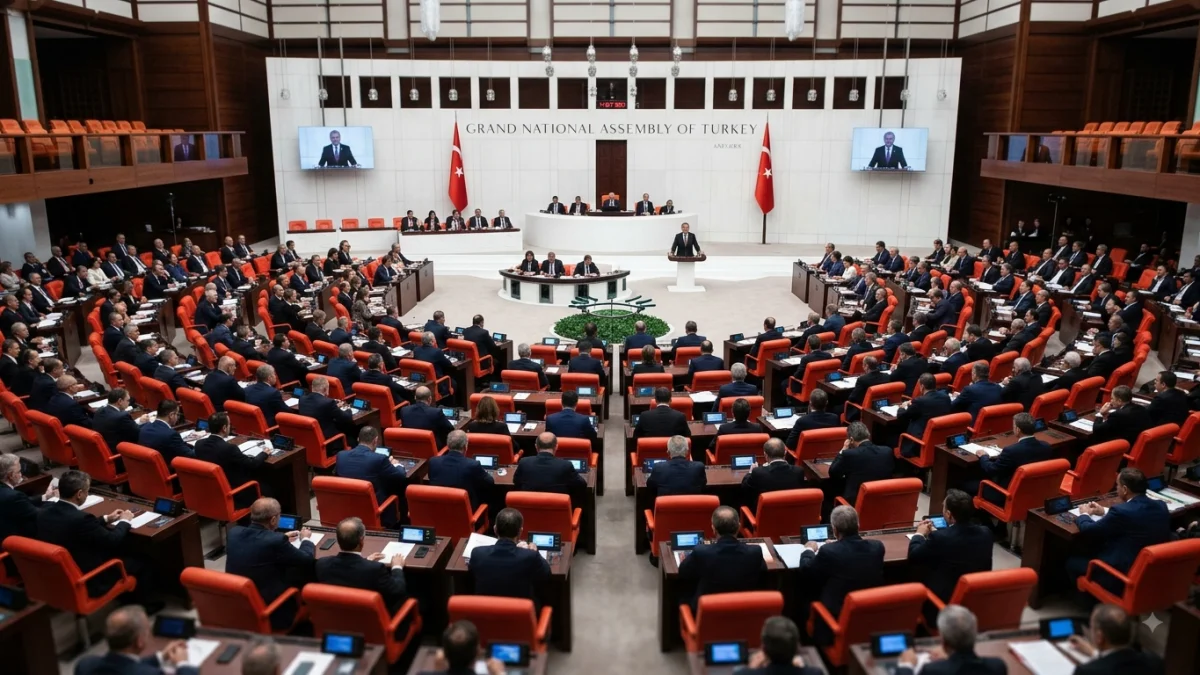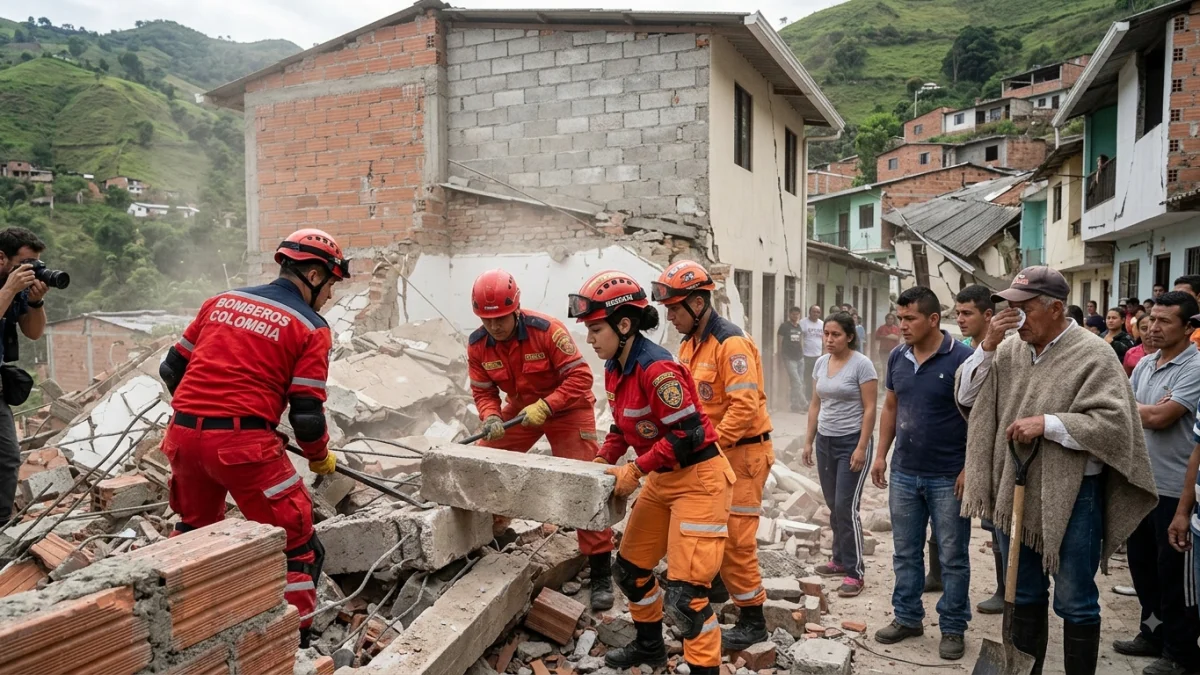


Colombia’s rescue effort entered a critical second day on Tuesday as the death toll from a magnitude 7.4 earthquake rose to at least 164, with emergency crews still searching collapsed buildings and authorities warning that the number of victims could increase. The earthquake struck western Colombia on Monday and was the strongest recorded in the country in decades, hitting just days after President Abelardo de la Espriella took office.
The disaster is therefore testing more than Colombia’s emergency infrastructure. It is the first major national crisis for a president whose government has only begun implementing a program centered on tighter public security, a smaller state and fiscal austerity. De la Espriella has declared a national emergency and placed rescue operations and aid delivery at the center of the government response, giving his administration an immediate test of its ability to coordinate institutions, move resources quickly and maintain public order while basic services remain disrupted.


The scale of the earthquake makes the test particularly demanding. Reuters reported that Cali had recorded at least 85 deaths and Pereira 66, while 13 others were reported dead in Chocó near the epicenter. Buildings, hospitals and other infrastructure were damaged, and rescue teams were continuing to search rubble for survivors. The full toll remains uncertain because communications and access have been disrupted in some of the hardest-hit areas.
That uncertainty is central to the government's immediate challenge. Early disaster figures can change substantially as rescuers gain access to damaged communities, identify victims and reconcile local reports. The Associated Press reported that more than 1,600 structures had been damaged and 61 had completely collapsed, while thousands of people were reported missing. Chocó, one of Colombia’s poorer and more remote regions, has presented particular logistical difficulties because damaged communications and limited access have slowed assessments.
For de la Espriella, the response also intersects with the priorities he set out during his inauguration on Aug. 7. The newly sworn-in president pledged to confront organized crime, reduce the size of the state and pursue fiscal restraint while strengthening security. Those commitments could now come under practical pressure as the government confronts the immediate need for public spending, emergency personnel and reconstruction. Reuters reported that the administration has deployed security personnel and imposed curfews in affected cities amid concerns about looting.
The earthquake also places renewed attention on Colombia’s longstanding exposure to seismic risk and the importance of building resilience before disasters occur. Colombia sits within a seismically active region, and the country has direct experience of how earthquake damage can overwhelm communities. The 1999 Armenia earthquake, measured at magnitude 6.1 by the Colombian Geological Service, killed hundreds in the coffee-growing region and caused extensive damage to homes and public infrastructure. The U.S. Geological Survey records at least 1,185 deaths from that disaster, while Colombian authorities have documented severe losses across Armenia and surrounding municipalities.
The comparison is significant but not exact. The 1999 earthquake was shallower and centered much closer to Armenia, while the 2026 event occurred at a depth of about 107 kilometers. Nevertheless, both disasters demonstrate how the consequences of an earthquake depend not only on magnitude but also on the location of the rupture, the vulnerability of buildings, population density and the capacity of emergency systems. The current damage across several major cities shows that even an earthquake whose epicenter is relatively distant from some population centers can produce a broad national emergency.
The economic implications will also become clearer only after the rescue phase. Damage to hospitals, airports, roads, housing and commercial buildings could disrupt local economic activity and create demands for reconstruction spending at a time when the new administration has emphasized fiscal discipline. International assistance has already begun, with the United States pledging $15.5 million and other governments offering support.
For now, the government's performance will be judged primarily by its ability to locate survivors, restore communications and essential services, protect displaced communities and deliver assistance to areas that remain difficult to reach. Authorities are also monitoring continuing aftershocks and the possibility of further structural failures. With rescue operations still underway and casualty figures changing, the confirmed situation remains fluid. The immediate focus is therefore on completing search-and-rescue operations, establishing the full scale of damage and maintaining coordinated emergency assistance as Colombia confronts its most significant earthquake crisis in years.