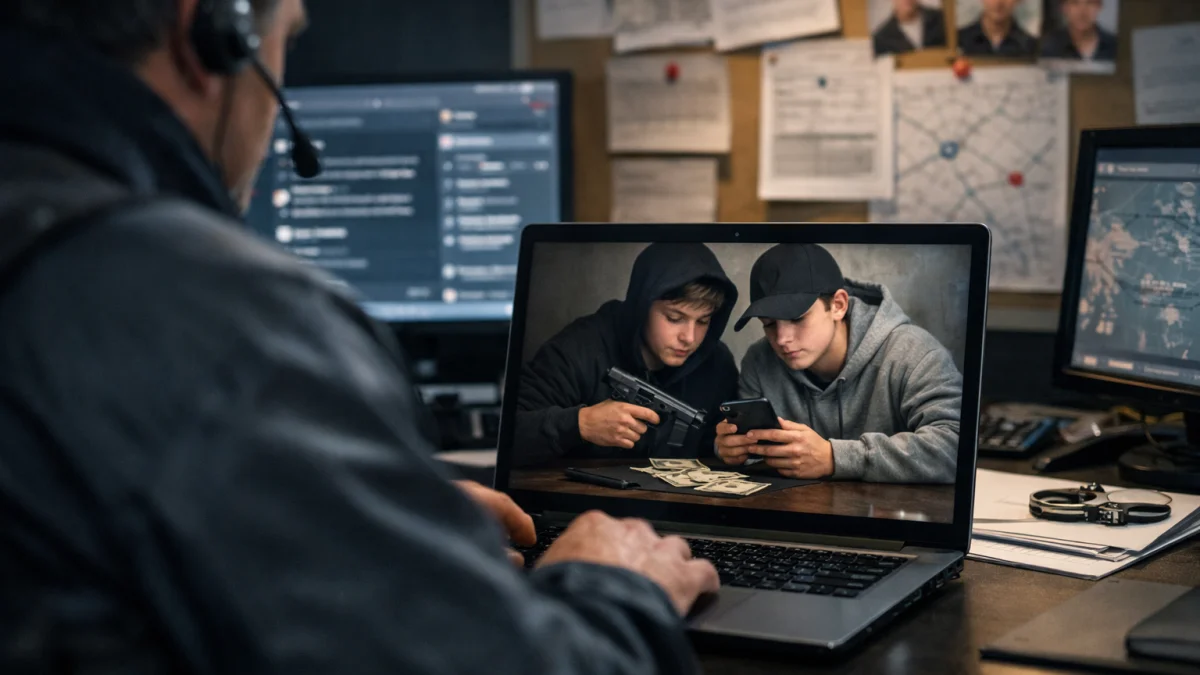


THE HAGUE — Criminal organizations are increasingly recruiting teenagers through social media platforms, encrypted messaging services and online gaming communities to carry out violent crimes, according to recent warnings from European law enforcement agencies and international policing organizations.
Authorities across Europe said criminal networks are using digital platforms to identify and recruit minors for offenses ranging from extortion and drug trafficking to assaults and contract killings. Europol, the European Union’s law enforcement agency, has described the trend as a growing threat to public safety and has launched specialized operations aimed at disrupting recruitment networks.


In a report released by Europol, investigators said organized crime groups increasingly target young people through social media and encrypted communication channels, often using coded language, financial incentives and online “gamification” techniques to encourage participation in criminal activity. The agency said minors are being assigned increasingly serious tasks, including violent offenses.
“Criminal organisations target young people via social media and encrypted messaging to recruit them to commit acts of serious organised crime,” Europol said in its intelligence notification on the recruitment of minors. The agency warned that the practice has expanded across multiple countries and criminal markets.
Law enforcement officials said criminal groups view minors as lower-risk operatives because juvenile justice systems often impose lighter penalties than those faced by adult offenders. Europol said the deliberate use of young people has become a tactic designed to shield senior organizers from detection and prosecution.
The issue has prompted an international response. In April, Europol reported that a multinational task force established to combat what it calls “violence-as-a-service” had made hundreds of arrests during its first year of operation. Investigators said many cases involved young recruits hired online to carry out assaults, shootings and other violent acts on behalf of criminal clients.
According to Europol, social media platforms, messaging applications and other online spaces allow recruiters to contact potential targets quickly and anonymously. Officials said criminal groups frequently exploit young people’s desire for money, status or belonging while concealing the risks involved.
International law enforcement agencies have also expressed concern about the broader use of digital tools by criminal networks. INTERPOL said in a recent assessment that organized crime groups are increasingly collaborating across borders and using technology to expand their activities.
Parents, schools and community organizations have been urged to remain alert to signs of online grooming and criminal recruitment. Europol said indicators may include the sudden use of encrypted messaging applications, unexplained access to money and changes in behavior.
As of June, Europol and national police agencies said investigations into online recruitment networks remain ongoing. Authorities said efforts are continuing to identify recruiters, remove online criminal content and prevent minors from being drawn into violent offenses.