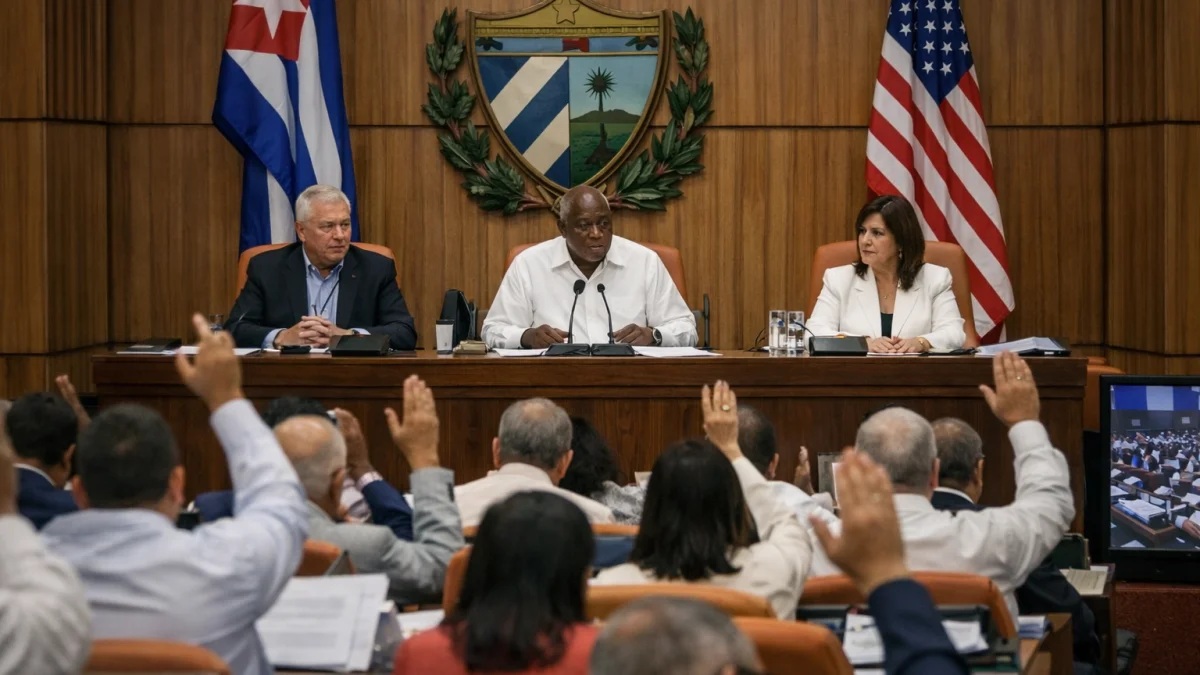


HAVANA — Cuban lawmakers have approved a broad package of economic reforms aimed at expanding private-sector activity and attracting investment as the island faces mounting economic difficulties and intensified pressure from the United States, according to government officials and state media. The measures were approved by the National Assembly earlier this month and were presented by Prime Minister Manuel Marrero as part of what authorities described as an effort to modernize the economy while maintaining Cuba’s socialist system.
The reforms, backed by the ruling Communist Party and former President Raúl Castro, include provisions allowing greater private participation in banking, broader opportunities for domestic and foreign investment, and changes to the management of state-owned enterprises, officials said. The package also seeks to reduce restrictions on private businesses and encourage capital from Cubans living abroad.


President Miguel Díaz-Canel said the measures were necessary to address the country’s prolonged economic crisis, which has been marked by shortages of fuel, food and medicine, as well as recurring power outages. Speaking ahead of the parliamentary vote, Díaz-Canel said Cuba needed “more output and less restriction,” according to remarks carried by state media and reported by Reuters.
Government officials have linked the economic challenges to longstanding U.S. sanctions, which Havana says have tightened in recent years and limited access to energy supplies, investment and international financing. The administration of U.S. President Donald Trump has maintained pressure on Cuba through sanctions and other measures, according to officials from both countries.
While Cuban authorities described the reforms as extensive, details on implementation timelines and enforcement mechanisms remain unclear. Officials have said the changes are intended to preserve socialism by improving economic efficiency rather than replacing the existing political system. Prime Minister Marrero acknowledged a larger role for market mechanisms in allocating resources, an approach that marks a significant shift in official rhetoric.
Some economists and residents have welcomed the announcement cautiously, while others have expressed skepticism about whether the measures will be fully implemented. Previous reform efforts have faced delays or partial rollbacks, according to analysts and local observers.
As of Tuesday, Cuban authorities had begun outlining the next steps for the reform package, but officials had not provided a comprehensive timetable for when all measures would take effect. Details on regulatory changes and oversight arrangements remain under development, government representatives said.